
Salesforce Commerce Cloud Alternatives: 6 Platforms Enterprises Should Consider Instead
If you're evaluating alternatives to Salesforce Commerce Cloud (SFCC), then the pricing model or ongoing maintenance timelines are probably among the reasons. Even with Salesforce's rebranding of Commerce Cloud to Agentforce Commerce, the addition of AI agents, or the acquisition of Contentful to add a content management system, those challenges don't simply go away.
However, if you're using SFCC you likely have other Salesforce products as well, CRM, Marketing Cloud, and Service Cloud all commonly tied into the same ecosystem. That means an alternative needs to provide you with:
- A migration path that doesn't leave your existing Salesforce integrations broken or requiring a full rebuild
- Pricing that doesn't rise in step with GMV regardless of the value the platform actually adds
- An implementation timeline measured in weeks, not the three to twelve months SFCC implementations often take
- Content and commerce operations that don't route every routine change through a developer
- AI agents built to run operations across a whole portfolio, not just personalize one brand's storefront
In this article we'll cover six alternatives worth considering, starting with Core dna, which runs content, commerce, and agentic tools from a single platform.
Running commerce across multiple properties, brands, or locations? See how Core dna handles it from a single backend.
Why Businesses Look for Salesforce Commerce Cloud Alternatives
GMV-based pricing that compounds as revenue grows
Salesforce's B2B Commerce pricing is tied to gross merchandise value, charging 1% GMV for the Growth edition and 2% GMV for the Advanced edition, according to Salesforce's own B2B Commerce pricing page, plus separate implementation fees. Enterprise implementations typically cost low to mid 6-figures or more before go-live, and most brands continue to rely on certified partners for updates and customization after launch.
For multi-property companies on SFCC it means that a team adding a new property or growing revenue across several storefronts ends up paying more when the GMV fee rises. This, in turn, causes ongoing partner costs to increase.
Implementation timelines
Standard SFCC deployments can take 3 to 6 months for mid-tier configurations and up to a year for complex enterprise builds. SFCC also requires teams to manage Business Manager and Salesforce Setup as two separate admin environments, adding ongoing operational overhead before a single feature has shipped.
Teams trying to respond quickly to market changes or launch new properties find that structure a persistent disadvantage. One reviewer on G2 confirmed that "Implementations often require significant technical expertise, and performance or integration issues can arise if the setup isn't carefully optimized."
Developer dependency for ongoing operations
SFCC's configuration model is built around developer-managed cartridges and customizations, so content changes beyond basic edits typically route through IT instead of being self-service for marketing teams.
Ecosystem lock-in
CRM, Marketing Cloud, and Service Cloud all connect to Commerce Cloud natively, and for organizations already running that ecosystem, the integration is a real advantage: data moves between systems without a third party in the middle. For organizations outside that ecosystem, every non-Salesforce connection needs its own middleware to bridge the gap. That middleware layer also gets harder to unwind the longer it's in place, since more of the business ends up built on top of it.
Agentic commerce not built for multi-property operations
Agentforce Commerce's Shopper Agent, Buyer Agent, and Merchant Agent are designed to deliver an agentic commerce across a single brand at scale. Teams running franchise networks, membership organizations, or multi-brand portfolios need AI that runs at the operational layer, pushing updates across properties with approval and rollback built in. That is a different job, and Agentforce Commerce was not designed for it.
6 Salesforce Commerce Cloud Alternatives for Enterprises
Here's how six real alternatives measure up to SFCC (Agentforce Commerce), starting with the platform built specifically for the multi-property operator problem.
1. Core dna
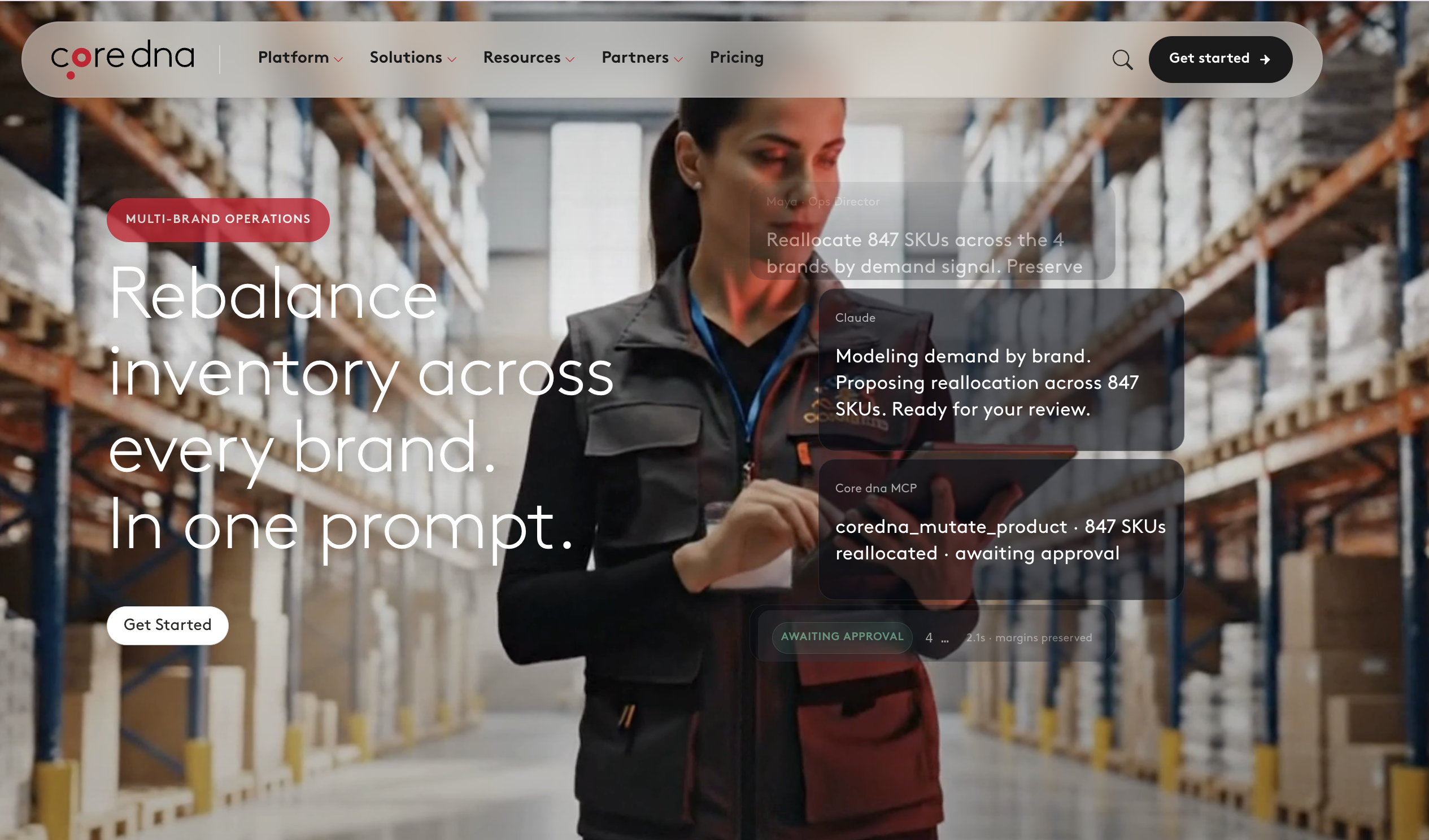
Core dna was built for multi-property operators who need content, commerce, and agentic operations without stitching three systems together for every location. A price change at one site and a seasonal promotion at another shouldn't require two different systems, let alone two different approval processes, yet that's exactly what happens when each property inherits whatever platform was in place when it opened, with no shared governance connecting them.
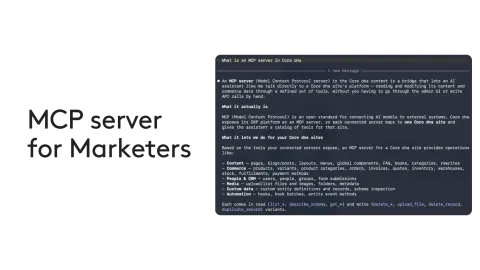
One MCP server replaces stitched together tools
Every AI-powered action on Core dna runs on a live MCP server with 80+ tools and over 400 APIs, in production today rather than on a roadmap. A team briefs an action once, in plain language, and that same action can be triggered from Claude Desktop, ChatGPT, Claude Code, or a custom agent, with identical governance no matter which client is doing the work. Governance lives in the platform, not in any tool connected to it.
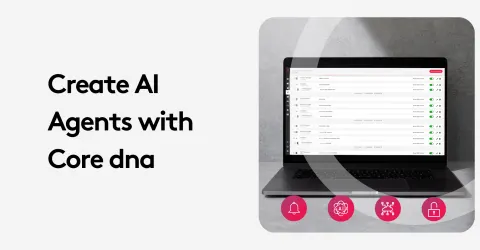
Most platforms bolt AI onto one site to help one person move faster. Core dna's agent operates the estate itself, updating a campaign, price, or product record across every property with a single instruction.
Get a personalized walkthrough to see the MCP server in action for your specific property structure.
One content graph behind two delivery modes
Content and commerce don't live in separate systems that need to be kept in sync. The headless API serves storefronts, apps, and AI agents directly, while the visual editor gives non-technical teams a UI to work in, and both read from and write to the same underlying content graph. Nothing falls out of sync because there's nothing to reconcile between two separate stores of truth.
Custom entities extend the same way. A dealer directory or a course catalog is modeled natively alongside pages and products, so updating one no longer requires touching a second system to keep it current.
B2B, B2C, and hybrid from one backend
Tiered pricing for B2B accounts, consumer subscriptions, and a shared checkout all run from the same system. Quote-to-cash approval happens within the platform rather than via email or a spreadsheet. For a multi-brand portfolio that carries both business and consumer relationships, that's one backend to govern instead of two systems each handling half the business.
A distributor selling wholesale to retail partners while also running a direct-to-consumer storefront is a common version of this. Both price books and both checkout flows live in Core dna, and the approval chain for a negotiated wholesale quote runs through the same system as a consumer order, not a separate B2B portal bolted on the side.
Approval and rollback built into every action
In Core dna, every action ships through a configurable approval workflow. The person in charge of final approvals can see the current and proposed states side by side, per property, and approve, send it back with changes, or cancel it outright. Nothing ships without a human signature, and agents apply governed templates rather than inventing brand voice or making merchandising calls on their own.
Read more: 10 Multi-property Workflows Now Running on Core dna MCP
Proven across real franchise networks
Clark Rubber runs a single ecommerce store across all 60 of its franchise locations on Core dna. Orders route themselves, and inventory and back-orders get reconciled across the entire network without anyone touching a spreadsheet.
2. Adobe Commerce
Adobe Commerce supports multi-site, multi-language, and multi-brand operations from a single admin. It offers B2B functionality, including shared catalogs, company account management, and negotiated quotes, shipping natively alongside the full B2C feature set. First-year costs, including licensing, development, and maintenance, are often in the mid- to high-6-figure range.
Key features include:
- Native B2B and B2C functionality in one installation
- Shared catalogs, company accounts, and negotiated quotes
- Deep integration with Adobe Experience Cloud, Analytics, Assets, and AEM
- Multi-site and multi-brand management from a single admin
Teams outside the Adobe ecosystem face roughly the same implementation timeline and developer dependencies that pushed them away from Salesforce in the first place.
3. SAP Commerce Cloud
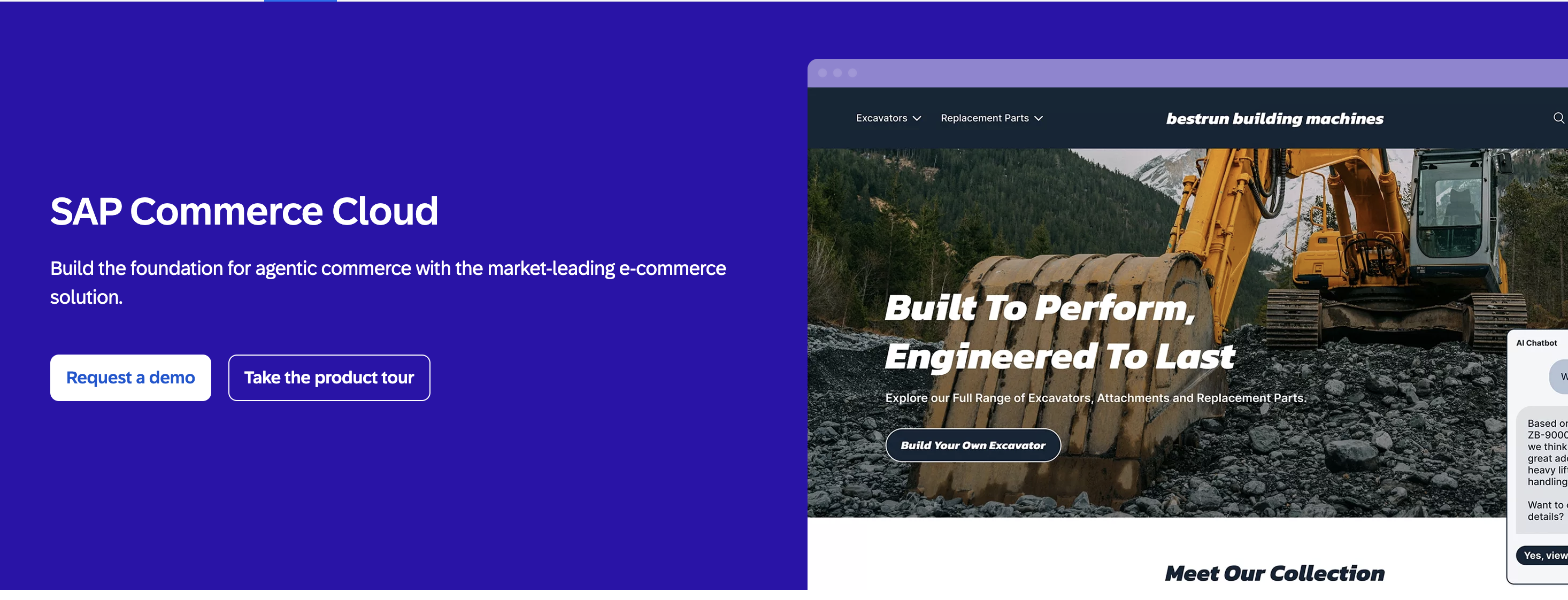
SAP Commerce Cloud is built for enterprises where tight ERP connectivity is non-negotiable. It handles inventory, pricing, and order data between systems without middleware, and supports multi-site, multi-currency, and multi-language deployments out of the box.
Key features include:
- Native integration with SAP ERP and S/4HANA
- Multi-site, multi-currency, and multi-language support
- AI-enhanced search and merchandising
- High transaction volume handling across global operations
Much of Commerce Cloud's value depends on already running the rest of the stack on SAP. Without that, the learning curve and reliance on SI partners for customization become the whole experience.
4. OroCommerce
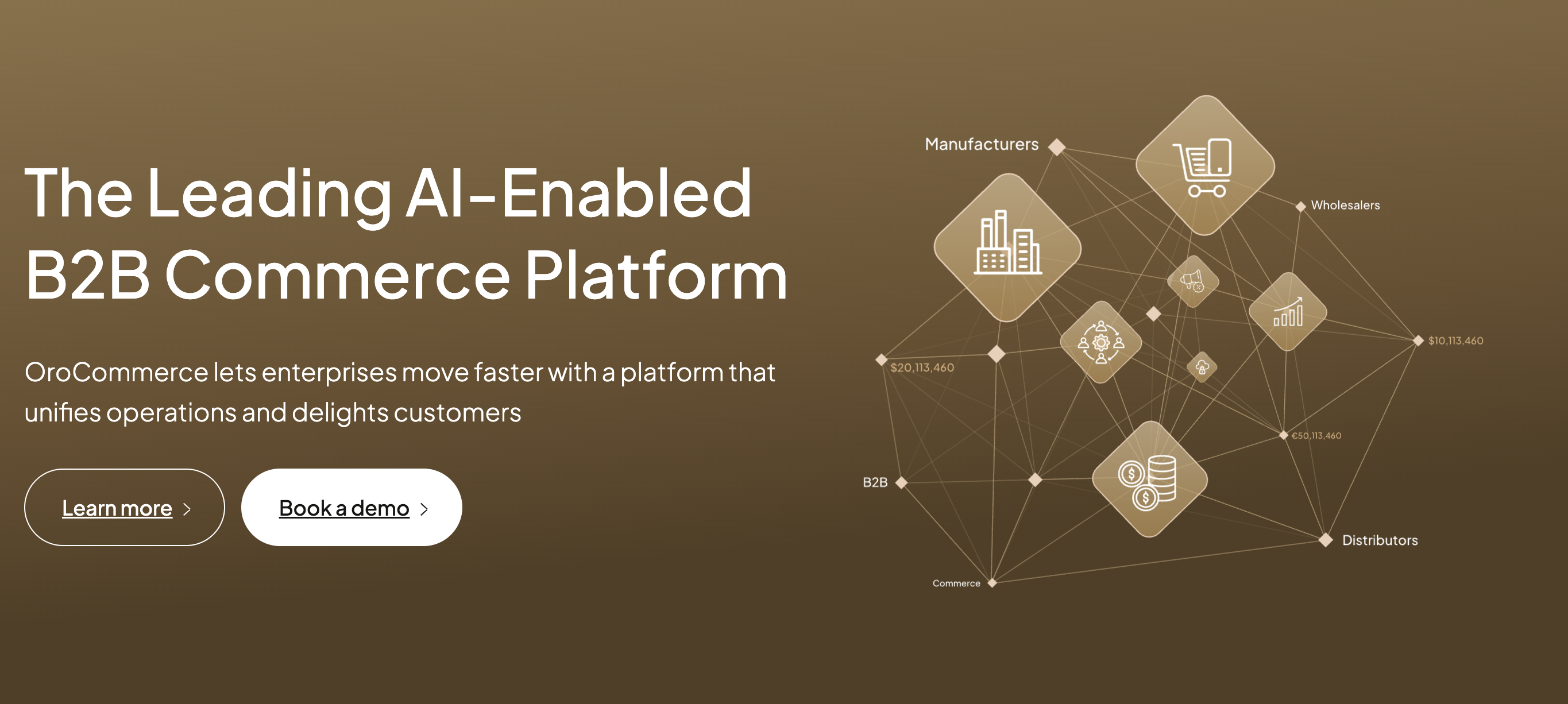
OroCommerce was designed from the ground up for B2B commerce rather than built on a retail foundation, with corporate account hierarchies, configure-price-quote workflows, rule-based pricing engines, and buyer-specific catalogs that ship without extensions or customization, plus a built-in CRM that shares data with the commerce platform.
Key features include:
- Native B2B account hierarchies and configure-price-quote workflows
- Built-in CRM sharing customer and transaction data with commerce
- Rule-based pricing engines and buyer-specific catalogs
Its market presence and update cadence both concentrate in North America and Europe, which is worth factoring in for teams operating outside those regions.
5. VTEX
VTEX covers digital commerce, order management, experience management, and marketplace in one multi-tenant SaaS platform, with B2B and B2C operations running side by side without separate configurations, and native marketplace functionality that lets operators bring third-party vendors directly into the platform.
Key features include:
- Multi-tenant SaaS covering commerce, order management, and marketplace in one platform
- Native B2B and B2C support without separate configurations
- Third-party marketplace vendors onboard directly into the platform
- Scales to handle peak demand without manual infrastructure management
Partner and infrastructure coverage runs deeper in Latin America and emerging markets than in North America, where the support network is comparatively thin.
6. Shopware
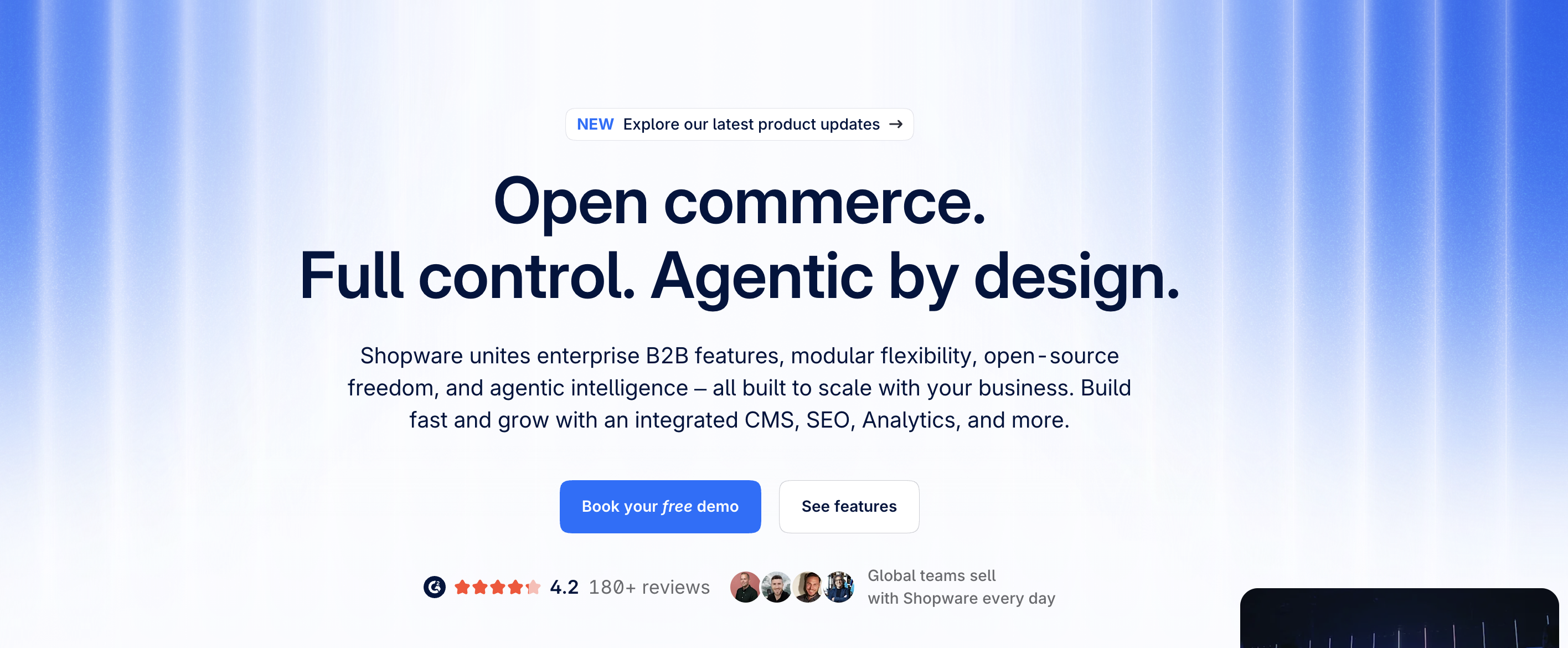
Shopware is an open-source ecommerce platform available in cloud and self-hosted versions. Shopware has a strong position in European markets and an API-first architecture that supports both headless builds and traditional deployments. Its open-source core is free to download and modify, with publicly priced cloud plans.
Key features include:
- Open-source core, free to self-host and modify
- Cloud and self-hosted deployment options
- API-first architecture for headless or traditional builds
- Publicly priced cloud plans
Implementation partners and app-marketplace depth are still concentrated in Europe, and are thinner than what's available to enterprise incumbents in North America.
Choose Core dna for Your Next Platform
Core dna was built to remove those tradeoffs entirely, running content, commerce, and the agentic layer that connects both from a single platform, so a multi-property operator doesn't have to stitch three systems together to run one portfolio.
With Core dna, operators can:
- Run content, commerce, and agentic operations from one backend, no separate CMS or middleware layer to maintain
- Govern every AI action through a single MCP server with 80+ tools and 400+ APIs, live today across any connected AI client
- Approve, audit, and roll back any change at the portfolio level, not property by property
- Run B2B, B2C, and hybrid commerce from the same backend, with quote-to-cash approval built in
Clark Rubber has already made this trade-off, running all 60 of its franchise locations on exactly this architecture today.
See how the same architecture would handle your specific property footprint.
Summarize with