MULTI-BRAND RETAIL ONE PLATFORM BEHIND EVERY BRAND

Manage every storefront without multiplying your stack

Give each brand its own storefront, pricing, catalog, and customer experience, while your team manages content, commerce, workflows, and shared operations from one place. Built for retail groups, holdcos, and portfolio operators managing 2 to 20 brands on a lean team.


Hero image
FOR MULTI-BRAND RETAIL OPERATORS

Trusted by RANDYS Worldwide across 9 manufactured brands, wholesale and retail, on one Core dna platform.

G2 Enterprise
DXP for multi-property operators
★★★★★
4.5
WHAT BREAKS FIRST Adding a brand should not mean adding another platform
Three brands, five platforms
The same customer buys from two of them and you cannot see it. Loyalty, returns, and reporting all break at the brand boundary.
Adding a brand means rebuilding
Another platform contract, another integration project, another set of plugins. The cost of operating compounds with every brand.
New brand, new build
The business says the new brand needs a new website, its audience, its pricing. It shouldn't mean a new platform contract.
The team is drowning
The team spends the week stitching together reports from five tools, chasing vendor support across multiple timezones.

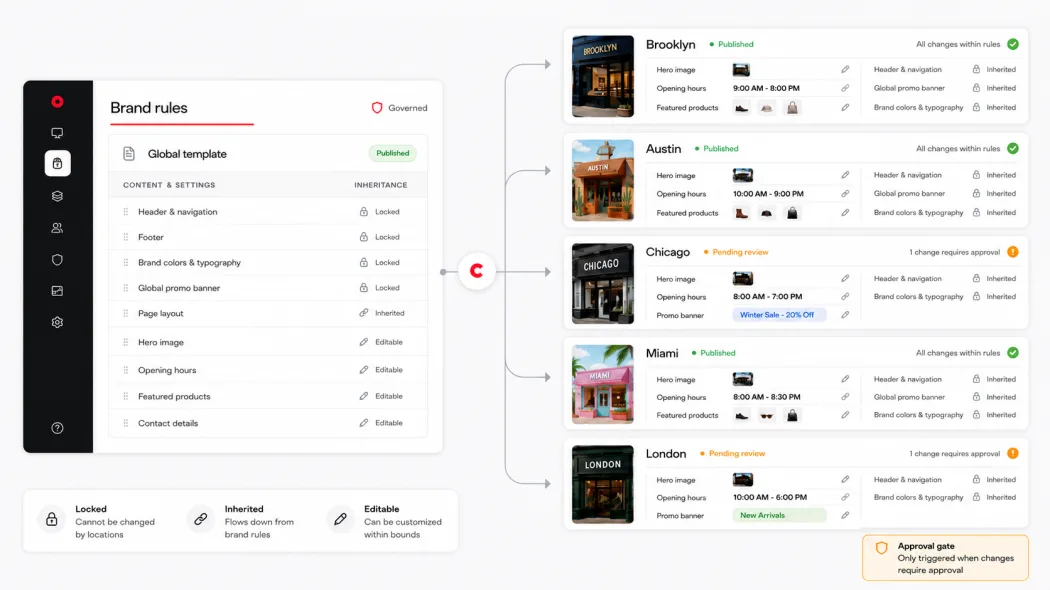
One shared commerce engine. Every brand still feels like its own brand.

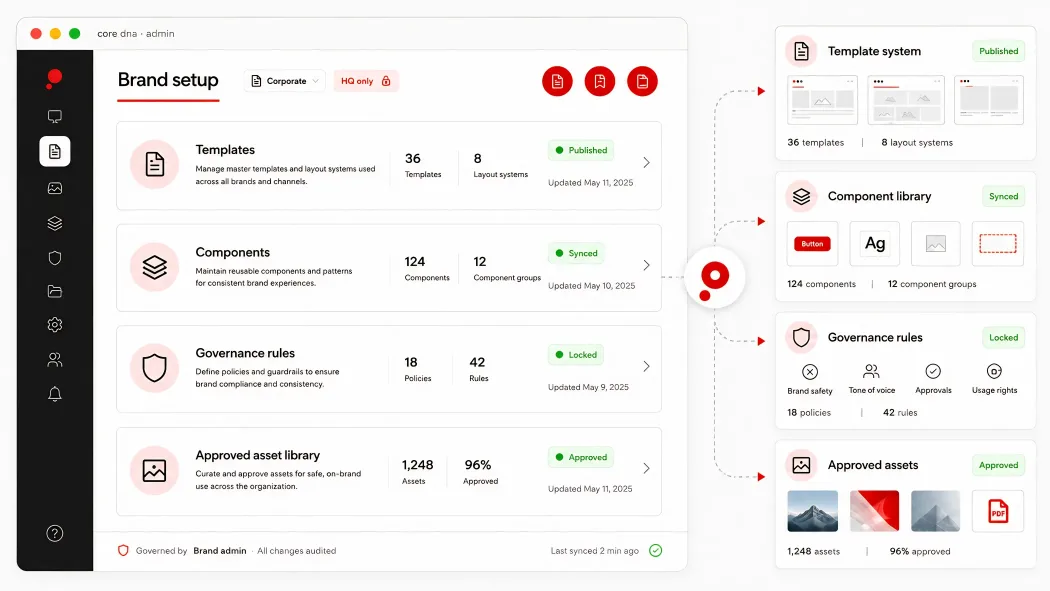
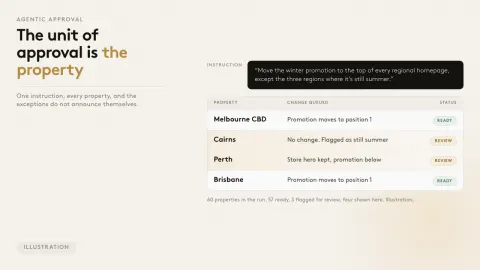
Set up each brand as its own tenant
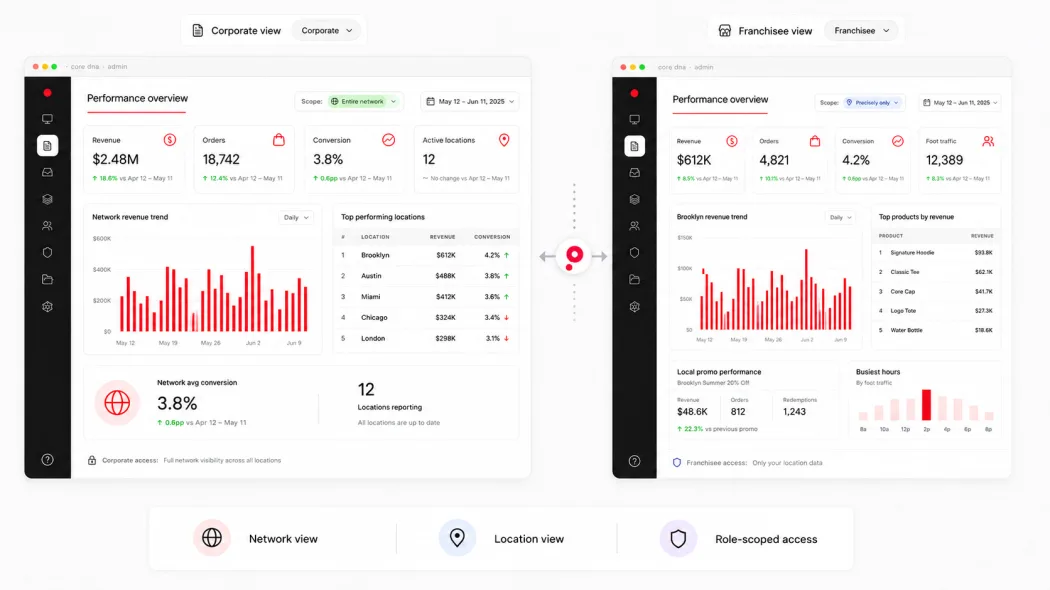
Share the operating layer behind the scenes
Scope what changes by brand
Launch the next brand from the same foundation
RANDYS Worldwide 9 brands, wholesale, retail, and ERP sync on one platform.

RANDYS Worldwide consolidated its brand portfolio onto one Core dna environment. Each brand keeps its own storefront and customer experience, while the catalog, wholesale portal, retail commerce, inventory, and order workflows stay connected behind the scenes.


James Campbell-Harris
eCommerce Director
9
manufactured brands
1
Core dna platform
B2B + B2C
wholesale and retail on same engine
Real-time
bidirectional ERP sync across all brands

What ships in the platform.

The same platform supports the catalog, customer, commerce, and workflow complexity behind every brand you operate.

Image

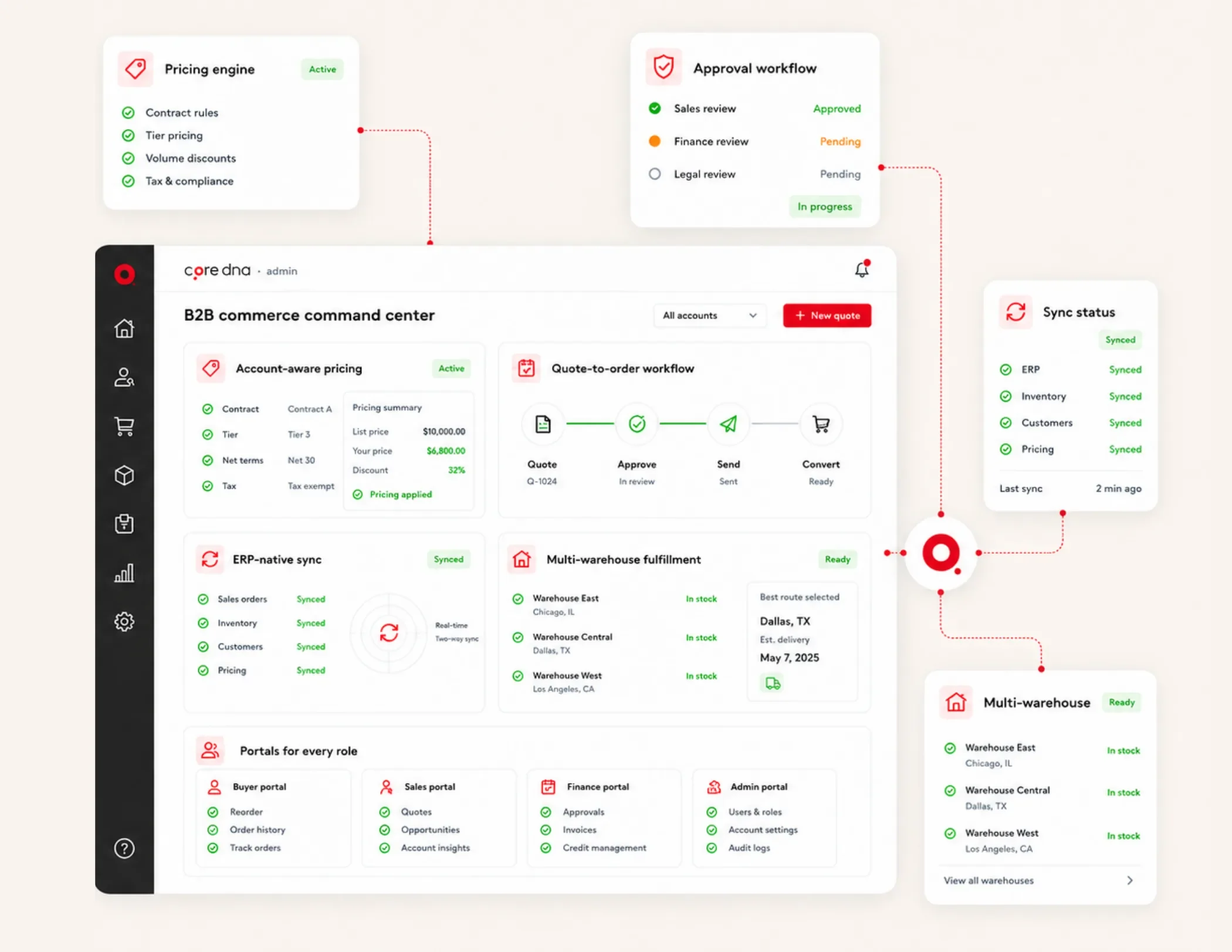
Built for every brand's independence but back office control

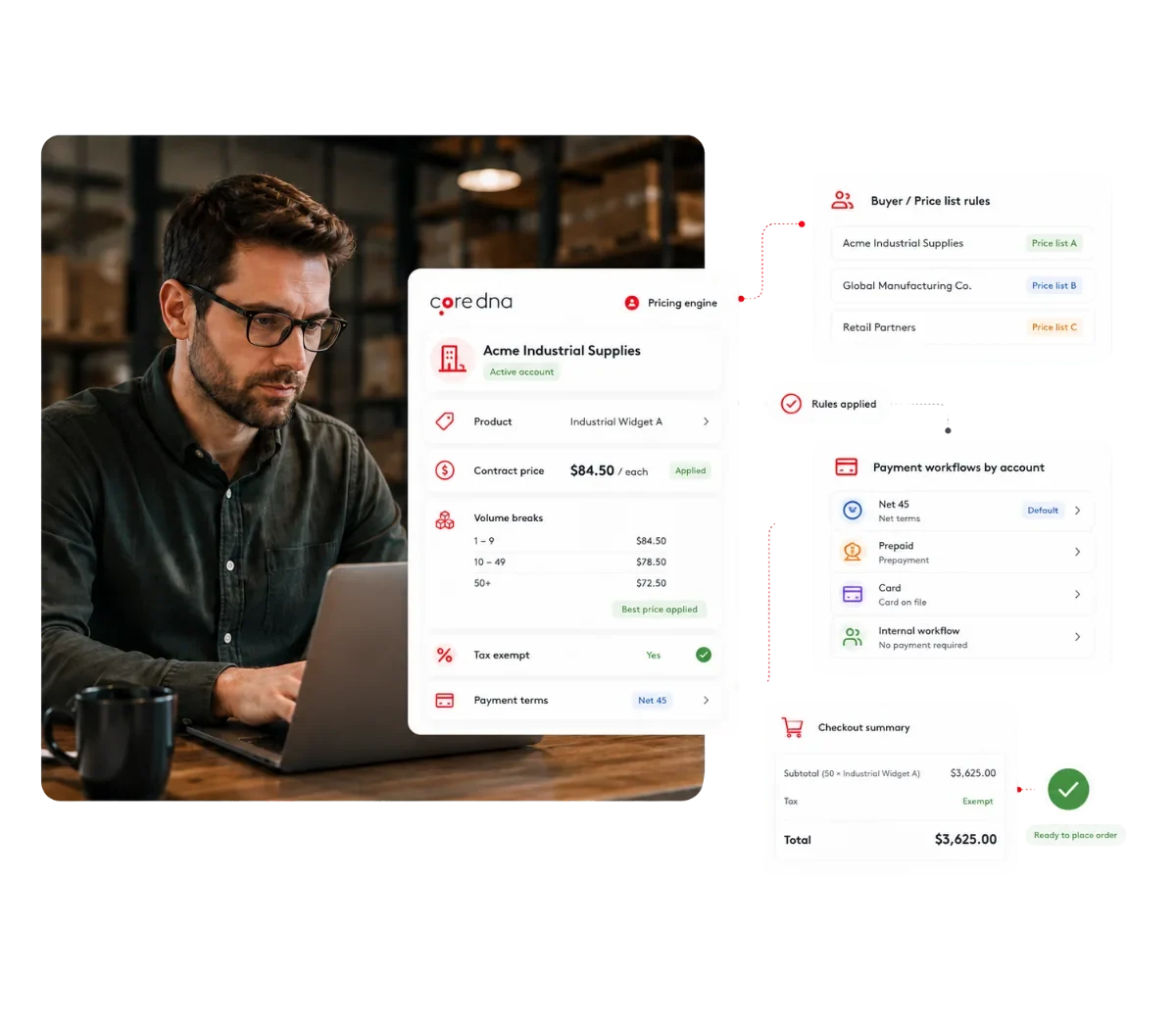
Pricing, tax, promotions, fulfillment, and payment terms are configured per brand. What one brand charges has no effect on what another brand charges.

  • Brand-specific pricing, currency, and regional rate rules
  • Independent promotional and discount logic per brand
  • Per-brand tax and fulfillment configuration
  • Wholesale or contract pricing scoped to a brand, not visible across the portfolio
  • Payment terms and methods configured per brand and per market


Explore Core Commerce
Whether you’re adding your second brand or untangling your tenth, the problems are the same.

Built for portfolio operators. Configured for your shape.

Multi-tenant architecture, brand-scoped catalog, shared customer graph, workflows, are the same across every portfolio shape. What changes is how they get configured for the way your specific group of brands operates.

01 Food, beverage, and CPG

D2C alongside retail-channel sites

D2C launches alongside retail-channel marketing sites. Multiple SKUs per brand, multiple brands per platform, subscription and one-off purchase on the same engine. Compliance content (allergens, labelling, regional regulation) handled per brand without forking the platform.

02 Fashion and apparel groups

Multiple labels, shared logistics.

Parent companies running multiple labels, seasonal collections per brand, shared logistics and customer service. Brand-distinct storefronts and merchandising. Shared customer profile with brand-specific privacy scoping. Multi-currency, multi-region, multi-language as needed.

03 Auto, and parts groups

Brand portfolios under one parent.

Brand portfolios under one parent, B2B wholesale and B2C retail on the same engine, complex SKU-to-brand mapping, dealer and reseller portals. Multi-brand catalog with shared inventory where it makes sense, brand-scoped pricing and tax everywhere else.

04 Multi-brand global retailers

Retail with 5 to 20 consumer brands

Retail with 5 to 20 consumer brands, each with regional sites and country-specific storefronts. Centralised brand governance, distributed brand operations. Regional data residency. Currency, tax, payment methods, and shipping rules configured per brand and per market.


How we get you live. And keep you there.

Most multi-brand replatforming projects overrun because teams try to move everything at once without a proven model. We establish the model first, then scale it across the portfolio.

Phase 1
We start with your business, not a template

Before anything is configured, we map how your portfolio actually operates. Which brands share customers, which share catalog, which need to stay commercially separate. The platform gets configured to match your operation, not the other way around.

Phase 2
We configure, you don't rebuild

Your existing systems: ERP, CRM, payments, connect to the platform. Your brands get their own storefronts, pricing, and customer rules. No custom code from scratch. No starting over.

Phase 3
We prove the model

We establish how the platform operates for your portfolio, validate it against your real workflows, and confirm it works for your operation. Then we scale across the rest of the estate at whatever pace fits your team.

Phase 4
The same team stays after launch

Once you are live, the people who configured the platform keep working with you. New brand acquisition, new region, new channel, the platform grows with the portfolio without becoming another project.

Multi-brand Retail Platform Comparison

Why retail groups outgrow brand-by-brand systems.

Multi-brand retail groups need each brand to keep its own storefront, pricing, catalog, and customer experience. The challenge is running shared operations behind the scenes without multiplying platforms, integrations, vendors, and reporting gaps every time a new brand joins the portfolio.

DimensionOne Shopify Plus org per brand
Separate storefronts
separate operations
 one org · per brand 
Custom multi-brand build
Bespoke control
engineering-heavy
 custom code · dev dependent 
Core dna
Configured platform
multi-brand retail operations
 one platform · many brands 
Time to next brand live
How quickly a new brand can join the portfolio
New setup every time
Each brand means a new org, new integration project, new app stack, and another vendor relationship to manage.
9 to 18 months
Each brand becomes another engineering project with discovery, architecture, build, testing, and launch dependencies.
✓ Tenant configured
Tenant configured in hours to days. Discovery and integration typically takes 4 to 6 weeks. Pilot brand live in 12 to 18 weeks from discovery kick-off.
Cost shape
How costs grow across the brand portfolio
Linear growth
Every brand multiplies subscription, app, integration, reporting, maintenance, and partner management costs.
Large capex
Large upfront build cost, followed by ongoing development, infrastructure, QA, security, and support commitments.
✓ Shared platform model
One platform subscription, a configuration project, and managed services support the full portfolio operating model.
Customer across brands
How customer data, loyalty, returns, and LTV work
Split records
One customer becomes separate records across brands. Loyalty, returns, service history, and LTV break at the brand boundary.
Built if prioritized
Cross-brand customer visibility depends on what the engineering team had time, budget, and data structure to build.
✓ One customer graph
One customer record can be scoped per brand, with loyalty configured at the brand or portfolio level.
Adding a brand
What happens when the portfolio grows
Buy and integrate again
Buy another Shopify Plus contract, rebuild the setup, reconnect systems, and recreate reporting for the new brand.
Engineering project
Every new brand needs technical planning, code changes, integration work, testing, and deployment support.
✓ Configure a tenant
Add the brand as a tenant in admin, then configure storefront rules, catalog scope, pricing, permissions, and integrations.
Catalog and pricing control
How shared products and brand-specific rules work
Duplicated by brand
Product data, pricing rules, merchandising logic, and availability often need to be copied or synced across orgs.
Custom data model
Shared catalog logic is possible, but the team has to design and maintain the product, price, and brand hierarchy.
✓ Shared core, brand scope
Use shared product records where it makes sense, then scope copy, imagery, pricing, availability, and merchandising by brand.
Brand independence
How each brand keeps its own experience
Strong isolation
Each brand can have its own storefront, theme, apps, and operating model, but shared operations become harder.
As designed
Brand independence depends on how well the architecture separates storefront experience from shared operations.
✓ Independent storefronts
Each brand keeps its own domain, identity, storefront, catalog expression, pricing model, and customer experience.
Shared operations
How the portfolio team manages work behind the scenes
Middleware required
Cross-brand reporting, inventory, customer data, promotions, and workflow coordination usually need external middleware.
Custom workflows
Shared operations can be designed, but every permission rule, workflow, and integration needs technical ownership.
✓ Portfolio command layer
Portfolio teams can manage content, commerce, workflows, reporting, and integrations across brands from one platform.
Where it breaks
The failure point as brand complexity increases
Independent org sprawl
Each org grows independently. Cross-brand operations become difficult without middleware, manual processes, or duplicate work.
Maintenance debt
Maintenance debt compounds as brands, features, integrations, and edge cases grow. Risk increases when the original team leaves.
✓ Capability accumulates
Configuration becomes reusable platform capability across brands instead of isolated project work for every new storefront.
Best choice when
Brands operate separately
Each brand runs mostly on its own, with limited need for shared customers, shared operations, or portfolio-level reporting.
You want bespoke control
You have the engineering budget, timeline, and internal team to own a custom multi-brand platform long term.
Portfolio
You need every brand to keep its own identity while your team runs shared commerce, content, customer, and workflow operations from one place.

Time to next brand live
How quickly a new brand can join the portfolio
Shopify Plus per brandNew setup
Each brand means a new org, new integration project, new app stack, and another vendor relationship.
Custom build9 to 18 months
Each brand becomes another engineering project with build, testing, and launch dependencies.
Core dna✓ 12 to 18 weeks
Tenant configured in hours to days, with discovery and integration typically taking 4 to 6 weeks.
Cost shape
How costs grow across the brand portfolio
Shopify Plus per brandLinear growth
Every brand multiplies subscription, app, integration, reporting, and maintenance costs.
Custom buildLarge capex
Large upfront build cost plus ongoing development, QA, security, and support commitments.
Core dna✓ Shared model
One platform subscription, a configuration project, and managed services support the portfolio.
Customer across brands
How customer data, loyalty, returns, and LTV work
Shopify Plus per brandSplit records
One customer becomes separate records across brands, breaking loyalty, returns, and LTV.
Custom buildBuilt if prioritized
Cross-brand visibility depends on what the engineering team had time and budget to build.
Core dna✓ One customer graph
One customer record can be scoped per brand, with loyalty configured by brand or portfolio.
Adding a brand
What happens when the portfolio grows
Shopify Plus per brandBuy again
Buy another contract, rebuild the setup, reconnect systems, and recreate reporting.
Custom buildEngineering project
Every new brand needs planning, code changes, integration work, testing, and deployment.
Core dna✓ Configure tenant
Add the brand as a tenant, then configure catalog, pricing, permissions, and integrations.
Where it breaks
The failure point as brand complexity increases
Shopify Plus per brandOrg sprawl
Each org grows independently, making cross-brand operations difficult without middleware.
Custom buildMaintenance debt
Debt compounds as brands, features, integrations, and edge cases grow.
Core dna✓ Capability accumulates
Configuration becomes reusable platform capability across brands.
GET STARTED

See it configured for your portfolio.

Book a 30-minute call. We will walk you through how Core dna would be configured for your specific situation.