PRODUCTS & CATALOG FOR MULTI-PROPERTY OPERATORS Powered by MCP Server

Run one catalog across every storefront, brand, and buyer type

60+
Storefronts and sites
selling from one catalog

Clark Rubber   |   YMCA Greater Toronto   |   Randy's Worldwide   |   Frontier Touring

G2 Enterprise
Digital Experience Platforms
★★★★★
4.5
FOUR MECHANICS what every catalog on Core dna runs on

One catalog models everything you sell.

Core dna holds products, variants, bundles, and the custom objects your business runs on in one model. Price, publish, translate, and scope each one per site, brand, region, and account.

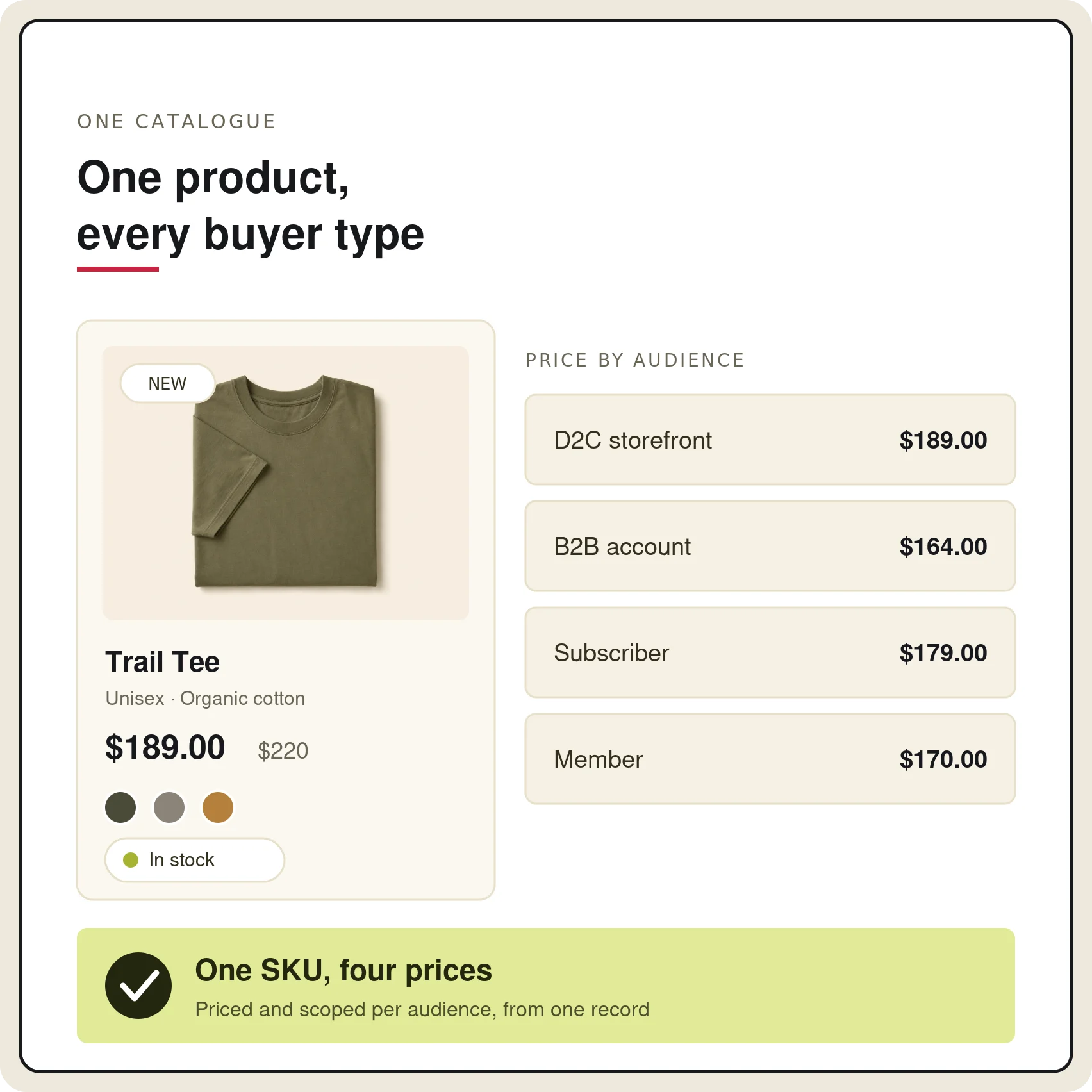
01 One model, every buyer type

Sell to D2C, B2B, subscribers, and members from one catalog

Serve retail, wholesale, contract accounts, subscribers, and members from the same product and customer model. One catalog, priced and scoped per audience.

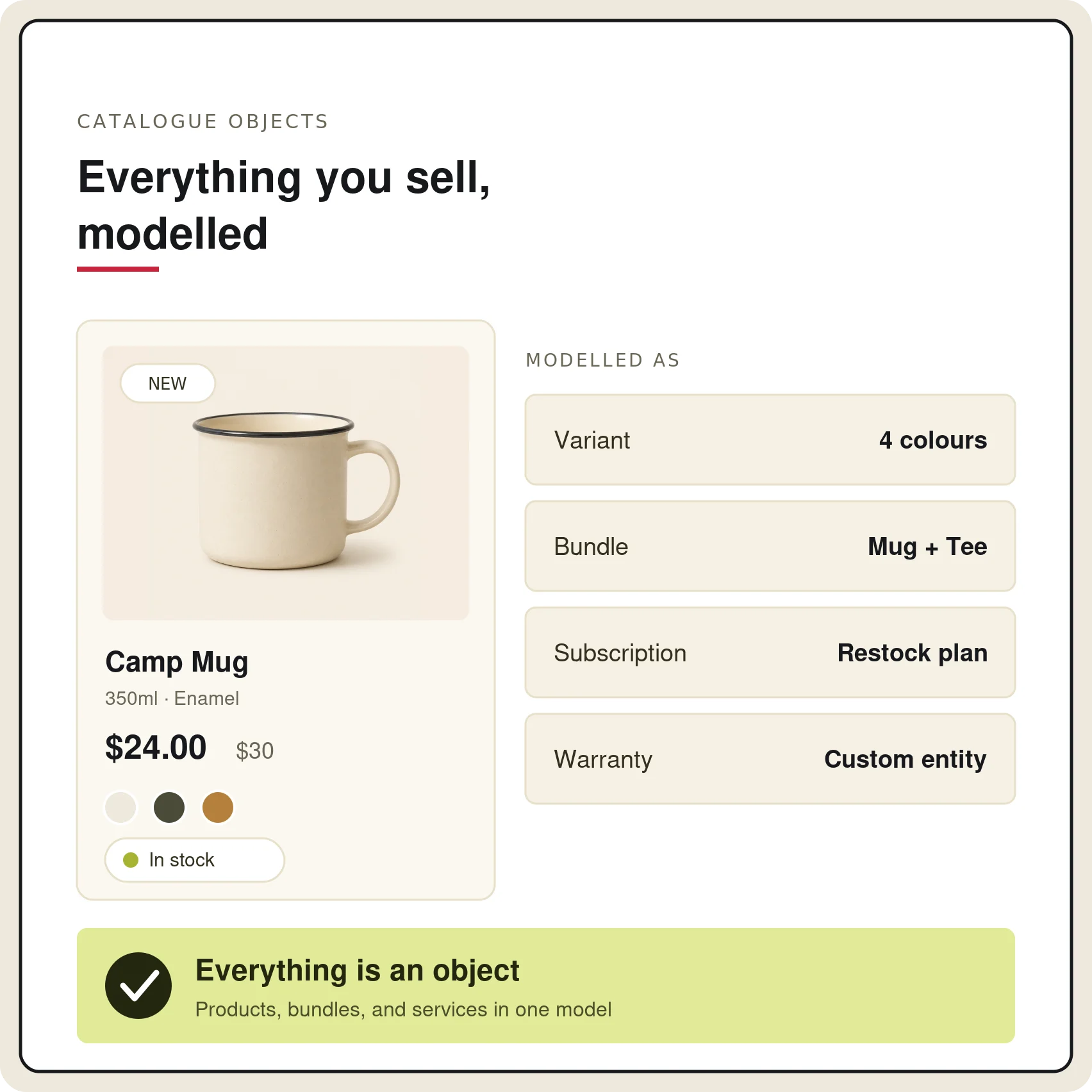
02 Everything you sell is a catalog object

Model dealers, courses, locations, and programs as catalog objects

Turn the objects your business runs on - services, subscriptions, dealers, members, locations, courses, programs - into first-class catalog entities with their own attributes and rules.

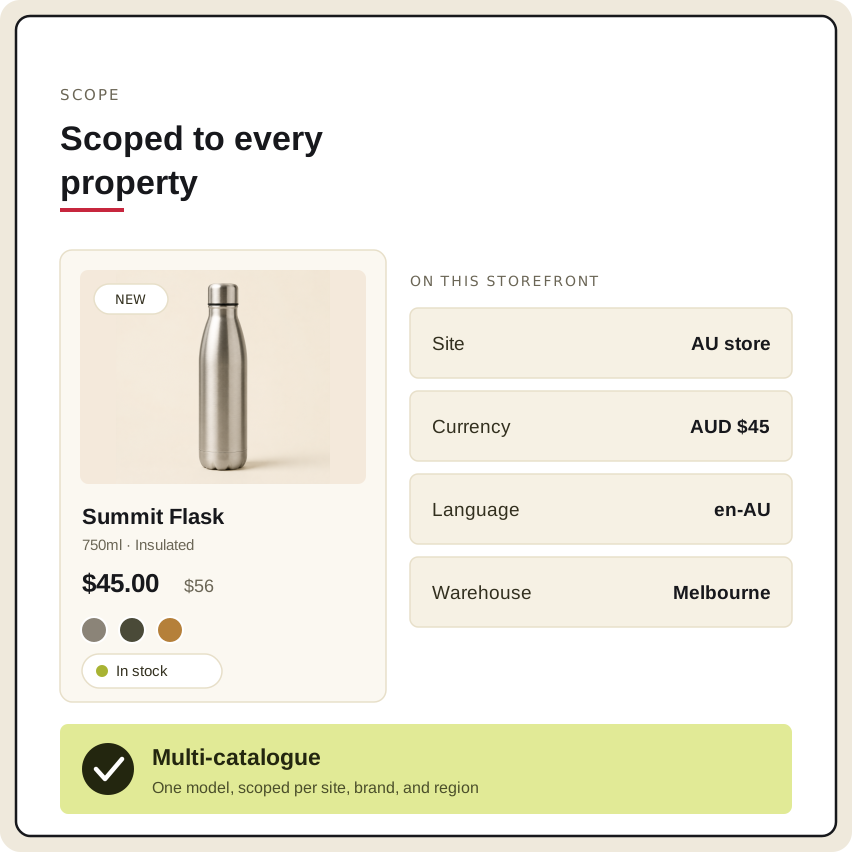
03 Scoped to every property

Scope catalog, pricing, and availability per site, brand, and region

Run multi-catalog, multi-currency, multi-warehouse, and multi-language from one model. Set what each storefront sells, in which currency, at which price, in which language.

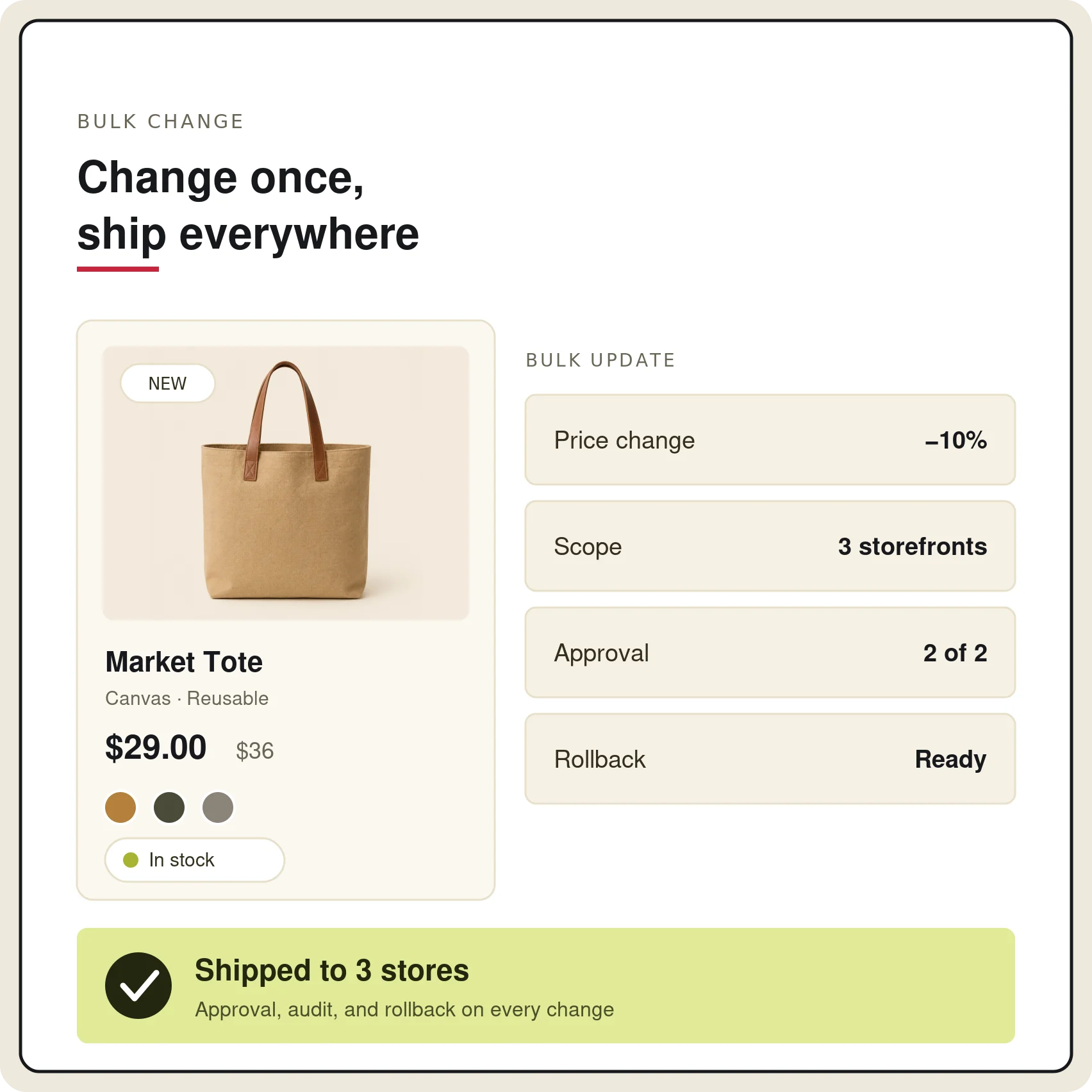
04 Change once, ship everywhere

Update the catalog across every property from one change

Edit a product, a price, a bundle, or a translation once, set the scope, and ship it across the storefronts you choose, with approval, audit, and rollback.

For teams running catalogs across more than one digital property.

Core dna models multi-store, multi-brand, multi-region, and franchise catalogs from one governed platform, with shared control across products, pricing, inventory, and content, and local overrides where they matter.

Your catalog models everything you sell, from products to programs

Core dna turns the objects your business runs on into first-class catalog entities. Products, variants, and bundles sit alongside subscriptions, courses, memberships, dealers, locations, and programs, each with its own attributes, pricing logic, and rules, defined as configuration.

  • Custom entities for the objects your business runs on
  • Catalog structure, pricing logic, and rules as configuration, not custom code
  • Products, variants, bundles, kits, and digital goods in one model
  • Attributes, categories, and relationships modeled to your business
Custom entities
Image
Image

Model every variant, bundle, and kit from one product record

A product carries its variants, options, bundles, kits, and digital goods in one record. Change a variant, a bundle price, or an attribute, and every storefront that sells it reads the change from the same source.

  • Variants, options, bundles, kits, and digital goods on one record
  • Per-currency pricing, RRP, and cost on every item
  • Categories, attributes, and relationships shared across storefronts
  • One source every storefront, search index, and feed reads from
eCommerce platform

Give every account and region the right catalog and price

Set customer-specific catalogs and price books per account, per region, per brand. Contract, tiered, and volume pricing apply automatically, and each storefront sells only what you scope to it.

  • Customer-specific catalogs and price books per account
  • Contract, tiered, and volume pricing applied automatically
  • Multi-catalog, multi-currency, multi-region scoping
  • Availability set per site, brand, warehouse, and location
Pricing and discounts
Image
Image

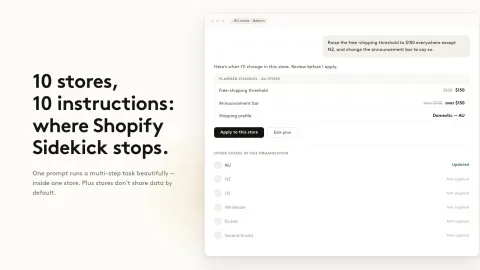
Update the catalog across every storefront from one prompt

Describe the change in plain language, set the scope, and Core dna prepares the catalog update across the storefronts you choose. Every change moves through approval, shows a store-by-store preview, and can roll back.

  • Make plain-language catalog changes across storefronts
  • Route bulk edits through approval, audit, and rollback
  • Connect Claude, ChatGPT, or any MCP client
  • Bulk-edit prices, attributes, categories, and translations by scope
Core dna MCP server

One catalog, every storefront. Same governance, same prompt, same team.

The product, the variant, the price book, the translation, the availability rule, modeled once, governed once, shipped to every property you run.

The catalog fundamentals, built for multi-property operations

Model products, variants, bundles, pricing, categories, media, and translations from one platform, with shared control and local overrides where they matter.

Govern every product, every price, every catalog change.

Audit log

Every product edit, price change, bundle update, and category move writes to an audit log, with who, what, and when.

Roles and permissions

Per-catalog permissions control who edits products, who sets pricing, and who publishes to each storefront.

Approval flow

Every catalog change is a draft until two reviewers approve. The same approval flow that governs content governs the catalog.

Revisions

Every change to a product, price, or category writes a new revision. Roll any item back to a previous state.

USE CASES the universality of the catalog on Core dna

Every Core dna operator runs a catalog.

MEMBERSHIP ORGANIZATIONS MEMBERSHIP TIERS · GATED PRODUCTS · COURSES

Model membership tiers, gated products, and course catalogs.

Sell memberships, gated products, and courses from one catalog. Entitlements, tiers, and renewals modeled as catalog objects.

Membership tiers Gated products Courses Renewals
DISTRIBUTORS AND B2B CONTRACT CATALOG · PRICE BOOKS · KITS

Model account-specific catalogs with contract pricing applied automatically.

Customer-specific products, contract-only variants, agreed price books, kits, and reorder lists per account.

Contract catalog Price books Kits Reorder lists Parts
FRANCHISE NETWORKS SHARED CATALOG · LOCAL PRICING · LOCAL STOCK

Run one catalog across every location, priced and stocked locally.

One shared catalog serves every franchise, with local pricing, local availability, and location-specific products.

Shared catalog Local pricing Local stock Location products
MULTI-BRAND RETAIL MULTI-BRAND · VARIANTS · MULTI-LANGUAGE

Model every brand, variant, and language in one catalog.

Cross-brand catalogs, per-brand merchandising, per-region currency, and per-storefront language, from one model.

Multi-brand Variants Currencies Languages
LEARNING AND CERTIFICATION COURSES · MODULES · CERTIFICATIONS · BUNDLES

Model courses, modules, and certifications as catalog objects.

Sell courses, module bundles, and certifications from the same catalog, with prerequisites and entitlements modeled in.

Courses Modules Certifications Bundles
NON-PROFIT AND CAUSE PROGRAMS · DONATIONS · MEMBERSHIPS

Model programs, donations, and memberships in one catalog.

Offer programs, donation tiers, memberships, and merchandise from one model, scoped per campaign and region.

Programs Donation tiers Memberships Merchandise

Connected to every record, every workflow, and every agent.

Pricing and price books

Per-currency, contract, tiered, and volume pricing read from the same catalog the storefront sells from.

Inventory and stock

Stock per warehouse, reserved, on-hand, and in-transit, tied to every product and variant.

Orders and fulfillment

Orders, quotes, and fulfillments reference the same product record the catalog models.

Search and merchandising

Search indexes the live catalog, ranked on stock and price, without a copy of the data.

Content and pages

Product content, descriptions, and media share the CMS that runs every page.

Customers and accounts

B2B accounts, groups, and members drive which catalog and price book each buyer sees.

Custom entities

Dealers, locations, courses, and programs modeled as catalog objects with their own rules.

Agentic and MCP

Create, edit, scope, and audit the catalog via Claude, ChatGPT, or any MCP client.

FAQ

Questions teams ask before they consolidate their catalog.

Yes. Catalogs scale to millions of products and variants per property, with attributes, bundles, and relationships modeled per item.

Yes. One model holds many catalogs. Scope products, pricing, currency, and language per site, brand, region, and account.

No. Catalog structure, attributes, pricing logic, and rules are configuration. Model a new product type or custom entity without custom code.

Set customer-specific catalogs and price books per account. Contract, tiered, and volume pricing apply automatically at checkout and on quotes.

Yes. Connectors sync products, pricing, and stock with SAP, NetSuite, and existing PIMs, with APIs and SDKs for the rest.

Yes. Edit by scope in plain language or in bulk, route through approval, preview store-by-store, and roll back.

GET STARTED

Bring your hardest catalog requirement to the demo.

Tell us the product model, the pricing rule, the catalog update, or the buyer type that takes too long today. We will show you how it works on Core dna.