Duplicate URLs, like a trailing slash or an old path, resolve with a site-wide rule, not a one-off fix per page.

Built around real questions
Model content around the topics, entities and questions your audience actually asks.

Model content around the topics, entities and questions your audience actually asks.

Reuse verified facts across every page instead of re-keying them and hoping they match.

Assign clear owners and approval workflows so nothing goes live unchecked.
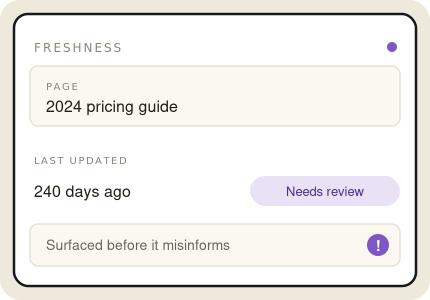
Surface content that is drifting out of date before it starts feeding wrong answers.

Schedule updates and publishing so refreshes happen on time, not when someone remembers.
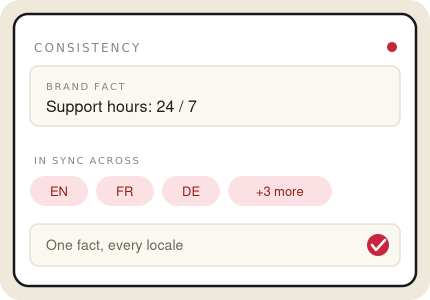
Keep entity and brand facts consistent across every property and language.
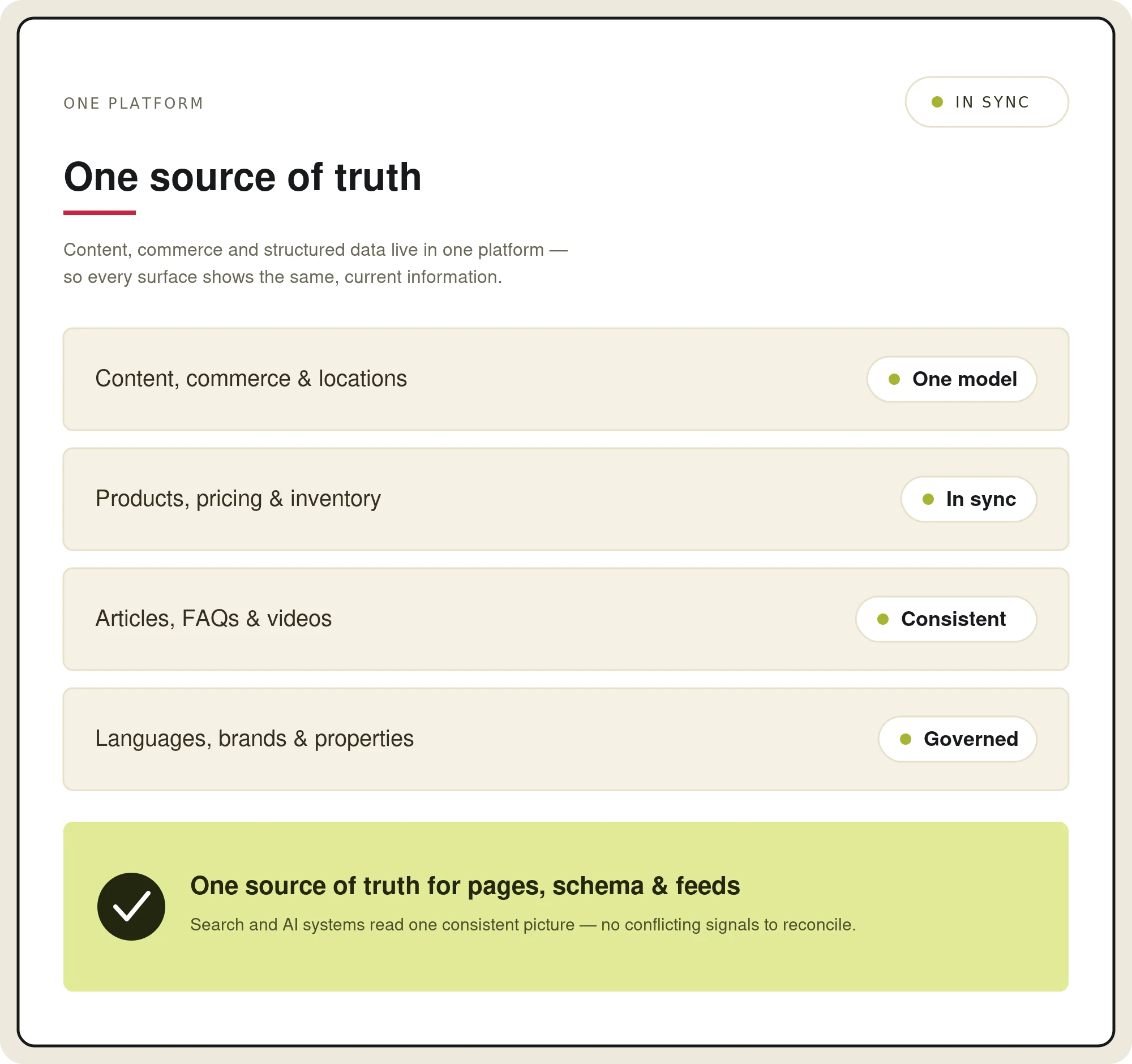
Because content, commerce and structured data live in the same platform, search engines and AI systems read a consistent picture of your brand instead of conflicting signals from disconnected tools. That is where the platform value becomes tangible: fewer contradictions to reconcile, and less manual work keeping systems in step.
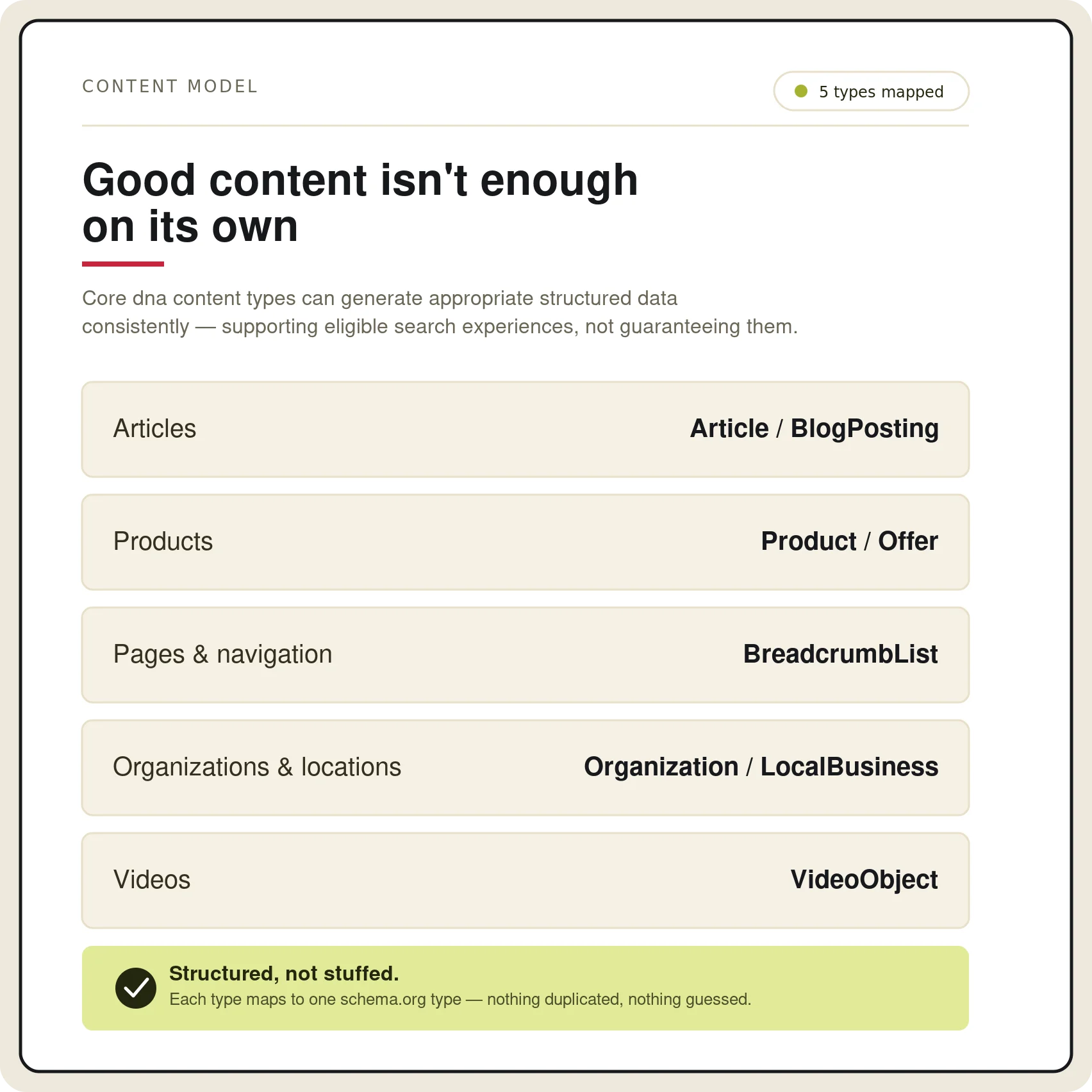
Structured data gives search engines clearer signals about what your content represents. It can improve understanding and eligibility for supported search experiences, but it works alongside crawlability, content quality, and authority.
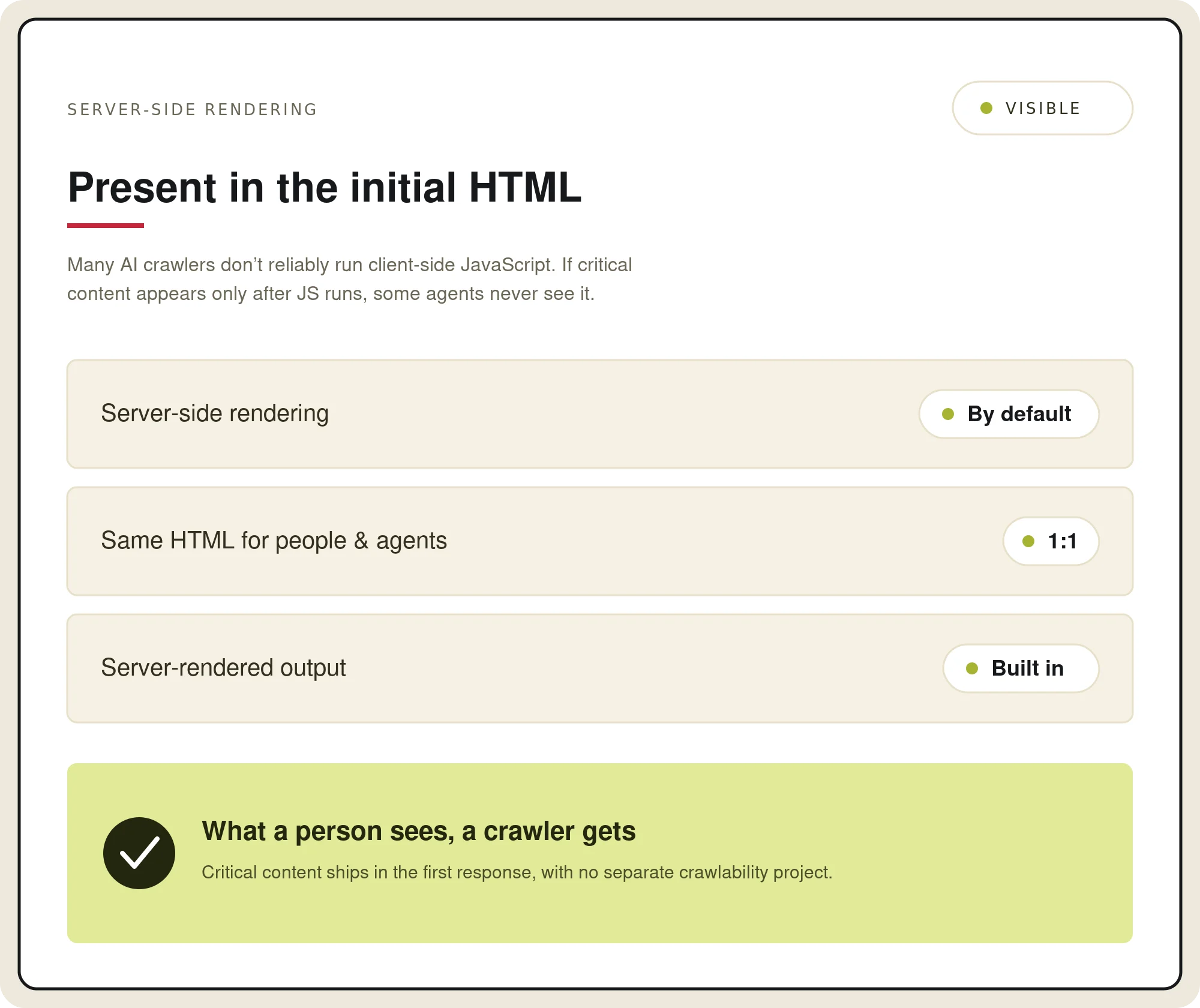
Many AI crawlers do not reliably execute client-side JavaScript. If critical content only appears after JavaScript runs, some agents may never see it.
Keep product descriptions, variants, pricing, inventory, and availability structured and synchronized, so search engines and shopping agents receive accurate commercial information rather than stale page content.

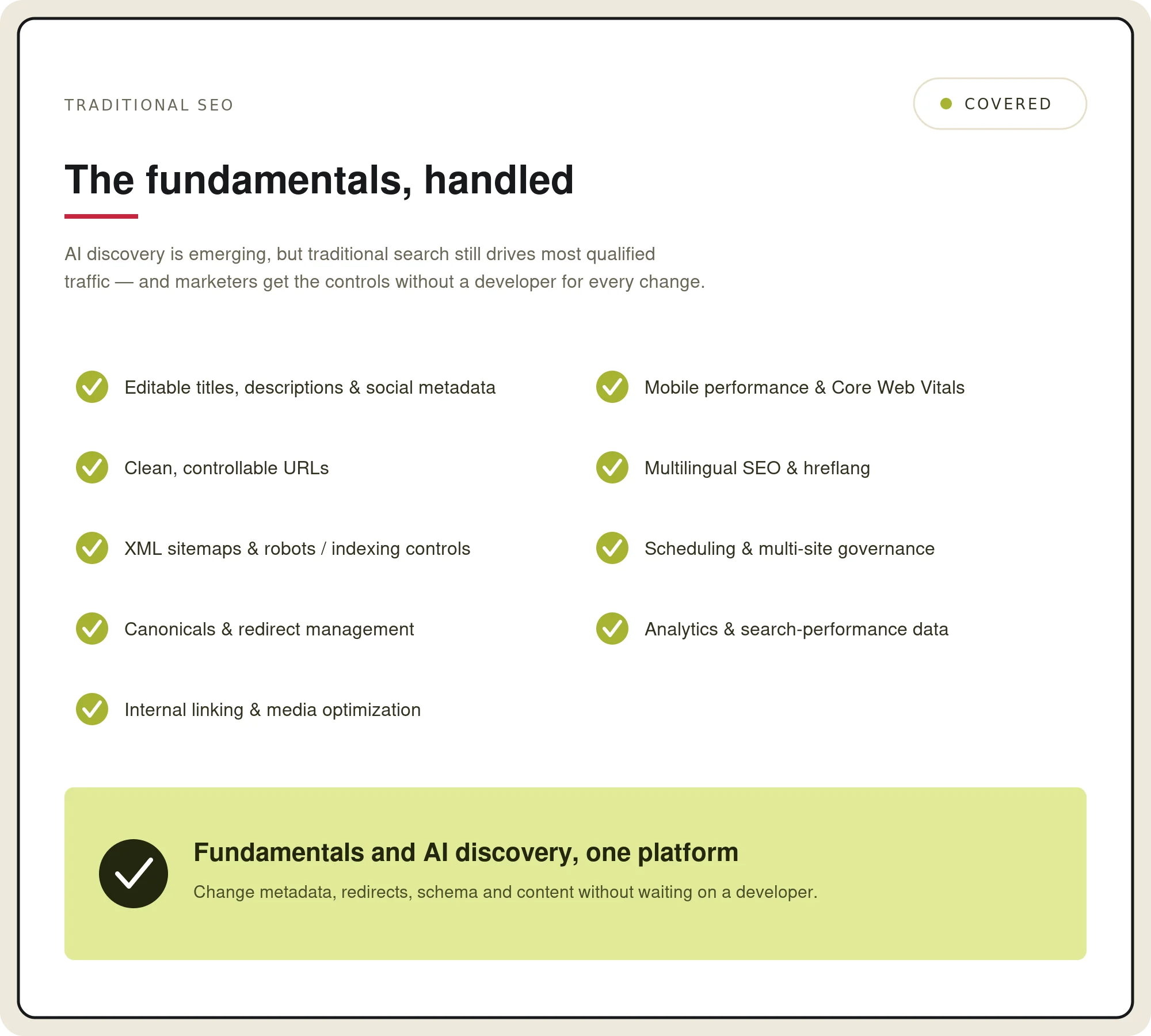
Core dna gives marketing teams the controls to improve AI discovery and AI visibility without relying on developers for every metadata change, redirect or content refresh.
Duplicate URLs, like a trailing slash or an old path, resolve with a site-wide rule, not a one-off fix per page.
A recurring job checks for accidental no-index tags and missing image alt text on a weekly cadence.
Server-rendered and CDN-served, exactly what Core Web Vitals measure, and Core Web Vitals are a confirmed ranking factor.
Language and hreflang data are managed as first-class content, not bolted on per translated page.
Too many sites stay invisible to AI search engines
Most of it isn't exotic. AI search optimization is mostly a rendering and structure problem.
Many AI crawlers do not reliably execute client-side JavaScript. If critical content only appears after JavaScript runs, some agents may never see it.
Training and search crawlers do different jobs. GPTBot relates to model training, while OAI-SearchBot is used to surface pages in ChatGPT search. A site can allow one and block the other. OpenAI treats them as separate controls.
Unstructured content gives search and AI systems fewer reliable signals about what information represents and how different elements relate.
A stray no-index tag or a missing alt attribute sits there until someone happens to notice.
MCP doesn't change rankings. It's the operational layer that finds problems and fixes them before they cost you visibility.
The same connection keeps content structured and current. It doesn't make a page eligible for an AI answer by itself.
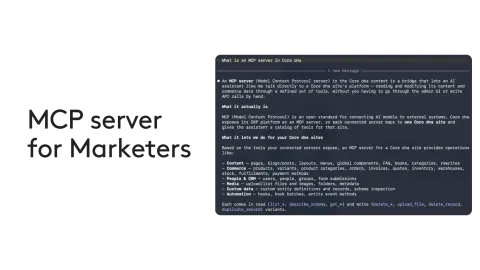
Connect your AI agent to Core dna
Three steps, plain language, your approval where you want it.
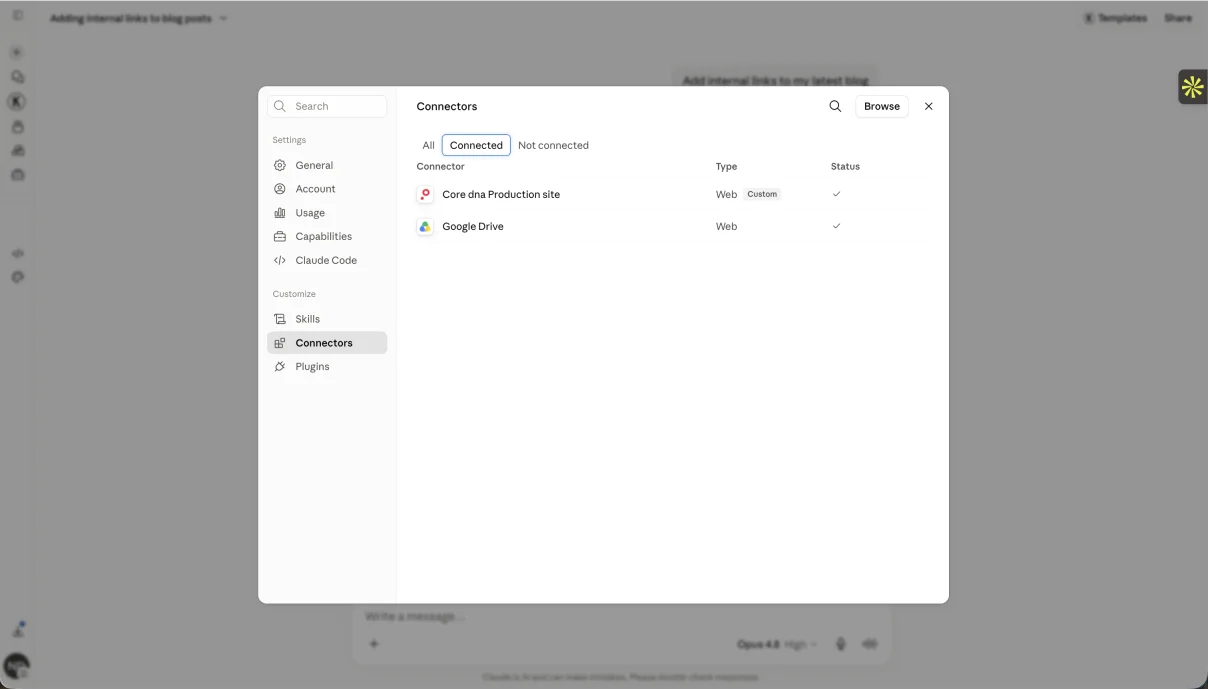



Link Claude or your agent of choice via MCP.

Tell it what to check, link, or update, in plain language.

On a schedule or on demand, with approval steps where you want them.


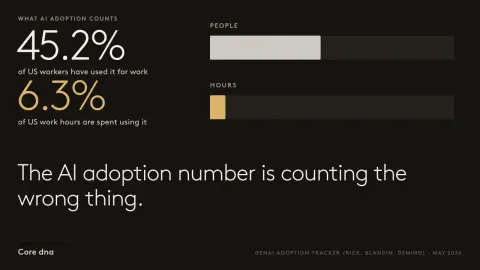






See how your site looks to an AI agent
Book a 20 minute walkthrough and we'll show you exactly what an AI crawler sees on your site today.