Optimizely is a .NET content management system, sold alongside separate products for commerce, experimentation and content marketing. It's a good fit if you have .NET developers or a partner agency, and you want to assemble the products you need around the CMS.
It's a weaker fit if you run many sites or brands and want content, commerce and B2B accounts in one system, if your marketing team needs to make changes without a developer, or if you'd like a platform that stays current without upgrade projects.
This post covers why teams review Optimizely, how to choose, and seven platforms to compare for content and commerce.
Optimizely is a strong platform with a long history in .NET content management, and for many teams it stays the right choice. When teams do compare, these are the reasons that come up most.
Day-to-day work depends on developers. On G2, where Optimizely CMS scores 4.0 out of 5 from 203 reviews, the learning curve is the most-mentioned downside. Reviewers say the platform is hard to adopt without .NET skills, and some note that changes such as styling the built-in forms take custom development.
Content and commerce are separate products. Optimizely offers its CMS, commerce, experimentation and content marketing separately. That gives you a choice over what you buy. It also means more licenses and integrations to manage as you add them.
Major upgrades are projects. Optimizely CMS 13 arrived in March 2026. Optimizely's CMS 13 FAQ puts the move from CMS 12 at two to six months, with .NET 10 and, if you run a store, Commerce 15.
So when is the right moment to compare?
This is our take
Before a renewal or a major upgrade, when you already have the budget and the project team lined up. For some teams the comparison will confirm that Optimizely is still the right platform. For others, especially those adding sites, editors or a store, it will show that one platform for content and commerce fits better.
7 Optimizely CMS alternatives and competitors
1. Core dna
Choose Core dna if you want your website, your online store and your B2B accounts on one platform, and you run more than one site, brand or location from it. Pages, products, orders and customer accounts sit in the same system, so your content and commerce teams work in one admin with one set of permissions.
You also stop planning around version upgrades. Every Core dna customer runs on the same codebase and gets updates continuously, so there is no equivalent of a CMS 12 to CMS 13 project to budget for.
Platform and hosting
Unified SaaS: content, commerce, learning and orchestration on one platform and one codebase. With custom entities and workflows, you configure what your business needs on the same platform, such as dealer onboarding or a quote approval process.
Content, commerce, B2B accounts, learning and workflows are built in, so you need fewer plugins and add-ons for everyday work. That means fewer contracts, fewer integrations to maintain, and fewer outside vendors with access to your site.
Content and commerce
- Many sites, brands or locations from one admin, with shared templates, catalog and prices that each site inherits
- B2C and B2B commerce on the same backend: trade accounts with credit terms, quotes and invoices, and stock by store or warehouse
- EDI and punchout through integration with the software you already use for them
- A learning management system on the same platform, for training customers, dealers or staff
Who can change your live site
- Head office sets the roles. Local teams, franchisees or dealers get their own login and edit only what you open to them.
- Changes can go to an approver before they publish, and every change is saved as a revision you can preview and roll back.
- AI assistants such as Claude and ChatGPT can update pages, products and prices through Core dna's MCP server. It is off by default, you turn it on per user, and an agent's changes go through the same approval workflow as a person's.
Migration
The people who build the platform run your implementation. Every site on Core dna today was migrated by our own team, redirects included.
Plans and pricing
Plans are scoped to the sites, stores and volume you run, with no per-seat charges, so adding editors, dealers or store staff doesn't change your price.
Ask Core dna: which integrations you'll need at launch (ERP, POS, shipping, your testing tool), and what the working prototype in discovery will cover for one of your sites.
See your website, your store and your B2B accounts run on one platform.
Pages, products, orders and approvals in one admin, connected to your ERP.
30 minutes. Bring your site list and your current stack.
2. Adobe Experience Manager with Adobe Commerce
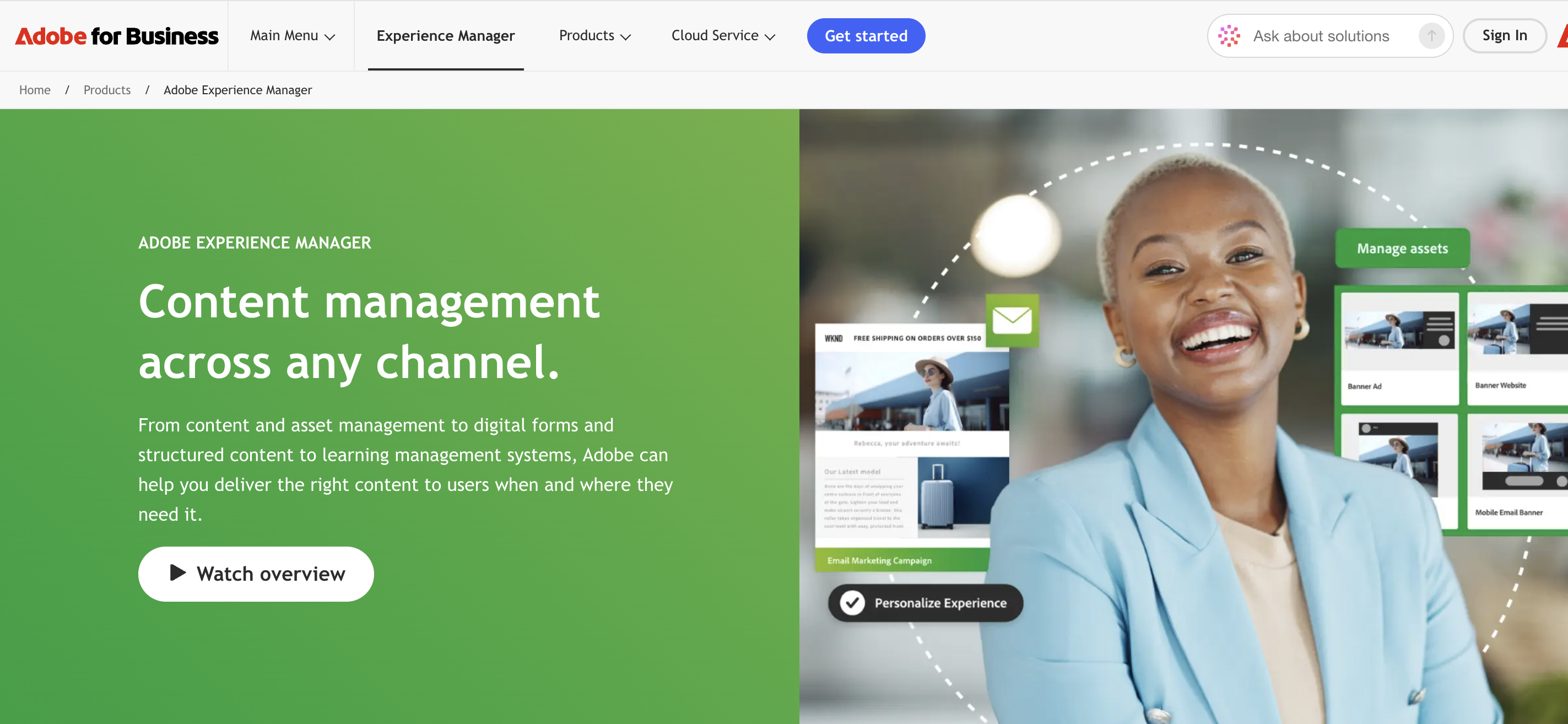 Consider Adobe if you're a large brand already running on Adobe's marketing tools. Adobe Experience Manager (AEM) Sites handles content, and its Multi Site Manager lets you build a source site and roll changes out to copies for each market or brand.
Like Optimizely, Adobe keeps content and commerce in separate products. You license Adobe Commerce separately and connect it to AEM through Adobe's Commerce Integration Framework. Adobe Commerce includes B2B features such as shared catalogs, company accounts and negotiated quotes.
Platform and hosting
Cloud service (AEM as a Cloud Service), with managed and self-hosted options for existing customers. You'll need developers or an Adobe partner to build and run it.
Plans and pricing
Adobe doesn't publish AEM prices, so you'll need a quote from Adobe sales.
Ask Adobe: what AEM and Adobe Commerce cost together in year one, including the partner who builds the integration between them.
3. Sitecore
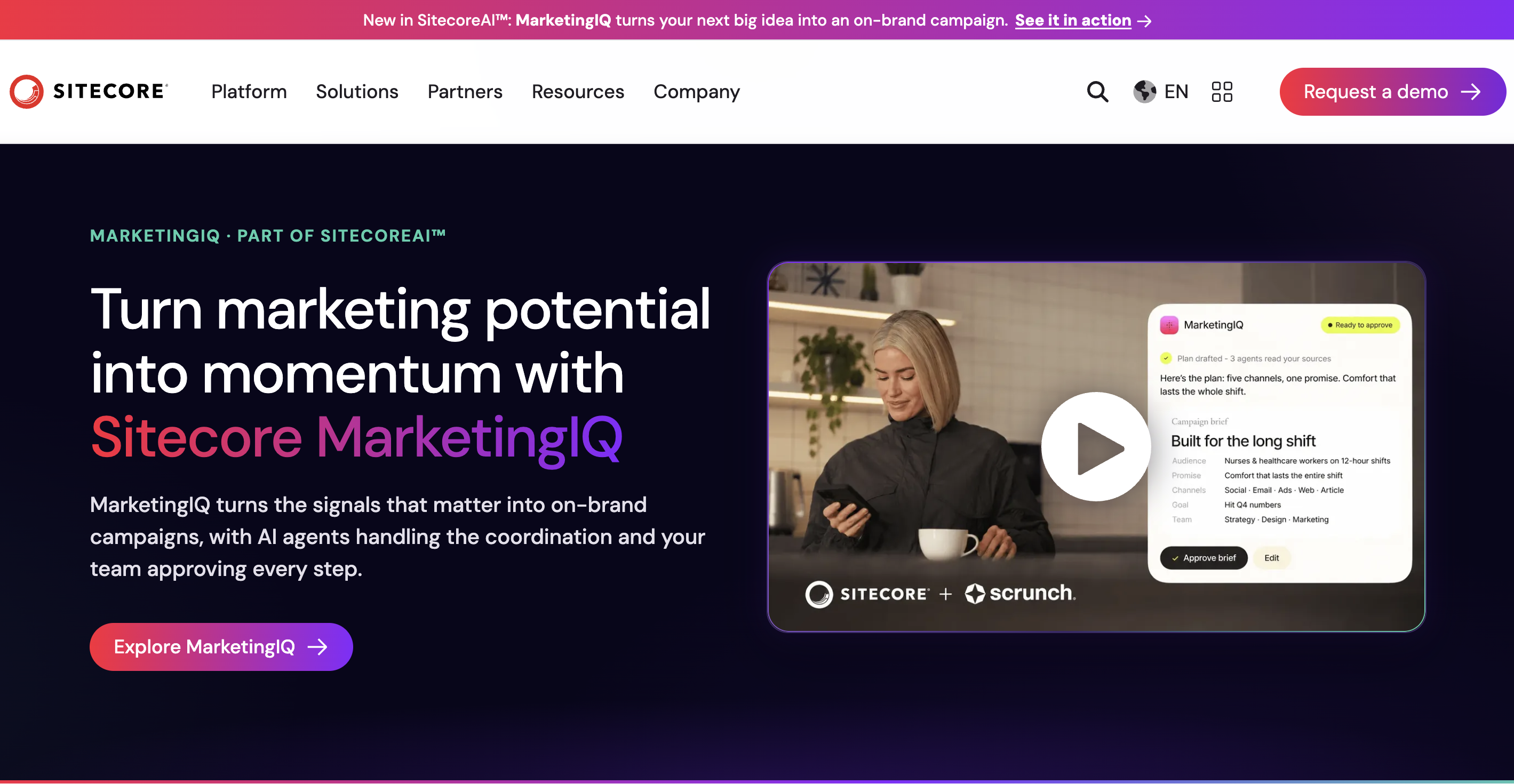
Consider Sitecore if your team has a .NET history and you have a partner to build with. Sitecore and Optimizely have competed for the same customers for years, so your developers and agency will find the concepts familiar.
Sitecore's current platform is SitecoreAI, announced in late 2025 as the next stage of XM Cloud. It brings content management, personalization, search and digital asset management together, with prebuilt AI agents for content and SEO work. If you know Sitecore from XP or XM, moving to SitecoreAI is a migration, so ask what it involves.
Commerce is Sitecore OrderCloud, a separate headless, API-first product that supports B2B and B2C. Your developers build the storefront on its APIs.
Platform and hosting
SaaS for SitecoreAI and OrderCloud.
Plans and pricing
Sitecore doesn't publish prices. Costs depend on your number of sites, traffic and usage.
Ask Sitecore: which SitecoreAI capabilities are included in your quote and which are the full paid products, and who builds your OrderCloud storefront.
4. Xperience by Kentico
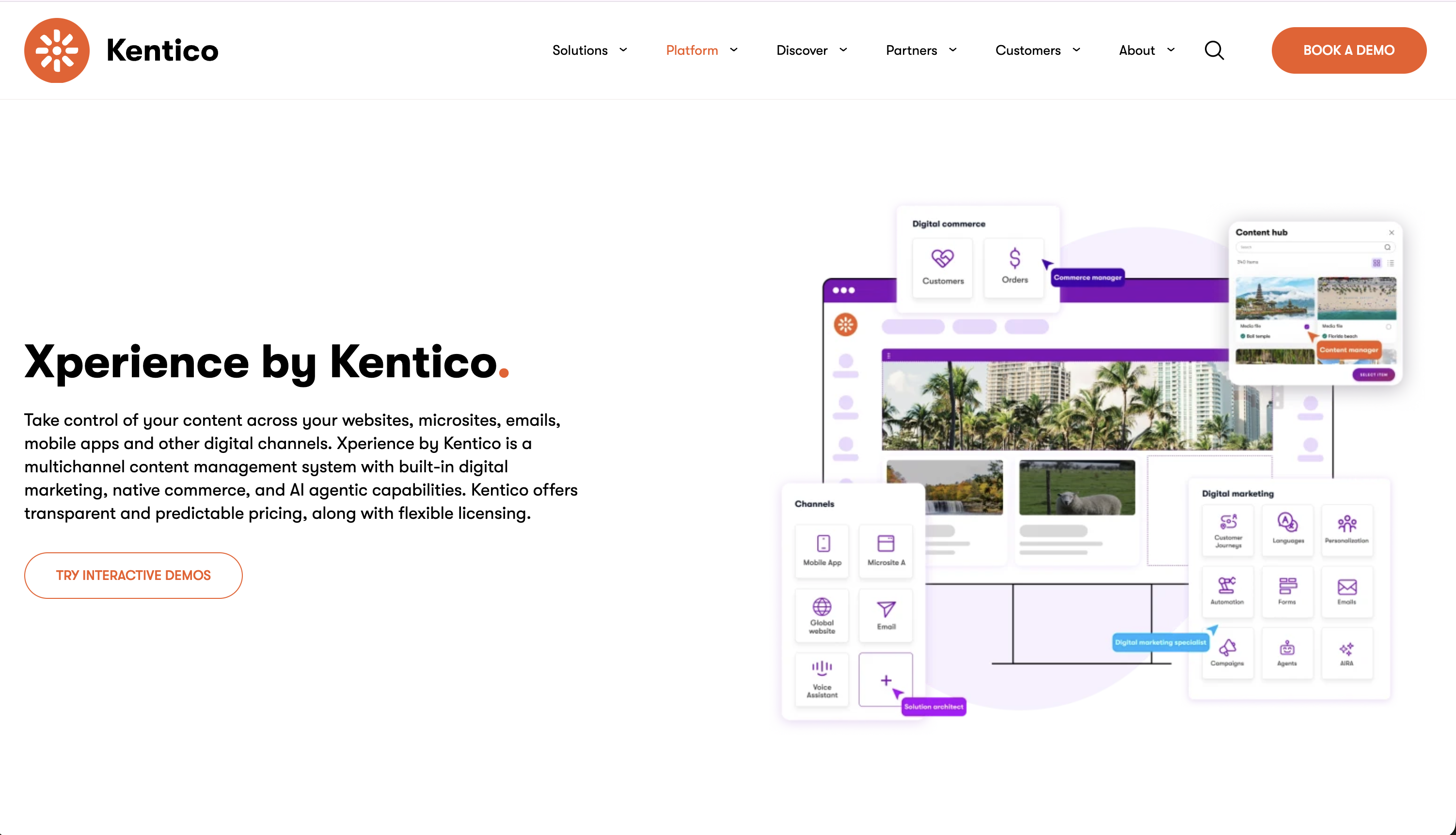
Consider Xperience by Kentico if you want to stay on .NET with a smaller team. It is the closest in shape to Optimizely CMS for a mid-market company: a .NET CMS with marketing tools built in, sold with managed hosting.
Kentico added commerce to the platform in 2025. Its digital commerce page lists a product catalog, cart, configurable checkout, promotions and orders, with no external commerce platform required. You connect your own payment and delivery providers, and your ERP through APIs. B2B features such as company accounts and quotes are not documented as built in.
Platform and hosting
SaaS, or self-managed if you prefer to host it yourself.
Plans and pricing
Kentico prices by quote, based on the functionality and usage you need.
Ask Kentico: how B2B accounts, customer pricing and quotes would be built for your store, and by whom.
Related: Kentico alternatives
5. Umbraco
 Consider Umbraco if you have .NET developers and want a CMS you control. Umbraco CMS is open source and free to use, and it runs on the latest .NET, so your Optimizely developers can work in it from day one.
You can host it yourself or use Umbraco Cloud. Umbraco Commerce and Umbraco Engage are paid add-ons. On Umbraco Cloud, Baselines let you reuse a master project across several sites and roll updates out to them.
Platform and hosting
Self-hosted, or Umbraco Cloud as a managed service.
Plans and pricing
Umbraco publishes its Cloud prices: Starter at €45 a month, Standard at €280, Professional at €730, and Enterprise by quote. Commerce and Engage are priced separately.
Ask Umbraco: what Commerce and Engage add to your price, and which partner would build and support your site.
6. Contentstack
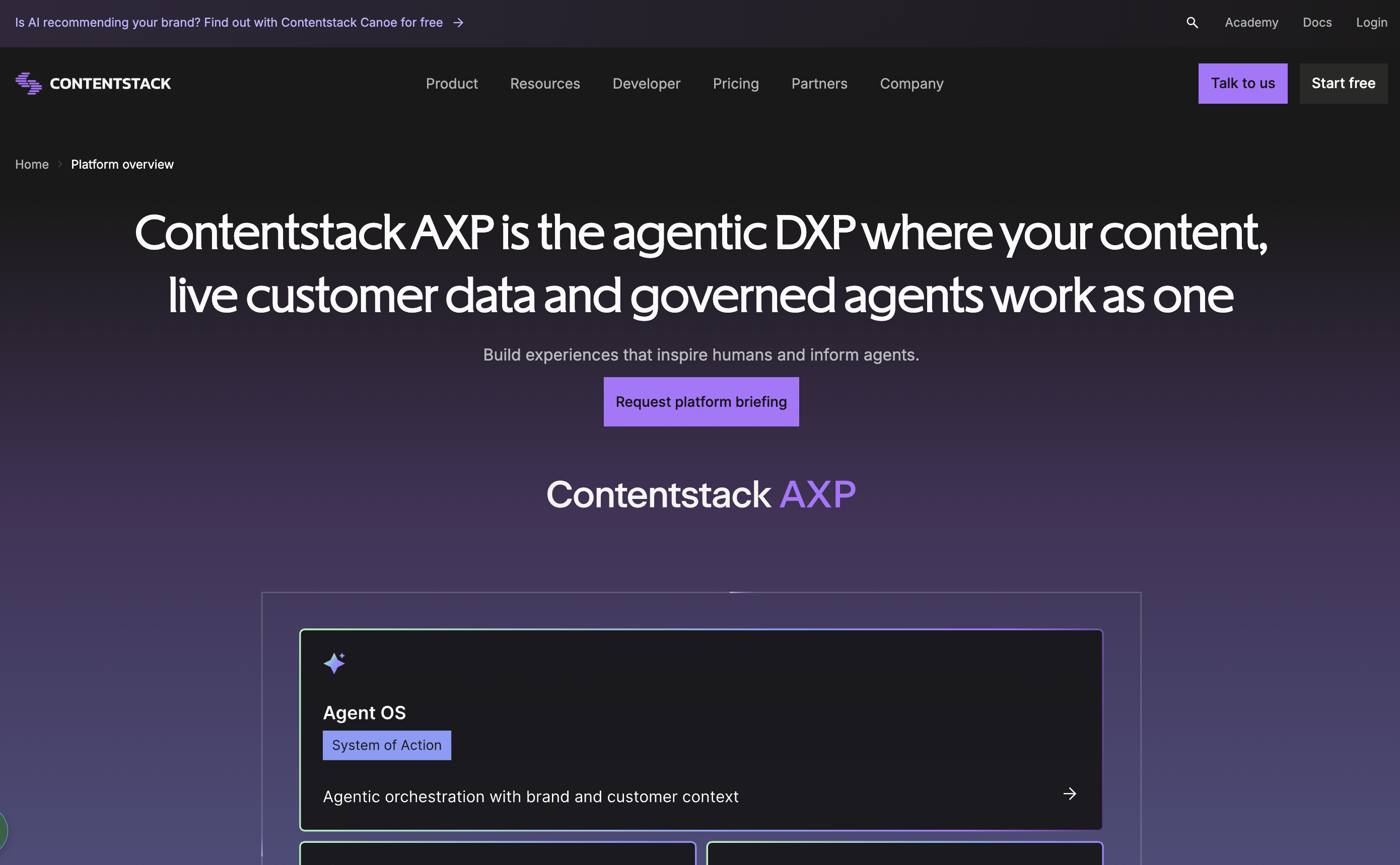
Consider Contentstack if you want a headless CMS and already have a commerce platform you're happy with. Your developers build the front end, and content reaches your website, app and other channels through APIs.
Contentstack includes its Agent OS for AI agents on every plan. Its pricing page lists no commerce features, so you'll pair it with a commerce platform and maintain the integration between the two.
Platform and hosting
SaaS, headless.
Plans and pricing
Contentstack publishes its prices: a free plan, Build at $29 a month, Growth at $299 a month, and Enterprise by quote.
Ask Contentstack: which commerce platforms its customers pair it with most, and who maintains that integration.
Related: Contentstack alternatives
7. BigCommerce
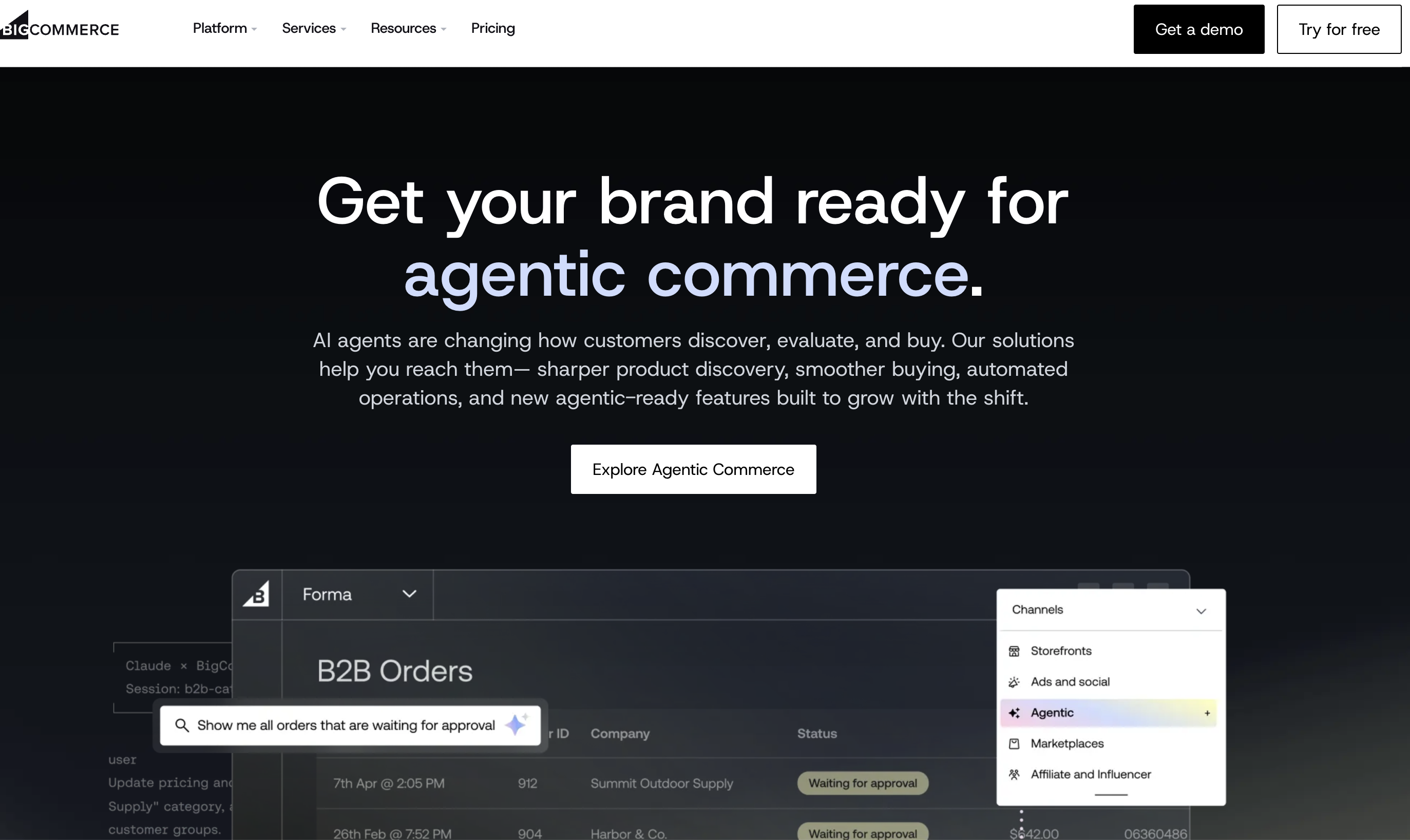
Consider BigCommerce if you're replacing Optimizely Configured Commerce and B2B ordering comes first. Its B2B Edition adds company accounts with buyer roles, quotes, an invoice portal, shared shopping lists and the ability for sales reps to order on a customer's behalf. It works with BigCommerce's multi-storefront feature if you run several stores.
BigCommerce is a commerce platform first. If your site carries a lot of content, plan for a separate CMS next to it.
Platform and hosting
SaaS.
Plans and pricing
B2B Edition builds on the BigCommerce Enterprise plan, and BigCommerce asks you to contact sales for its price.
Ask BigCommerce: whether your content needs fit its built-in pages, or which CMS it recommends alongside.
Related: BigCommerce alternatives
Which platforms include commerce, and which need a second product?
| Platform | Content | Commerce | B2B accounts and quotes | Hosting | Published price |
|---|---|---|---|---|---|
| Core dna | Included | Included | Included; EDI and punchout by integration | SaaS | By quote, no per-seat charges |
| Adobe | AEM Sites | Adobe Commerce, licensed separately | In Adobe Commerce | Cloud service | No |
| Sitecore | SitecoreAI | OrderCloud, a separate headless product | Built on OrderCloud's APIs | SaaS | No |
| Xperience by Kentico | Included | Included | Not documented | SaaS or self-managed | No |
| Umbraco | Included, open source | Umbraco Commerce add-on | Not documented | Self-hosted or Umbraco Cloud | Cloud from €45 a month |
| Contentstack | Included, headless | Not included | Not included | SaaS | Free, $29 and $299 a month; Enterprise by quote |
| BigCommerce | Basic pages; pair with a CMS | Included | B2B Edition on the Enterprise plan | SaaS | No |
Optimizely itself sits in the "second product" group: Optimizely CMS for content, and Configured Commerce or Commerce Connect for the store.
How do you choose an Optimizely alternative?
1. List the Optimizely products you run, and which ones you'd replace. Optimizely sells a CMS, two commerce products (Configured Commerce for B2B and Commerce Connect), experimentation, and more. Swapping a testing tool takes weeks. Moving your CMS or your store is a project with a migration, redirects and integrations. Know which one you're scoping before you talk to vendors.
2. Decide whether content and commerce should run on one platform or two. On Optimizely they are separate products that work together. Some alternatives below keep that split, and some put pages, products, orders and customer accounts in one system. If your content and commerce teams edit the same pages, one system saves you the integration.
3. Ask who can change your live site, and how. For each vendor, ask which roles can publish, what goes through approval, how you roll a change back, and whether the same rules apply to AI agents.
Our RFP questions guide has the full list of questions to send vendors.
What if you only need to replace the testing tool?
Then you don't need a new CMS. Web Experimentation is a separate product, and you can swap it without touching your content or your store. VWO, AB Tasty, Kameleoon and Convert are established client-side testing tools.
Who runs content and commerce on Core dna?
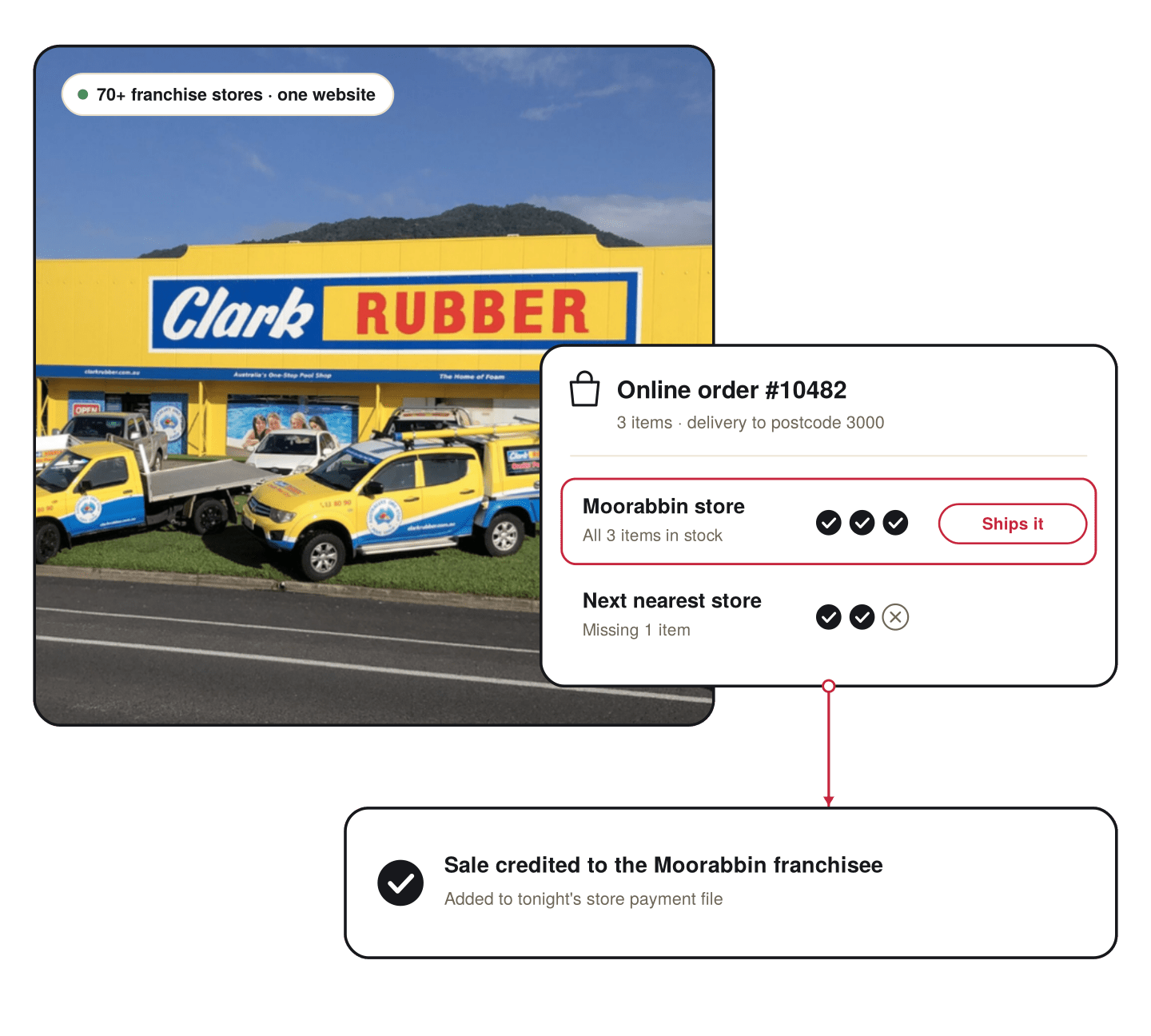
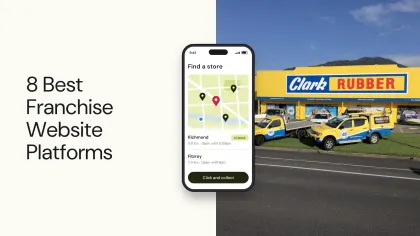
Clark Rubber runs its national website, a page for every one of its 60+ franchise stores, its online store and its trade accounts on Core dna. Head office sets the catalog and prices once, each store sees its own stock and order queue, and every online order goes to a store that can fill it. Read the Clark Rubber story.
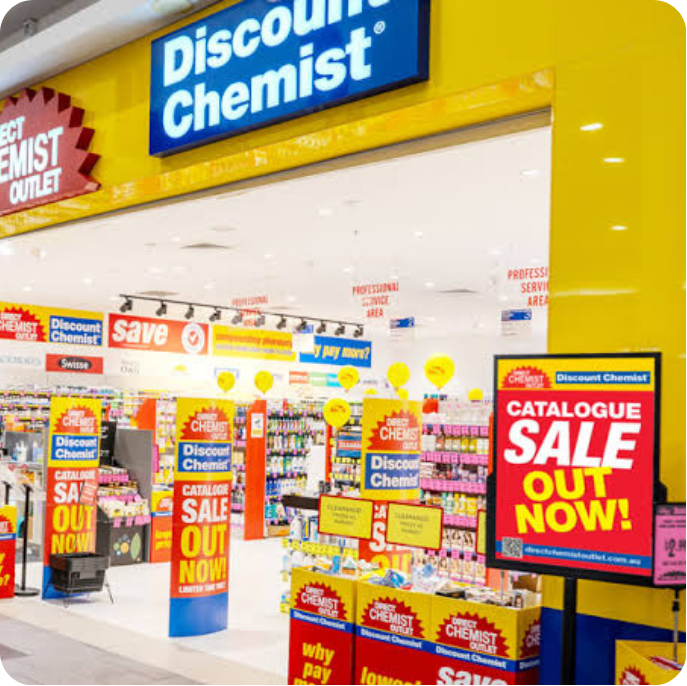
Direct Chemist Outlet is moving its 150+ franchised pharmacies onto Core dna, with B2B ordering for its stores on the same platform as its website. Read the DCO story.
Save a Life is translating its website through Core dna's MCP server, with an AI assistant doing the drafting and its team approving what goes live.
Is Optimizely a CMS?
Yes, among other things. Optimizely CMS is a .NET content management system. Optimizely also sells separate products for commerce, experimentation and content marketing.
Which Optimizely alternative suits marketing teams without developers?
Look for a platform where marketers build and publish pages from templates without a deployment. Core dna and Xperience by Kentico are built for that. Headless options such as Contentstack need developers to build and maintain the front end.
Which Optimizely alternatives support B2B and B2C?
Core dna runs B2B and B2C on the same backend. Adobe Commerce includes B2B features next to its B2C store, BigCommerce adds them through B2B Edition, and Sitecore OrderCloud supports both through its APIs.
Optimizely vs Sitecore: which fits?
They are close in shape. Both have a .NET history, both sell commerce as a separate product, and both usually need developers or a partner agency. Choose on the skills and partner you already have. Moving from one to the other is a full migration either way.
Do I have to upgrade from Optimizely CMS 12 to CMS 13?
Not right away. Optimizely doesn't set a formal end-of-life date for CMS versions. It supports the current major version and backports selected security fixes to the previous one. When you do upgrade, Optimizely estimates two to six months, and CMS 13 requires .NET 10.
What is the best alternative to Optimizely CMS?
It depends on what you run. If you want content and commerce on one platform across several sites, look at Core dna. If you want to stay on .NET, look at Xperience by Kentico, Umbraco or Sitecore. If you want a headless CMS next to an existing store, look at Contentstack.
What is the best alternative to Optimizely Configured Commerce for B2B?
BigCommerce B2B Edition and Adobe Commerce both include company accounts and quotes. Core dna runs B2B accounts, quotes and invoices on the same platform as your website and your B2C store, which suits manufacturers, distributors and franchise networks that sell to trade and consumers.
Summarize with