
Headless CMS with Native Commerce: What You Need to Know
What Is a Headless CMS with Native Commerce?
A headless CMS with native commerce capabilities combines content management with built-in ecommerce functionality in a single platform.
Unlike traditional setups that require integrating separate CMS and commerce systems, these unified solutions offer content creation, product information management (PIM), checkout flows, and order processing under one roof.
The "headless" architecture decouples the backend (where content and commerce data are managed) from the frontend presentation layer. Content and product data are delivered through APIs to any channel—websites, mobile apps, IoT devices, or digital kiosks.
This flexibility enables organizations to create consistent omnichannel experiences without the complexity of managing multiple vendors or fragile plugin ecosystems.
Native commerce means the platform handles core ecommerce functions such as product catalogs, inventory, pricing, cart, checkout, payments, and order management, without requiring third-party commerce engines.
This integration streamlines workflows, reduces vendor sprawl, and gives marketing and commerce teams a unified workspace.
Why Choose Native Commerce Over Separate Platforms?
Businesses evaluating headless solutions often face a choice: select a dedicated headless CMS and pair it with a separate commerce platform, or choose a unified platform with native commerce.
Unified Workflow and Single Source of Truth
When content and commerce live in one system, teams manage products, campaigns, and customer experiences from a single interface. Marketing can embed product data directly into blog posts, landing pages, and personalized journeys without switching tools or waiting for developers to build custom integrations. Real-time data synchronization across CRM, ERP, and other systems ensures inventory, pricing, and customer information stay accurate across every touchpoint.
Faster Time to Market
Reducing the number of integrations shortens development cycles. Instead of coordinating APIs between a CMS and a separate commerce backend, teams configure workflows and launch experiences faster. Low-code page builders and orchestration tools allow non-technical users to deploy new storefronts, microsites, or campaigns without engineering bottlenecks.
Reduced Operational Complexity
Managing a single platform vendor eliminates the finger-pointing that occurs when issues span multiple systems. Organizations benefit from unified support, consistent security updates, and one upgrade schedule. Managed infrastructure, auto-scaling, and uptime SLAs further reduce the DevOps burden.
Performance and SEO Advantages
Native integration often delivers faster page loads and better Core Web Vitals scores, which directly impact search rankings and user experience. With fewer external API calls and optimized data flows, headless platforms with native commerce can outperform stitched-together solutions on speed and reliability.
Key Features to Look for in a Headless CMS with Native Commerce
When evaluating platforms, prioritize features that align with your business model, scale, and technical requirements.
Flexible API Architecture
Look for RESTful and GraphQL APIs that allow custom frontend frameworks (React, Vue, Next.js) and seamless integration with CRM, ERP, and marketing automation tools. The API layer should support custom checkout flows, progressive web apps (PWAs), and headless storefronts.
B2B and B2C Capabilities
Top platforms handle complex B2B use cases—customer-specific pricing, bulk orders, account hierarchies, quote management, and approval workflows—alongside B2C storefronts with personalization, subscriptions, and recurring billing.
Multi-Site and Localization Support
Organizations with global footprints need unlimited sites, multi-language content, regional pricing, and localized tax and shipping rules—all managed from one platform.
Content Orchestration and Workflow Automation
Orchestration engines connect content, commerce, and external systems to trigger workflows, automate customer journeys, and build AI agents for SEO, personalization, or translation tasks. This "digital nerve center" approach eliminates manual handoffs and accelerates innovation.
Managed Infrastructure and Security
Look for platforms that provide built-in security, auto-scaling, continuous core upgrades, and guaranteed uptime (99.95%+ SLAs). Managed infrastructure lets teams focus on strategy rather than DevOps.
Leading Headless CMS Platforms with Native Commerce
Several platforms stand out for combining headless CMS capabilities with integrated commerce functionality.
Core dna: Composable DXP for Unified Content and Commerce
Core dna is a composable Digital Experience Platform (DXP) that unifies a hybrid, headless CMS with native B2B and B2C commerce capabilities.
The platform offers three core modules: Core CMS (multi-channel content delivery with low-code page building), Core Commerce (flexible APIs for custom checkout flows, complex product catalogs, subscriptions, and global tax/shipping rules), and Core Orchestration (workflow automation across content, commerce, CRM, and AI agents).
Core dna differentiates through its guaranteed partnership model: a dedicated team of strategists and system integration experts who act as an internal consulting arm, helping mid-market to enterprise organizations launch faster and use platform capabilities effectively. Continuous modernization, zero-downtime updates, managed infrastructure, and 99.95% uptime reduce operational risk.
The platform is ideal for organizations running multi-site content operations, B2B portals, B2C storefronts, and subscription models who want to eliminate vendor sprawl and reduce dependency on fragile plugins.
Case examples include YMCA Greater Toronto, which saved $100,000 by consolidating departmental sites, achieved a 500% increase in online registrations, and improved marketing CMS adoption from 20% to 90%.
Crystallize: GraphQL-Native Platform for Product Storytelling
 Crystallize combines a headless CMS with product information management (PIM) in a GraphQL-first architecture. It's designed for fast-loading product pages and unified content/product marketing, making it a strong choice for content-rich ecommerce experiences.
Swell: Headless Commerce with Built-In CMS and Checkout
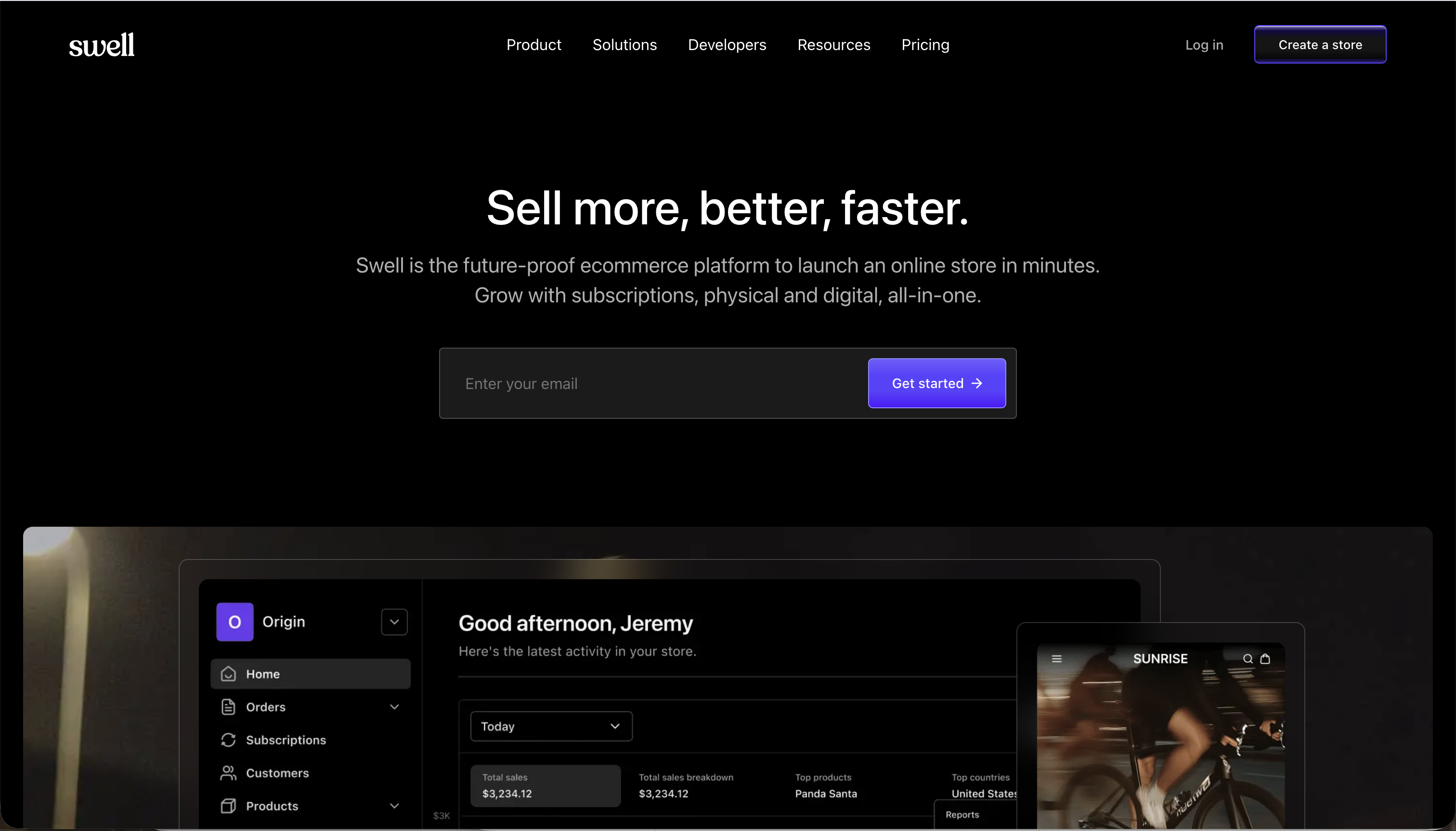 Swell provides a commerce-as-a-service model with prebuilt logic for catalogs, carts, orders, and checkout, alongside a built-in CMS. Its dashboard and APIs support flexible customer experiences without requiring a separate content platform.
Commercetools: Enterprise Composable Commerce
Commercetools is an API-first, MACH-certified (Microservices, API-first, Cloud-native, Headless) platform designed for enterprise-scale flexibility. While primarily a commerce engine, it integrates well with dedicated headless CMSs for organizations that prefer best-of-breed architectures.
When to Choose a Unified Platform vs. Best-of-Breed
The "best-of-breed" approach which means pairing a dedicated CMS like Contentful or Storyblok with a separate commerce backend like Shopify Plus or Commercetools—offers specialized functionality and advanced features in each domain. However, it introduces integration overhead, multiple vendor contracts, and potential data-sync challenges.
A unified platform with native commerce is the better choice when:
- You want a single vendor relationship and unified support for faster incident resolution.
- Your team needs low-code tools to launch campaigns and storefronts without developer dependencies.
- Real-time data synchronization across content, commerce, CRM, and other systems is critical.
- Reducing operational burden (DevOps, security, upgrades) is a priority.
- You need to consolidate costs and eliminate transaction fees or per-seat licensing from multiple vendors.
For organizations with highly specialized requirements—such as advanced AI-driven personalization, deeply customized content workflows, or niche commerce features—a composable best-of-breed stack may justify the added complexity.
Migration and Implementation Considerations
Moving to a headless CMS with native commerce requires strategic planning:
- Audit your current stack: Document integrations, custom plugins, and data dependencies.
- Define business outcomes: Clarify goals (faster launches, cost savings, improved uptime) and measure success.
- Evaluate vendor support models: Look for partners who provide migration assistance, system integration expertise, and ongoing optimization.
- Plan for content modeling: Structure content for reuse across channels—blogs, product pages, personalized journeys—and ensure your platform supports flexible schemas.
- Test performance and SEO: Validate rendering strategies (SSR, SSG, ISR), Core Web Vitals, and meta-management to preserve or improve search rankings.
A good headless CMS with native commerce capabilities delivers flexibility, speed, and operational simplicity by unifying content and commerce in one platform. Whether you prioritize low-code tools for marketing teams, API flexibility for developers, or a guaranteed partnership model with dedicated expert support, the right platform reduces vendor sprawl, accelerates time to market, and scales with your organization.
For mid-market to enterprise teams running complex B2B and B2C operations, platforms like Core dna offer a compelling alternative to fragmented, plugin-heavy stacks—enabling faster launches, real-time data sync, and continuous innovation without replatforming.
Summarize with