


Liferay Alternatives: 7 Platforms Enterprises Should Consider Instead
Liferay has been around for decades, earning its reputation in the industry through recognition in annual analyst reports and an enormous partner network.
For large enterprises with dedicated Java development teams, large agency support budgets, and portal-focused requirements, Liferay remains a valid digital experience platform (DXP). For others, the platform can feel complex and laden with legacy baggage.
Complaints about the high total cost of ownership, developer dependency, and a platform architecture built around portal management rather than modern digital commerce and content delivery are among the reasons enterprises consider alternatives.
In this blog, we’ll cover the seven alternatives that can meet enterprise requirements, including our own Core dna which provides native commerce alongside content management and orchestration that satisfy mid-market to enterprise requirements.
Why Businesses Looking for Liferay Alternatives
Liferay's own solution list, which includes customer portals, supplier portals, partner portals, and intranets, signals where it was built to perform and where it wasn't. However, that isn’t the only reason businesses that have more than those needs want to leave.
High Total Cost of Ownership
Liferay's subscription model separates license, implementation, support, and managed services into distinct cost layers. Implementation normally requires certified solution partners or system integrators (SIs) to get from planning to launch. For organizations without internal Java expertise, that partner dependency doesn't end at launch; it remains an ongoing operational cost.
Architectural Complexity for Modern Digital Experiences
Liferay's core architecture was built around portlets and portal pages. This is a model optimized for authenticated, role-based experiences, such as employee intranets and partner portals.
However, adapting that foundation to support modern headless content delivery, ecommerce workflows, or omnichannel publishing requires extensive customization that falls outside the platform's natural strengths.
One user said, “Liferay's main drawback lies in its complexity and steep learning curve, hindering quick implementation and customization for non-technical users.”
Java Developer Dependency
Unlike platforms that have moved toward low-code or API-first models, Liferay's development model remains Java-centric. Enterprise IT teams already running Java can manage this limitation and continue getting the most out of the platform.
But for mid-market organizations trying to reduce developer dependency, this imposes an additional structural constraint that slows change, not just implementation costs.
7 Liferay Alternatives
1. Core dna: Flexible and future proof
Core dna takes a different approach to the composable DXP conversation compared to other alternatives on this list. Rather than assembling best-of-breed components that each require integration, it natively combines content management, ecommerce, personalization, and workflow orchestration in a single codebase with no plugin dependency.
Where this matters most is for organizations where content and commerce are inseparable. A franchise operator managing 70 locations with real-time inventory across sites, split ordering, and franchise-level permissions — like Clark Rubber — isn't a problem Liferay's portal architecture was designed to solve.
Manufacturers with complex product catalogs, customer-specific pricing, and multi-tenant environments face the same gap. Core dna's architecture handles these requirements natively rather than through custom development.
The transformation partner model also directly addresses Liferay's system integrator (SI) dependency problem. Core dna includes direct engineering access as part of the relationship with platform architects and senior developers available to support complex commerce and customization needs.
Advantages
- Native B2B and B2C commerce in the same platform as CMS
- Workflow orchestration replaces tools like Zapier, translation services, and SEO plugins natively
- Multi-site management with brand governance built into the core architecture
- Transparent pricing
- Direct engineering and support access rather than a partner-dependent support model
Limitations
- For organizations whose primary requirement is a complex enterprise portal such as B2B partner networks, Liferay's native portal architecture remains more mature
- Core dna is built around digital experience and commerce, not portal management
What Customers Say: “One of the things that really set Core dna apart, aside from their tech, was the support we received. Their team was always willing to jump in and help. This direct engagement helped get our team's mastery of the system complete much faster than we anticipated. If we had issues or discovered something wasn't working they were on top of it and communicated in a timely way.”
2. Contentstack: Best for enterprise content operations

Contentstack is a DXP built for content at scale, particularly for companies with large editorial teams, multi-brand publishing, and omnichannel content delivery. As a DXP, Contentstack offers a built-in customer data platform (CDP) and AI and automation capabilities, but its strength lies in content operations rather than commerce. For organizations leaving Liferay primarily because of publishing complexity and a reliance on developers on the content side, Contentstack addresses those specific pain points well.
Advantages
- Significantly lower architectural complexity than Liferay for content-focused requirements
- Reduced developer dependency for content management and publishing workflows
- Strong enterprise content operations capabilities for large editorial teams
Limitations
- Doesn't solve the commerce problem as organizations needing product catalog management, pricing logic, or checkout will require a separate commerce platform
- Personalization and analytics are available as paid add-ons rather than native capabilities
What Customers Say: “Some modules feel limited in flexibility, especially when more custom layouts or edge cases come up. There’s also no built-in ability to make direct HTML updates, which means more advanced changes still require developer support instead of being handled directly within the CMS.”
3. Acquia: Best for large enterprises and government entities

Acquia is the enterprise wrapper around Drupal that provides managed hosting, security compliance, and support for organizations that want Drupal's flexibility with enterprise-grade infrastructure. Its strongest foothold is in government, higher education, and heavily regulated industries where open-source credibility and compliance documentation matter.
Advantages
- Drupal's flexibility and module ecosystem give it genuine customization depth
- Strong compliance posture for regulated industries (FedRAMP, GDPR, HIPAA-adjacent)
- Larger developer community than Liferay's Java-specific talent pool
Limitations
- Implementation overhead comparable to Liferay and requires Drupal-specific expertise
- Native commerce is limited and Drupal Commerce is not comparable to purpose-built platforms
- Organizations moving away from developer dependency may find that Acquia requires a similar internal or partner investment
What Customers Say: “Navigating and adopting the platform can occasionally be overwhelming due to its vast feature set. Furthermore, the documentation isn't always up to current, which results in more time being spent on support or troubleshooting.”
4. WordPress VIP: Best for content-heavy sites
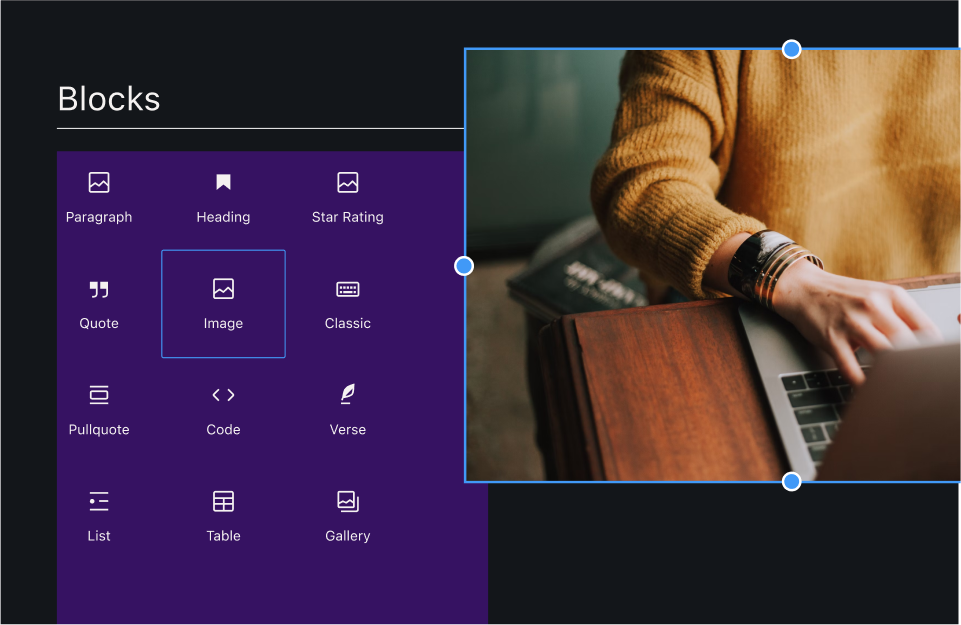
WordPress VIP is the enterprise hosting tier of WordPress, adding security hardening, SLA guarantees, and compliance tooling on top of the world's most widely deployed CMS. Since almost every content and marketing team has worked with WordPress, this reduces training overhead and significantly broadens the hiring pool.
Advantages
- Lowest learning curve for content teams of any option on this list
- Massive plugin ecosystem and available developer talent
- Suitable for high-traffic editorial and media sites
Limitations
- Plugin architecture introduces security exposure, plugin conflicts, and update dependencies that require active management at enterprise scale
- Enterprise commerce workflows, complex user permissions, and personalization push quickly toward plugin stacking and technical debt
- WooCommerce doesn't scale to the complexity that drives most Liferay evaluations
What Customers Say: “[It comes with the] constraints of WordPress. WordPress is both powerful and old crunchy overly-opinionated software.
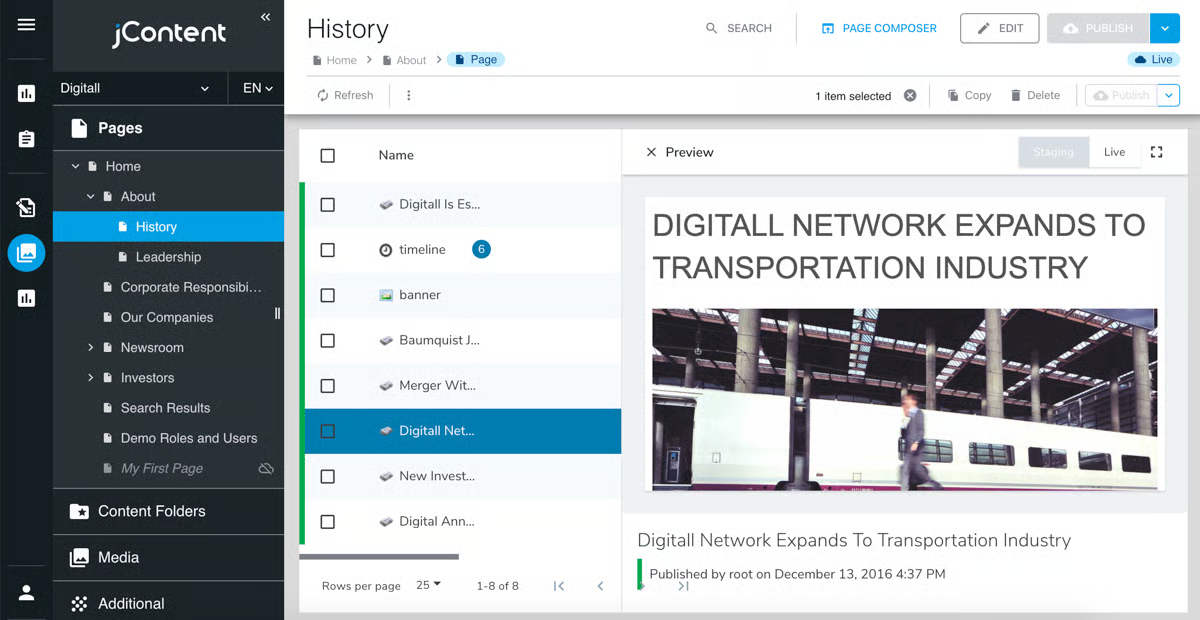
5. Jahia: Best portal alternative
 Source
Jahia is the closest architectural equivalent to Liferay on this list. Like Liferay, it's a Java-based open-source DXP with deep portal capabilities. For organizations that genuinely need portal functionality but find Liferay's cost or partner dependency untenable, Jahia is worth evaluating.
Advantages
- Native portal architecture comparable to Liferay
- Open-source model with enterprise subscription options
- Lower brand recognition can translate to more competitive licensing
Limitations
- Java-centric development model and similar implementation complexity to Liferay
- Smaller partner network than Liferay
- Organizations looking to reduce developer dependency won't find the fundamental model much different
What Customers Say: “For new users, the complexity of Jahia DXP mainly comes from the platform's rich functionality and the diversity of concepts to master. The installation is well documented, but it requires a certain level of technical expertise.”
6. Sitecore: Best for hyper-personalized enterprise content requirements
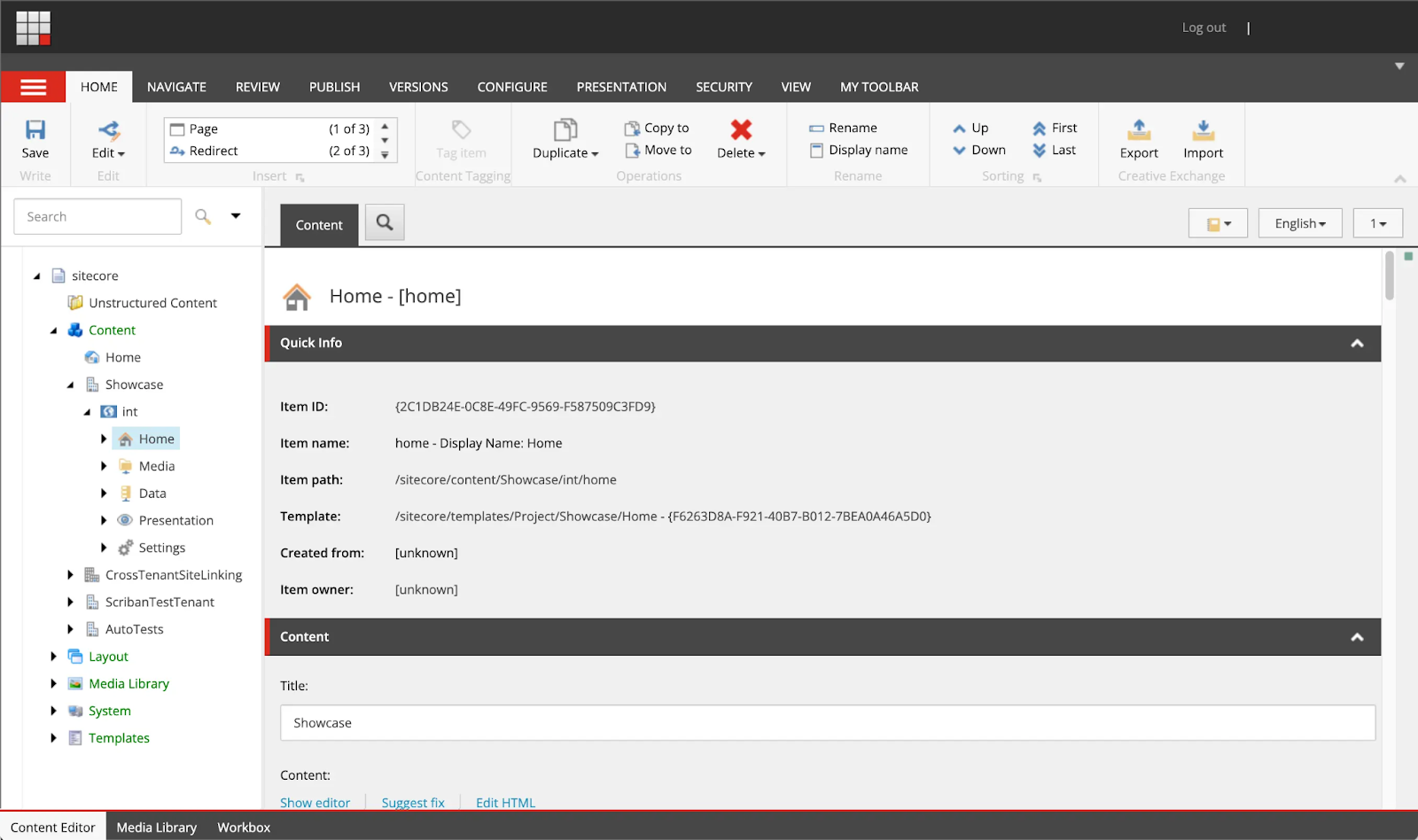
Sitecore is the platform of choice for enterprises where personalization is the primary capability requirement. It offers complex segmentation, A/B testing at scale, and content targeting across authenticated and anonymous user journeys. It's recognized by Gartner and Forrester as a leader in DXP, which makes it a credible option for large organizations under board-level scrutiny.
Advantages
- Most mature personalization engine of any option on this list
- Strong for organizations with large marketing teams and personalization program maturity
- Gartner/Forrester recognition provides internal justification for procurement decisions
Limitations
- Cost and complexity exceed Liferay with long implementation cycles being common
- SI dependency is effectively mandatory
- Organizations leaving Liferay because of cost and complexity concerns will find that Sitecore amplifies those problems
- Commerce is a separate product as Sitecore OrderCloud is not native
What Customers Say: “Sitecore products and platforms are not the right solution for every business. Strategy and implementation can be complicated and typically requires an experienced partner.”
7. AEM: Best multinational enterprise alternative
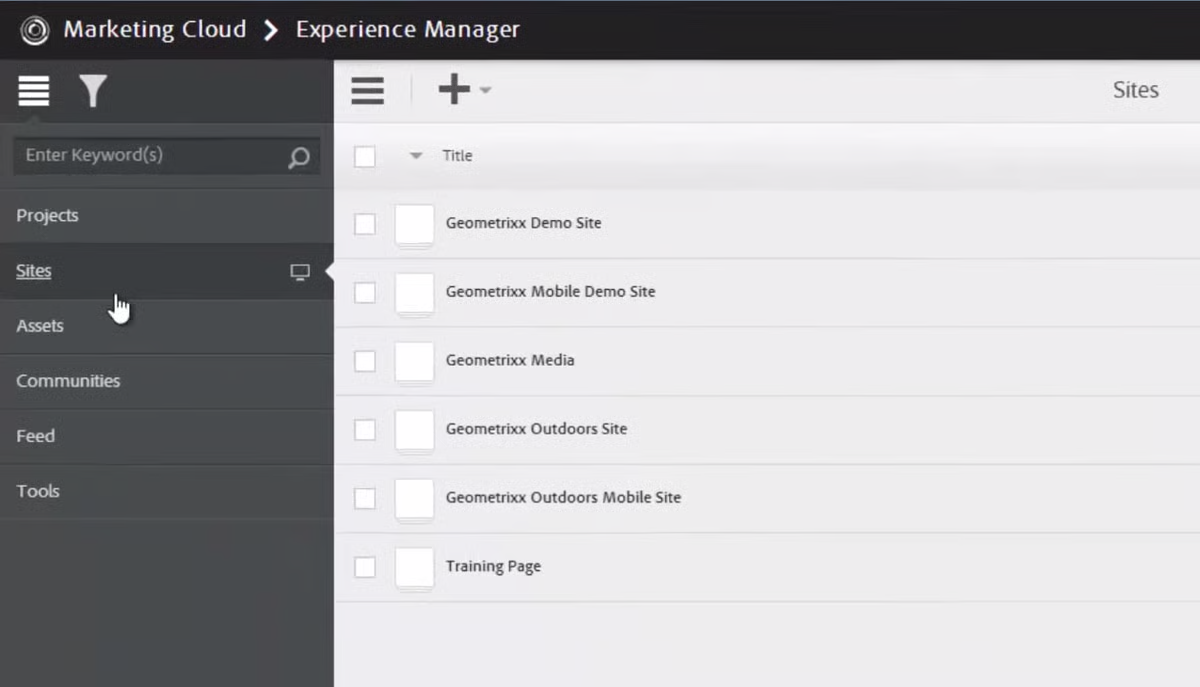
AEM is the platform for organizations that have committed to the Adobe stack — Analytics, Target, Campaign, and Marketo all integrate natively, creating a unified data and experience layer that no other option on this list can replicate. For multinational enterprises with the internal resources and budget to operate within the Adobe ecosystem, it's the most complete option available.
Advantages
- Deepest integration with Adobe's marketing and analytics suite
- Strong for organizations managing content across multiple global markets and languages
- Enterprise-grade compliance and security posture
Limitations
- Price point typically starts where most mid-market budgets end
- Implementation complexity and cost rival or exceed Liferay; Adobe-certified partners are required
- Integration advantage only exists inside the Adobe ecosystem and it doesn't justify entry cost without it
What Customers Say: “The learning curve is serious. It took me a good few weeks to really feel comfortable with the authoring workflow. Also, it can be frustratingly dependent on IT. If I want to change something slightly outside of the pre-set templates, I’m stuck until a developer can build it for me. The authoring interface can also get pretty laggy during peak hours.”
How to Choose the Right Liferay Alternative
Before evaluating specific platforms, it helps to determine your specific organizational needs.
Do you need portal functionality such as for employee intranets, multi-tenant B2B partner portals, or complex user hierarchies?
If portal management is the primary use case, Liferay's architecture was built for exactly that, and most alternatives on this list weren't. Jahia is the strongest like-for-like substitute with the same Java-based foundation, native portal architecture, and comparable feature depth at a lower cost.
Do you need native commerce functionality alongside content management?
Contentstack, Acquia, and WordPress VIP all require a separate commerce platform which means integration overhead, additional licensing, and a second set of implementation complexity. Core dna is the only option on this list that handles content, commerce, and orchestration natively in the same platform, without requiring a third-party commerce layer.
Are you primarily creating content-heavy digital experiences?
For content operations without a strong commerce requirement, Contentstack and WordPress VIP are the strongest alternatives. Contentstack fits large editorial teams that need agile workflows and governance at enterprise scale. WordPress VIP is well-suited to content-heavy sites where publishing volume and editorial simplicity are more important than platform depth. However, Core dna can handle these content-heavy requirements while still offering commerce functionality.
What's your budget?
SI partner fees, Java developer salaries, and customization costs typically account for the majority of TCO when dealing with Liferay. Sitecore and AEM are also a higher total investment than Liferay, while Acquia carries similar implementation overhead. Core dna, Contentstack, and WordPress VIP offer meaningfully lower TCO, though the right comparison depends on which capabilities you actually need to replace.
Wrapping Up
Liferay is a legitimate enterprise platform well-suited to organizations running complex, authenticated portals with internal Java teams and the budget to support SI-led implementations. The alternatives on this list exist because most mid-market enterprises evaluating Liferay don't meet all three of those conditions at once.
However, platforms like Core dna can provide content, commerce and orchestration allowing them to work together natively without integration overhead, making it the ideal solution for a post-Liferay world.
Contact us to see how we can support your digital experience journey today.
Summarize with