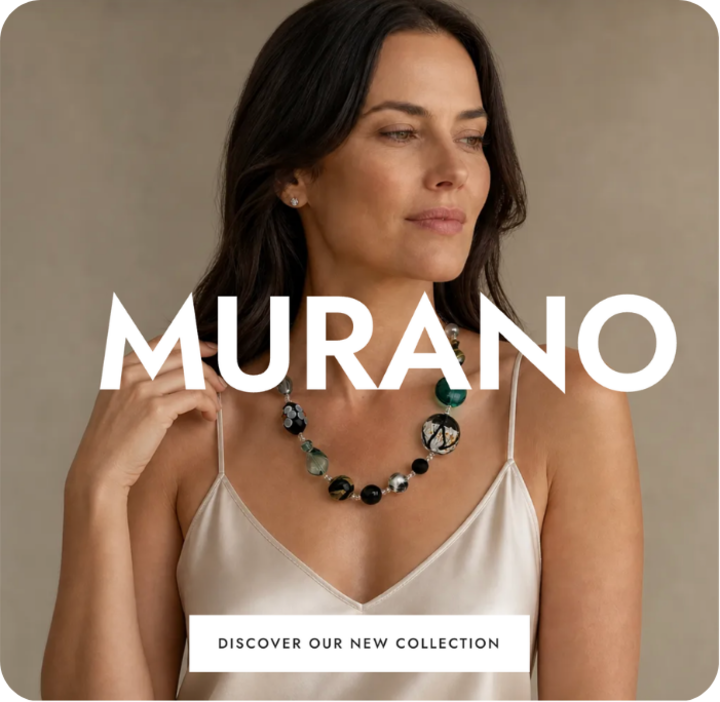
Ophelia has sold handmade Murano glass jewellery in Australia since 1999, first through department stores including Daimaru and David Jones, and now mainly online. Core dna rebuilt its online store on Core dna's eCommerce platform, after working with Ophelia on its positioning, a younger target market and its brand.
The challenge
Ophelia's previous store listed each colour and each earring fitting as a separate product, kept a separate page for each colour, and had no way to shop by occasion.
Its buyers were mostly long-standing collectors, women over 45. Ophelia wanted a store that would also work for younger buyers, without losing the collectors who already knew the brand.
One product page per design
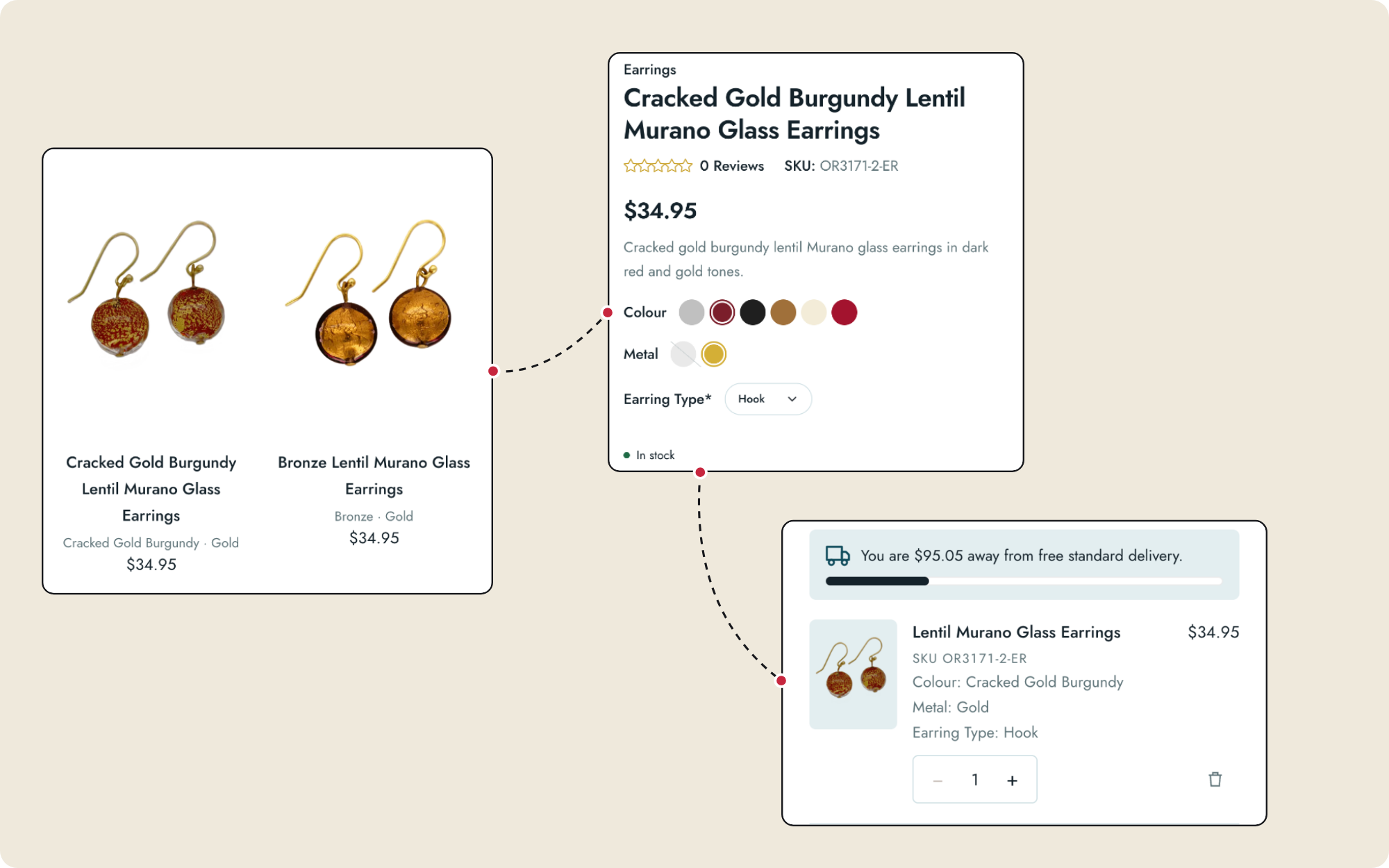
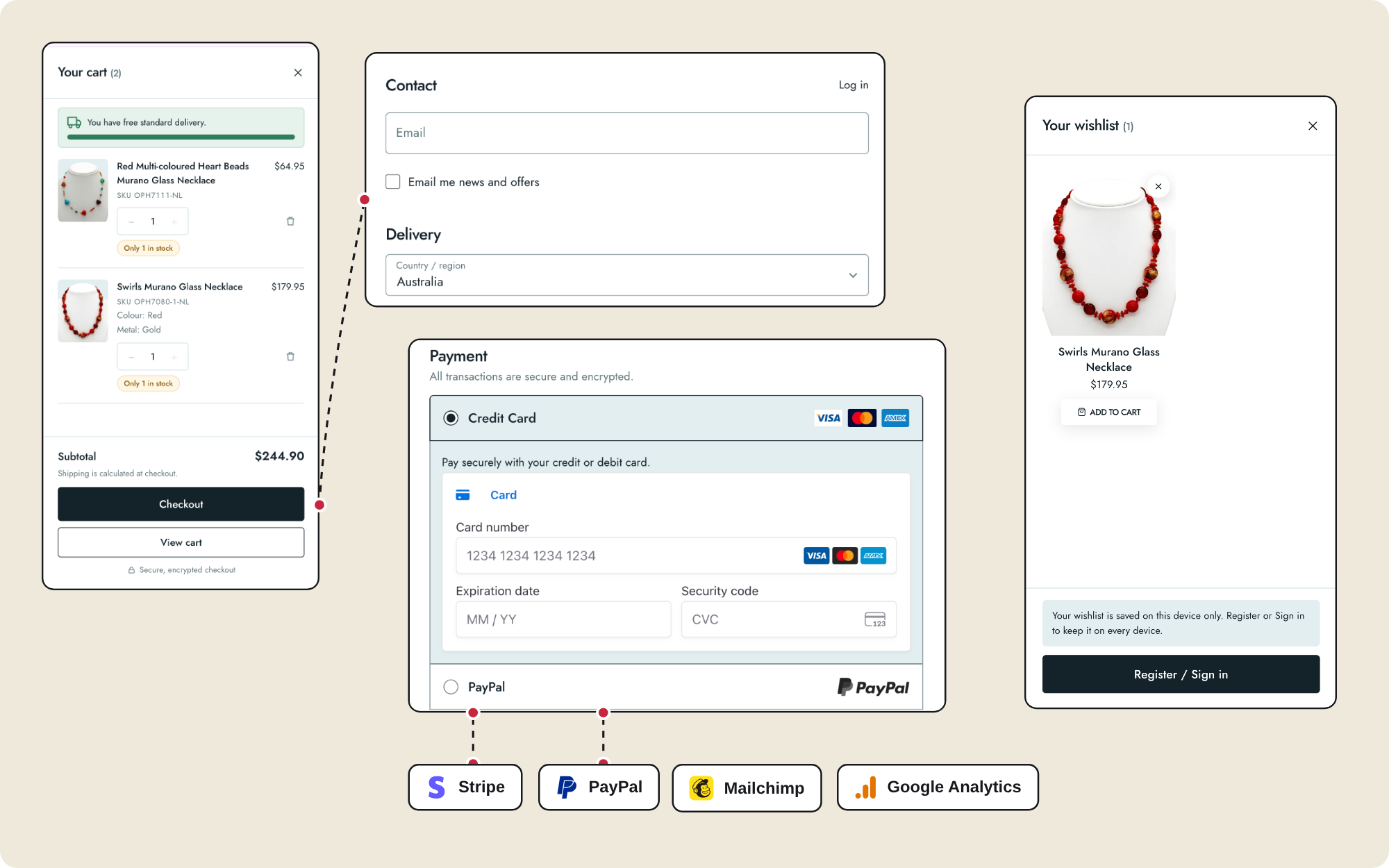
Each design is one product, with colour, metal and earring fitting as options. Listings still show each colour as its own card, and every card opens the same product page with that colour selected. The cart and checkout show the options chosen.
Cart, wishlist and checkout
The cart shows progress to free delivery and flags pieces with only one left. Shoppers can keep a wishlist without an account. Checkout is one page, with card payments through Stripe, PayPal, and newsletter sign-ups sent to Mailchimp.
Modernising your online store?
Book a call with Core dna. We'll look at your current store and what a rebuild would involve, from product data to checkout.
Talk to the team behind Ophelia's store.
Filters across 226 pieces
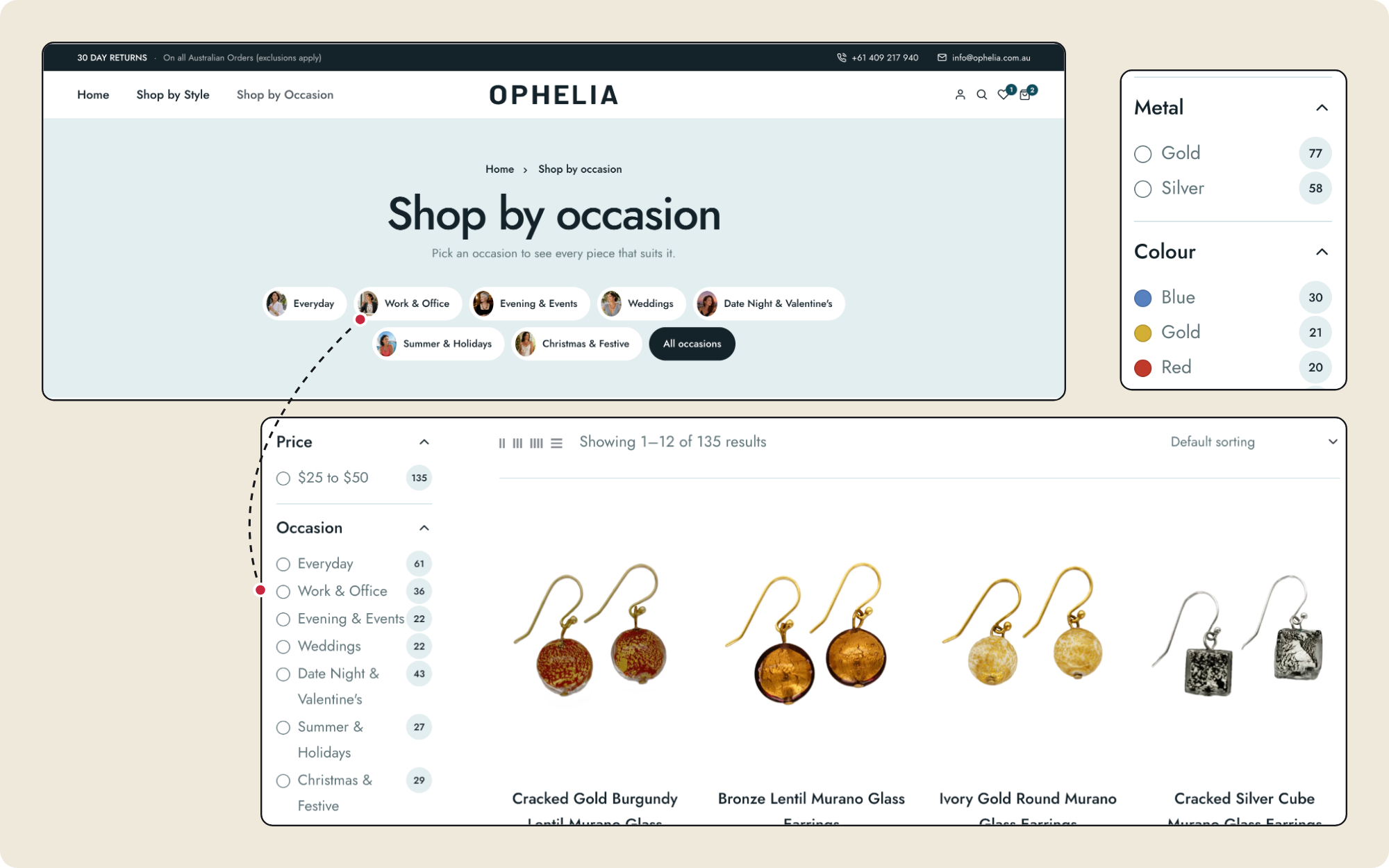
Shoppers can narrow all 226 pieces by occasion, price, metal, colour, bead shape and size. Each of the seven occasions, from Everyday and Work & Office to Christmas & Festive, also has its own page.
Built on a new position and target market
- Position. Australia's original Murano glass jewellery specialist, in a market split between TV shopping, overseas sellers, fashion jewellery and fine jewellery.
- Target market. Women aged 25 to 40 added as a second market, with established buyers aged 45 to 70 kept as the first.
- Brand. An evolved logo, a palette taken from Murano glass and Venice, a tone of voice and brand guidelines.
- Testing. A 90-day plan to check the position and the new market against sales.
Before and after
| Before | On Core dna | |
|---|---|---|
| Product listings | Separate products for each colour and fitting | One product per design, with options |
| Ways to shop | Product type, earring fitting and a page for each colour | Seven occasions, and filters for colour, metal, bead shape and size |
| Target market | Established buyers, mostly women over 45 | Established buyers, plus women aged 25 to 40 |
| Position | Between TV shopping, overseas sellers, fashion jewellery and fine jewellery | Australia's original Murano glass jewellery specialist |
Questions to answer before modernising your online store
- Are options listed as separate products? Plan how they merge into one product, and where each old URL will point.
- Which details do buyers compare? Add them to every product as attributes before import, so they work as filters.
- What does checkout need? Decide on payment methods, guest checkout and delivery options before the build.
- Who buys today, and who next? Decide whether new buyers add to your core market or replace it.
For the full list, use the 47-point eCommerce platform migration checklist.
What's next?
The store went live on 12 November 2026. Next is the 90-day testing plan from the positioning strategy.
[TBC: confirm next steps and timing with Ophelia. Add results after the first 90 days.]