

Contentful has been regularly recognized as one of the leading headless CMSs on the market for quite some time. Thousands of organizations, including many Fortune 500 companies, have benefited from its API-first architecture and developer-friendly features.
However, after the honeymoon phase ends, many Contentful customers end up complaining about its pricing challenges and the lack of freedom for non-technical users. What’s more, there are no commerce capabilities for organizations that need both content and commerce on the same platform.
If you're running into any of those walls, we’ve covered six alternatives organized by the problems they actually solve, including our own Core dna, which is perfect for handling your complex commerce and content needs.
Why You Might Need a Contentful Alternative
A Pricing Model That Doesn’t Always Match Usage
Contentful's pricing model compounds across multiple variables simultaneously. API calls, CDN bandwidth, content types, spaces, users, and locales are all metered or restricted depending on the plan.
For many headless CMSs or DXPs, this is common. As you add more spaces, support tiers, or exceed API limits, pricing will change. The issue with Contentful is that it changes fast and often without warning.
As one G2 reviewer mentioned, “as your content and API usage grow, costs can quickly escalate, which may be a challenge for some organizations when scaling larger applications or content-heavy platforms.”
Non-Technical Users Have a Steep Learning Curve
Despite being positioned as a solution that frees marketing teams from developer dependency, Contentful's interface is built around content models, reference fields, and API structures that require technical fluency to navigate comfortably.
The reality is that “It is not particularly intuitive. The learning curve is steep.” Consequently, even after the initial setup period, marketing teams and content editors may still rely on developers for certain tasks.
Zero Native Commerce Capabilities
Contentful is a CMS that offers some personalization capabilities and can integrate with other solutions via APIs. However, it also lacks native product catalogs, a cart or checkout, pricing management, order management, and customer account functionality.
For organizations that need both CMS and commerce, this means licensing a separate platform, building and maintaining the integration between them, and absorbing the cost and complexity of two enterprise systems.
As more and more enterprises look to consolidate their marketing stack and avoid vendor sprawl, this becomes a major blocker.
6 Contentful Alternatives
Core dna: Best for stack consolidation and complex use cases
Core dna platform in action
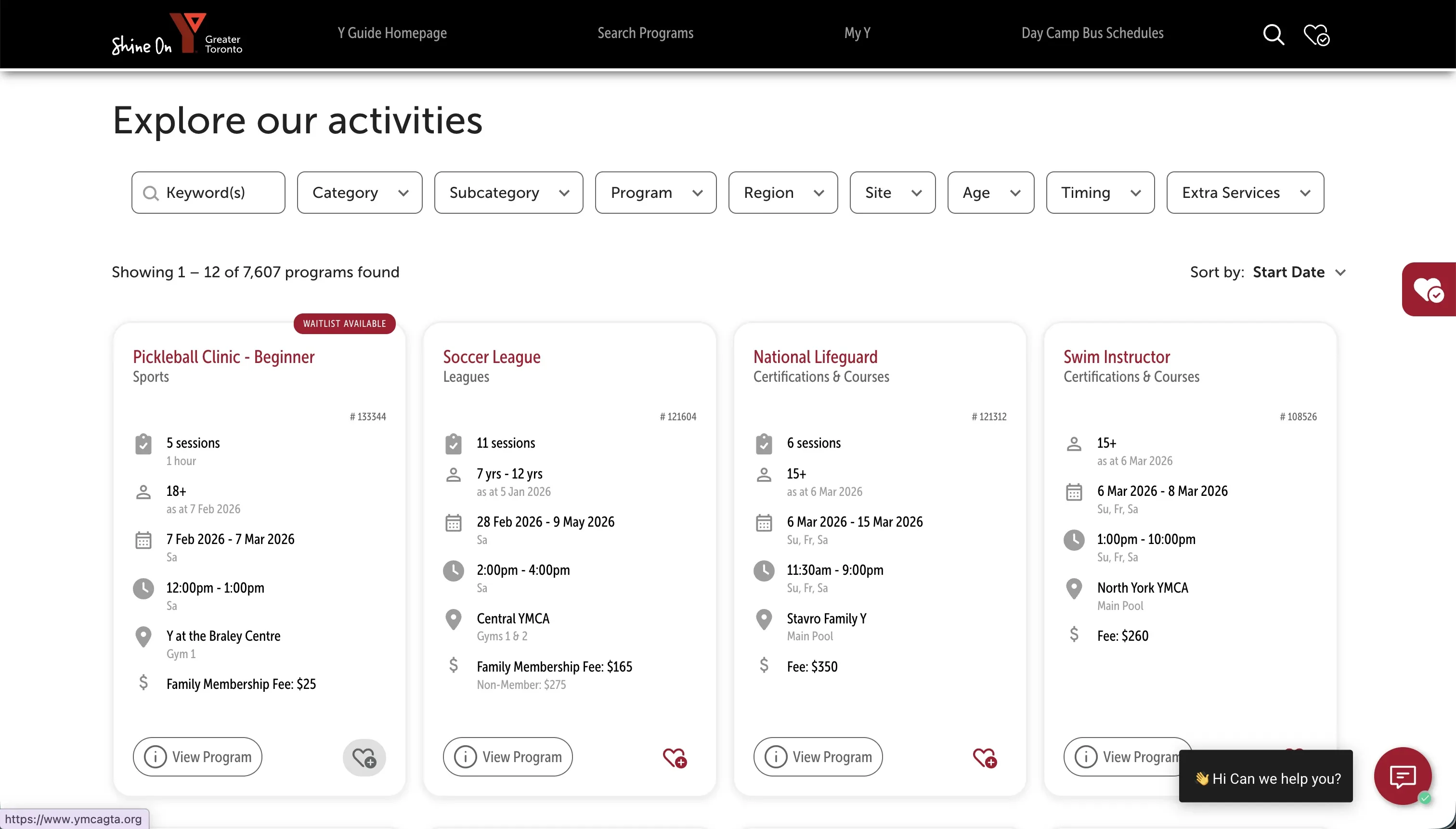
Featured use case: YMCA Greater Toronto experience
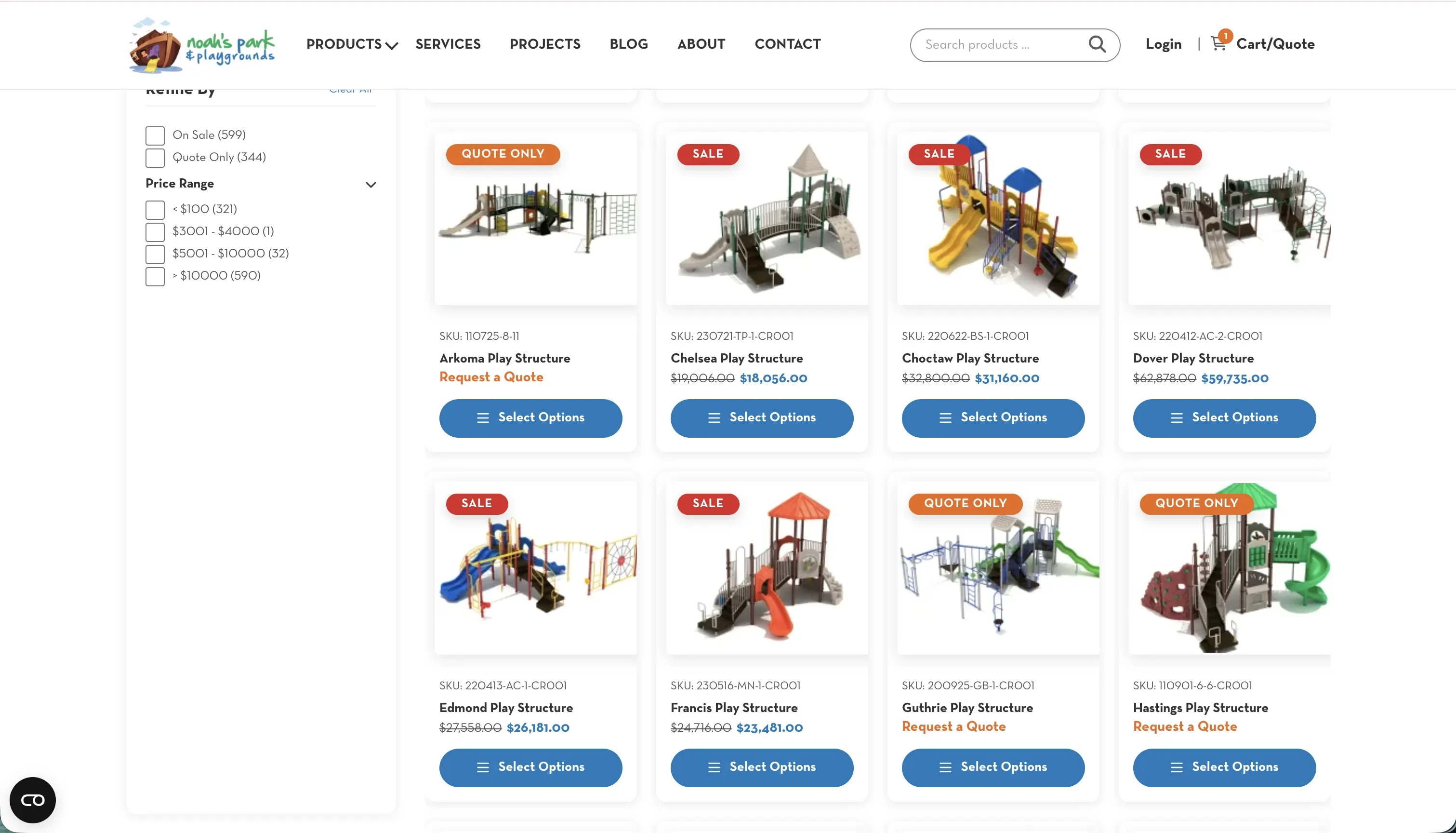
Unified CMS and commerce management
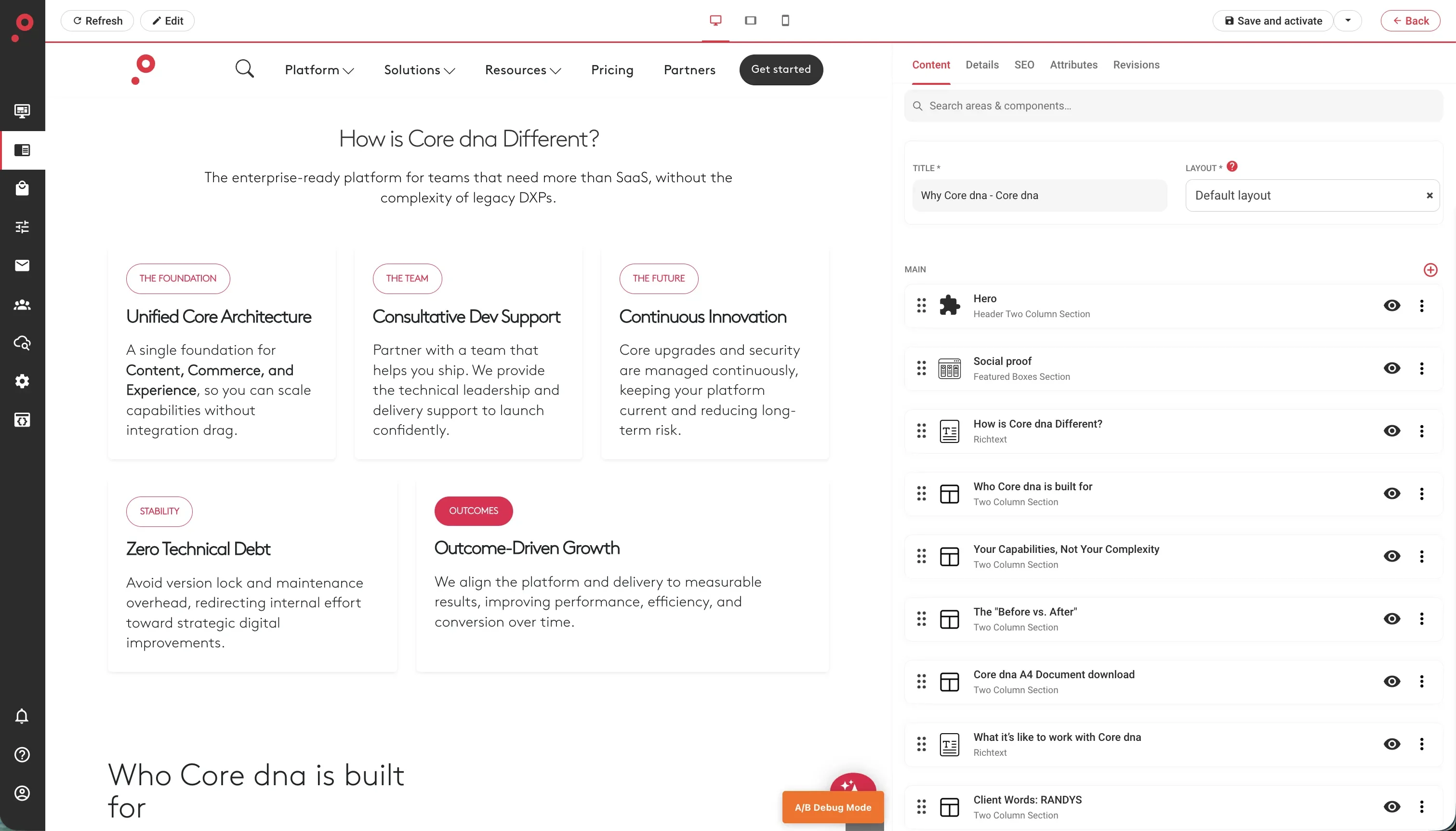
Live preview across digital experiences
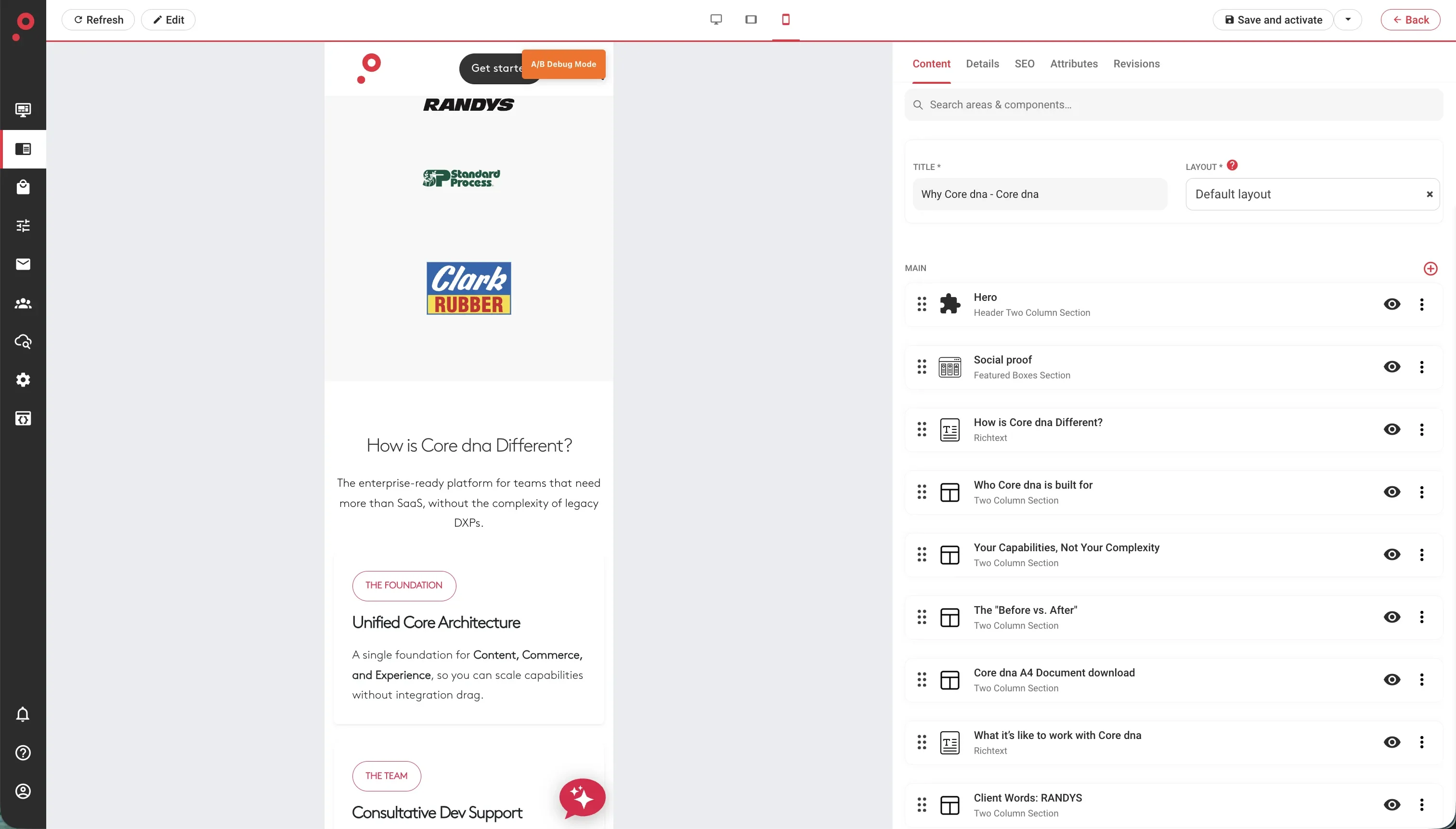
Responsive preview across channels
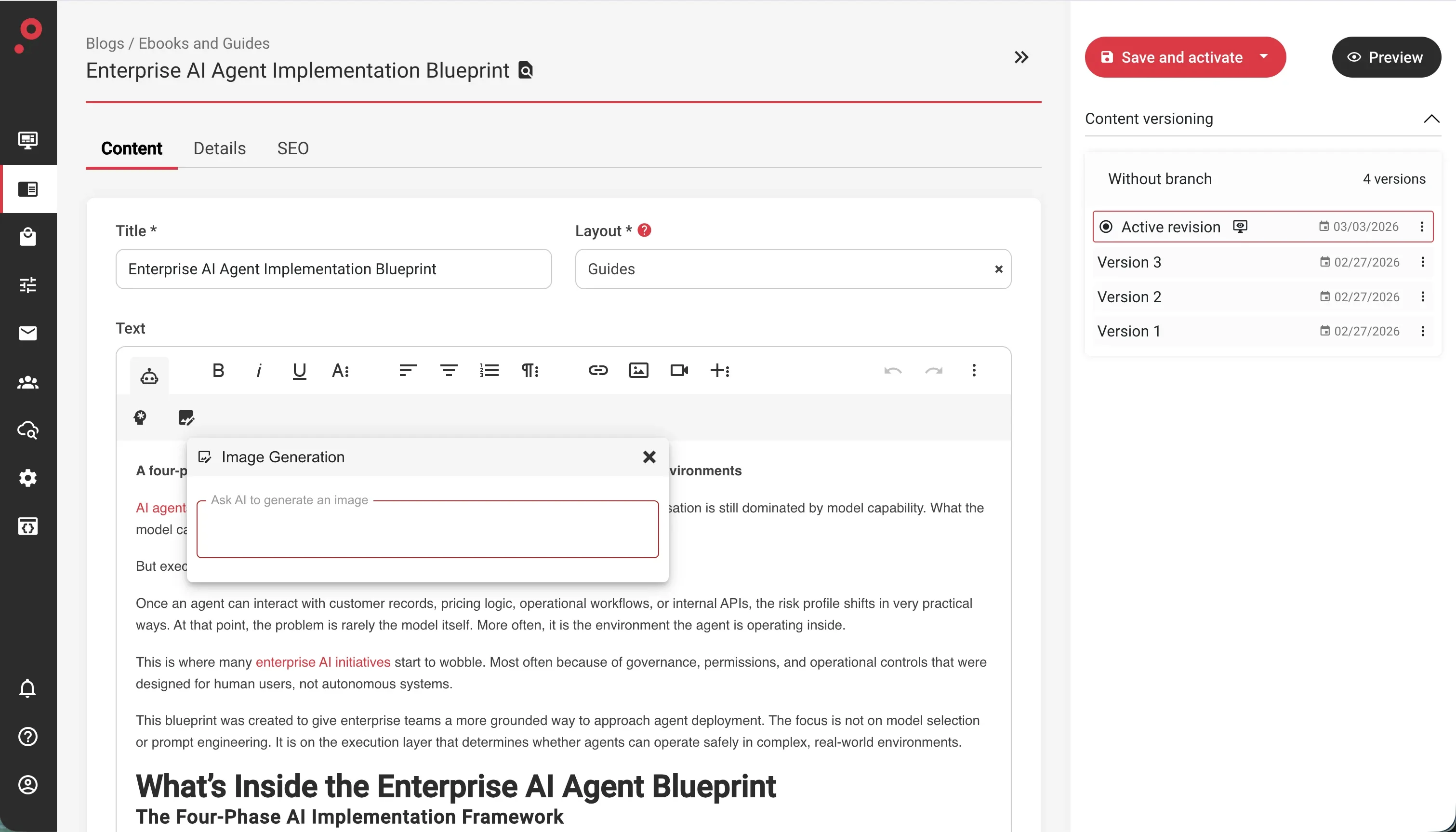
AI content generation workflows
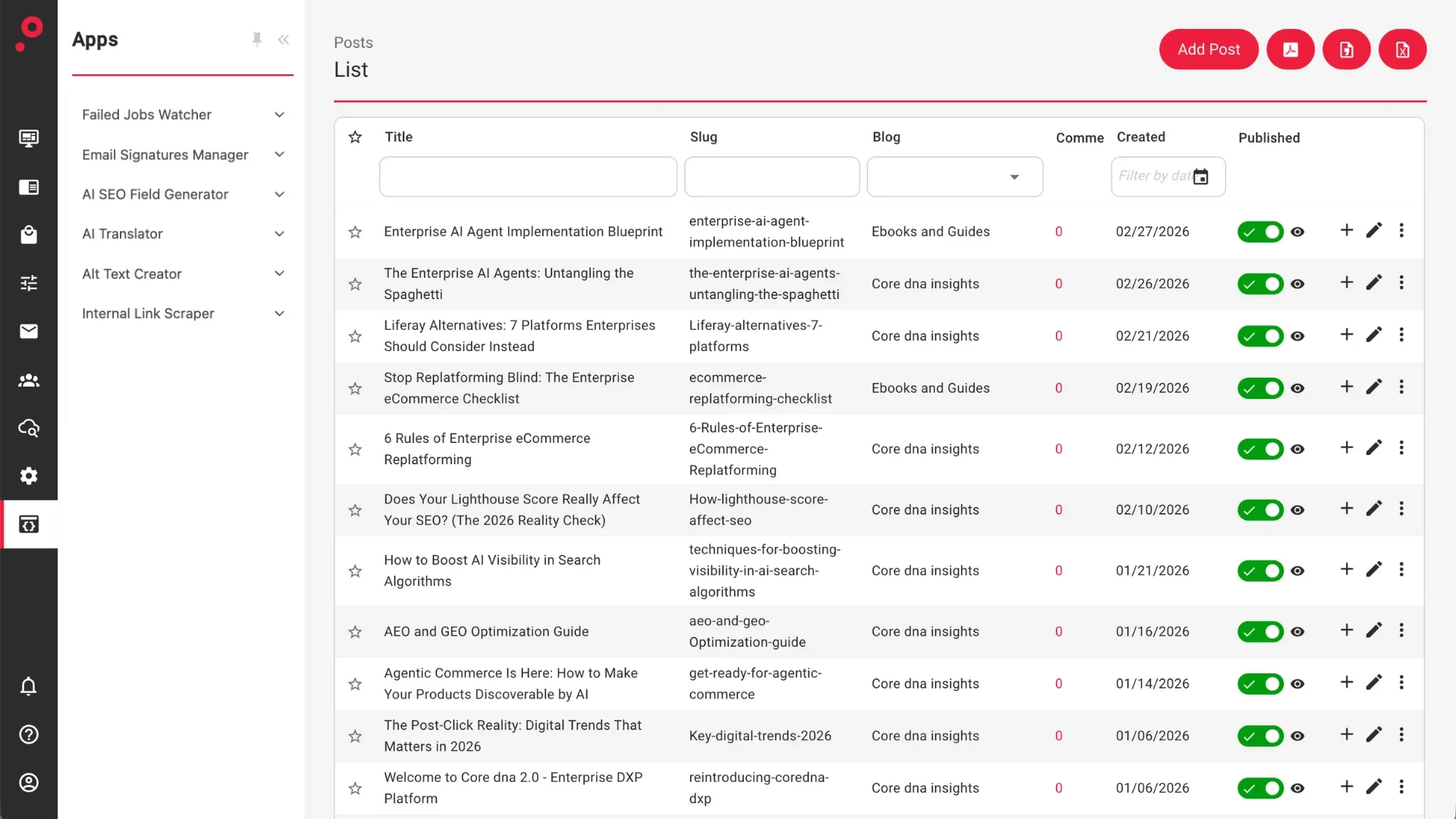
Apps and workflow management
Core dna offers unified CMS, commerce, personalization, and automation, which can handle complex enterprise use cases. Rather than replacing Contentful's content layer with another, Core dna combines headless CMS, composable commerce, and workflow orchestration into a single platform.
The pricing model is transparent and doesn't meter API calls or charge by the space, while the intuitive interface is built for marketers to manage content, products, and customer experiences without developer involvement in daily operations.
Core dna includes native B2B features that no pure CMS alternative can match, and the orchestration layer also directly addresses the integration overhead problem.
Advantages
Transparent SaaS pricing with no API call metering or per-space charges
A marketer-friendly interface for managing content, products, and customer experiences without daily developer involvement
Native B2B commerce features no pure CMS alternative that can match, including customer-specific pricing and catalogs, contract-based discounting, multi-level approval workflows, purchase orders and net payment terms, account hierarchies, and customer portals.
Built-in orchestration for translation, personalization, SEO, and workflow automation, reducing the number of third-party tools needed
Direct engineering access is included in the platform relationship, rather than a partner-dependent support model.
Limitations
Core dna's ecosystem is smaller than Contentful's, with fewer third-party apps and fewer pre-built integrations available.
What Customers Say: “The team are extremely helpful, always available and have recently upgraded our custom CMS platform to cater our needs. With so many new features available, we are super happy!”
Contentstack: Best for enterprise content operations
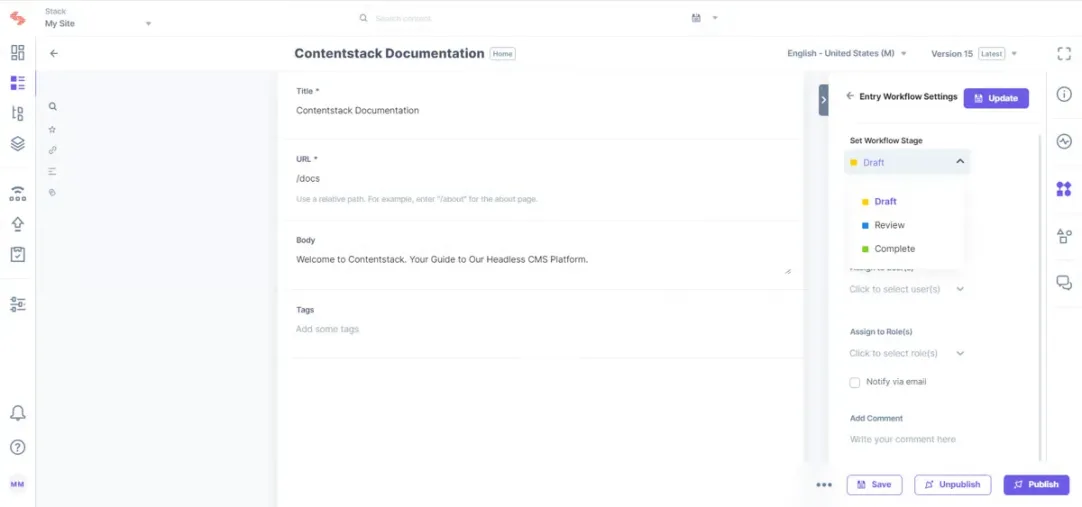
Contentstack is the closest like-for-like alternative to Contentful for teams running large-scale content operations. Contentstack is more of a digital experience platform than a pure headless CMS like Contentful, and it offers a built-in CDP while addressing pricing and usability frustrations more directly than Contentful does.
Advantages
More transparent pricing than Contentful
Strong content governance, approval workflows, and multi-channel publishing at scale
Proven platform with a large customer base and extensive third-party integrations
Disadvantages
No native commerce, so teams still need a separate platform and integration for ecommerce
Complex implementations remain developer-heavy
Still requires meaningful developer resources for initial setup and customization.
What Customers Say: “The modular content approach is the biggest win for our team, we can make frequent changes, reuse components across pages, and launch updates quickly without heavy developer involvement. Some modules feel limited in flexibility, especially when more custom layouts or edge cases come up.”
Storyblok: Best for marketing teams
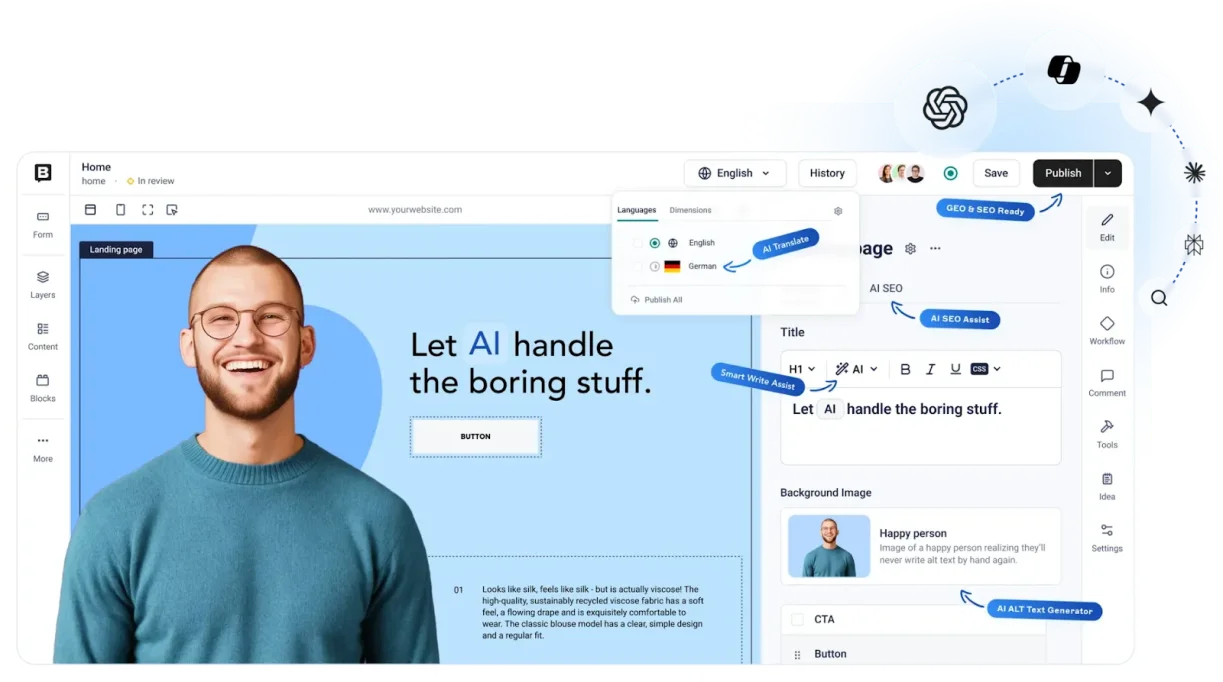 Storyblok is a headless CMS whose primary differentiator is its visual editor, which lets marketers preview and publish content changes in real time without developer involvement. For teams where the core Contentful frustration is the bottleneck between marketing and development, Storyblok is the most direct fix. Additionally, pricing is generally more predictable than Contentful, and the component-based architecture works well for designers.
Advantages
The visual editor lets marketers see changes in real time and reduces reliance on developers.
Component-based architecture works well for design systems and structured page building.
Faster time-to-publish for non-technical teams once set up.
Disadvantages
Commerce still requires a separate platform and integration, which doesn't solve the vendor-sprawl problem.
The visual editor has its own learning curve, despite how it's marketed.
What Customers Say: “Storyblok’s component-based, headless architecture gives us the flexibility to structure content exactly how we need it. Some of the more powerful features require developer input to set up correctly, so non-technical users may need guidance early on before everything feels intuitive.”
Strapi: Best for teams with developer resources
Strapi is open source, which means self-hosted deployments are free, but it also offers cloud deployments that can be appealing to enterprises. As a headless CMS, Strapi requires strong developer resources and is more developer-dependent than Contentful. Teams choosing the self-hosting option also need to account for infrastructure management costs, such as security patching and updates, which add operational overhead.
Advantages
Open-source, so self-hosted deployments are essentially free.
Large and active developer community
JavaScript-based, which is familiar to modern dev teams
Disadvantages
More developer-dependent than Contentful, so non-technical users will struggle more.
Self-hosting requires managing security patches, updates, and other in-house infrastructure considerations.
No rate limiting for APIs
Upgrading versions can break things.
What Customers Say: “Some aspects of Strapi become challenging when working on a complex, multi-site project like ours. The main limitation is the absence of native features for rate-limiting, analytics of API usage, or built-in monitoring.”
Sanity: Best for complex content modeling
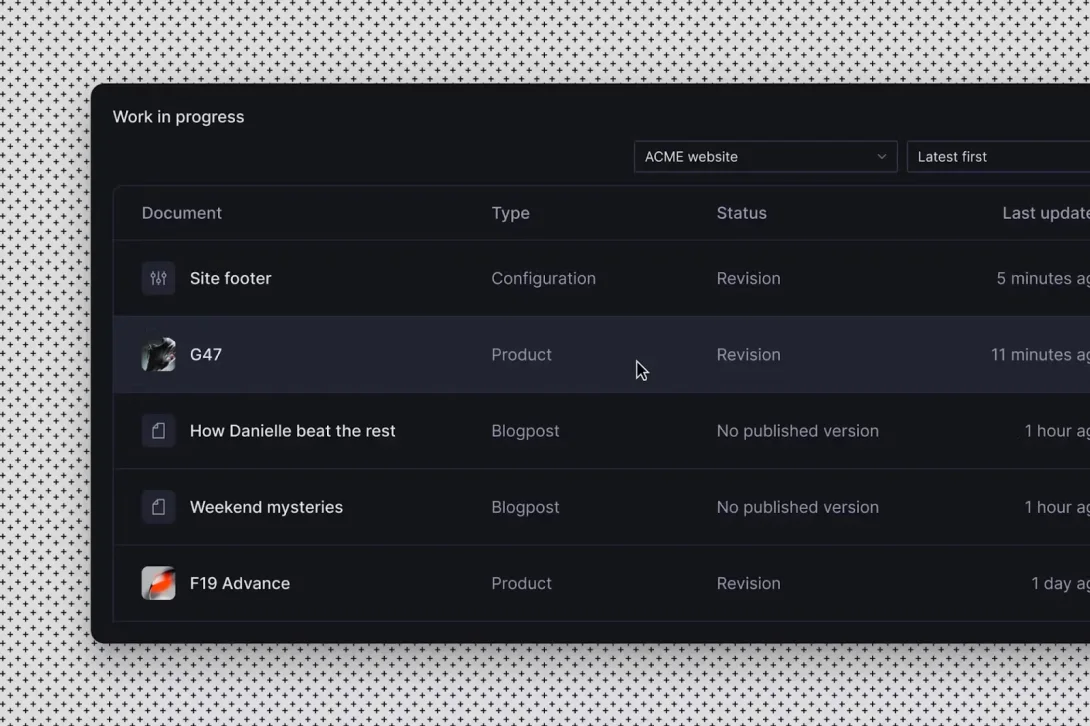 Sanity offers the most flexible content modeling, which is good for teams with complex content structures that don't fit neatly into standard CMS patterns. With Sanity, developers get the tools to build exactly what they need, but there is also a steep learning curve similar to Contentful for non-technical users. However, pricing is more transparent as Sanity scales based on seats rather than API call volume.
Advantages
Most flexible content modeling of any platform on this list, and it handles complex, non-standard structures well.
Seat-based pricing, which addresses one of Contentful's core billing frustrations
Highly customizable editing environment
Disadvantages
Steep learning curve, Contentful is for non-technical users, so marketers without developer support will struggle
Significant upfront and ongoing developer investment required
Flexibility comes at the cost of out-of-the-box usability.
What Customers Say: “The learning curve can be a bit steep at first, especially for non-developers. Setting up schemas and mastering GROQ queries takes time.”
Hygraph: Best for GraphQL-first teams
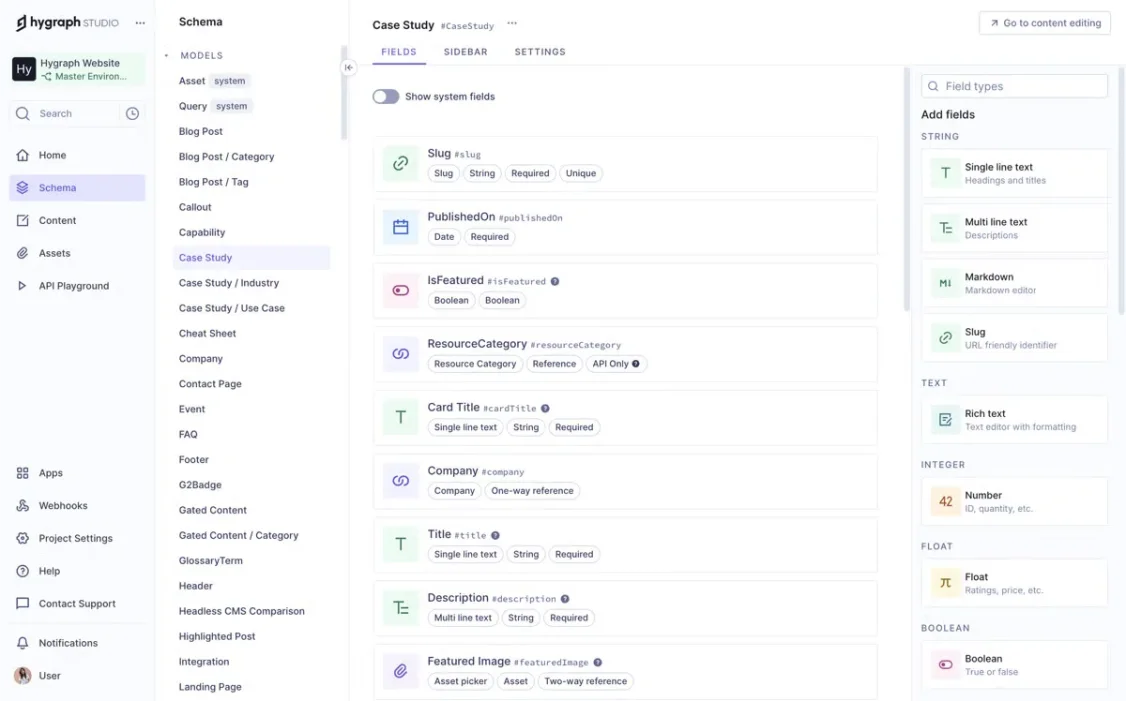
Hygraph is a headless CMS built natively on GraphQL, giving teams already invested in that architecture a CMS that fits naturally rather than requiring REST-to-GraphQL translation layers.
The GraphQL API, flexible content modeling, and fine-grained permissions give developers the tools they need to build content experiences. However, it also suffers from some of the same pricing complexities as Contentful.
Advantages
Native GraphQL API
Good fit for teams building complex, interconnected content architectures
Disadvantages
Developer-focused, so non-technical users face a steep learning curve.
Smaller ecosystem and community than competitors
Pricing structure
What Customers Say: “Our developers can query exactly the data they need, which keeps the codebase cleaner and improves performance on the client side. The main downside of Hygraph for us is the cost structure. As our usage and number of projects grow, the pricing can increase quickly, which makes it harder to justify compared to other headless CMS options in the market.”
Contentful Alternatives at a Glance
How to Choose the Right Contentful Alternative
For most enterprises searching for a Contentful alternative, the right starting point depends on whichever Contentful pain point is costing you the most right now.
If pricing is the primary problem
Strapi offers the lowest cost floor for developer-resourced teams, while Core dna, Storyblok, or Hygraph offer more predictable mid-market pricing than Contentful. Additionally, if your goal is overall cost reductions and stack consolidation, Core dna adds another layer of benefits by offering content, commerce, and orchestration together.
If marketer autonomy is the primary problem
Storyblok's visual editor is the most direct fix for pure CMS use cases. Contentstack is also viable for content operations, while Core dna lets marketers manage content and products without requiring developers, while also offering visual editing functionality.
If commerce is the problem or could within the next 12-18 months: Core dna offers native commerce capabilities that Contentful, nor other CMSs on this last can’t match. Other platforms require integrating a separate commerce system, which means inheriting integration overhead.
As more brands look to blend content and commerce, or even adopt the latest approaches to composable or agentic commerce, having a platform with this native functionality can offer much greater flexibility than simply replacing one CMS with another.
Wrapping Up
Contentful is still a leading headless CMS, and for teams who want that flexibility to deliver content to multiple channels and build custom frontend experiences, it’s a great fit. However, the pricing structure and developer dependency can pose some challenges.
For mid-market enterprises in particular, Core dna offers a robust DXP that provides content, commerce, and orchestration in one place. This makes it not only a great alternative to Contentful but also to other headless CMSs.
Get started today and see how Core dna can solve your content and commerce challenges.
Summarize with