FOR MULTI-PROPERTY OPERATORS REPLATFORMING

Replatform the portfolio.

Replace the stack.

For multi-property operators moving off a stack of 5 to 7 vendors. CMS, commerce, multi-property orchestration, integrations, and workflows on one platform. Configured per property.


Trusted by
Clark Rubber across 60+ franchise storefronts. One platform replaced their previous stack of three.
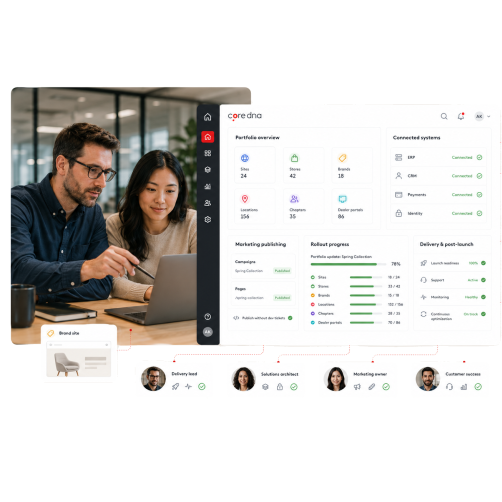
Multi-property admin Portfolio overview
Clark Rubber franchise storefronts on one platform
60+
Pilot timeline
12-18 weeks
Pilot property live from discovery
Native
Agentic operations on every property, configured
Trusted by multi-property operators who replatformed onto Core dna

Built for teams that outgrew their stack

BUILT FOR REPLATFORMING MULTI-PROPERTY OPERATIONS

Built for teams that outgrew their stack

01 The composable trap

When composable meant more vendors, not fewer

You replatformed onto headless CMS + commerce + search + iPaaS + DAM two years ago. The integration surface is now larger than the monolith you replaced. The vendor count grew. The team shrank.

Learn more
02 The frankenstein stack

When the storefront engine became the whole stack

A strong storefront engine is not a multi-property CMS. At portfolio scale, every storefront needs its own app stack and middleware. You run multiple storefronts and the middleware to glue them. The data model splits at the storefront boundary

Learn more
03 The legacy platform

When the platform locks you to the agency that built it

Built for content. Commerce, orchestration, and multi-property logic were always bolted on. The agency that built it holds the knowledge. The internal team has rotated. You're running three versions behind production because the cost of the next upgrade exceeds the cost of staying stuck.

Learn more
04 The plugin estate

Lean-team output

The platform was meant to be simple. Then it became twenty plug-ins, a custom build on top, and an agency on retainer to keep them all talking. Security, performance, and integration risk scale with the plug-in count.

Learn more

What replatforming onto Core dna looks like

5+ Vendors replaced per implementation
12-18 weeks To the first property live
Migration safety Cutover and rollback, per property.
Minutes Run portfolio-wide changes from your AI chat.
Image

Built so portfolios actually consolidate

Consolidation is the difference between a replatforming that ships and one that stalls halfway through the portfolio. 

  • One platform, every property. Sites, stores, brands, locations, chapters, dealer portals
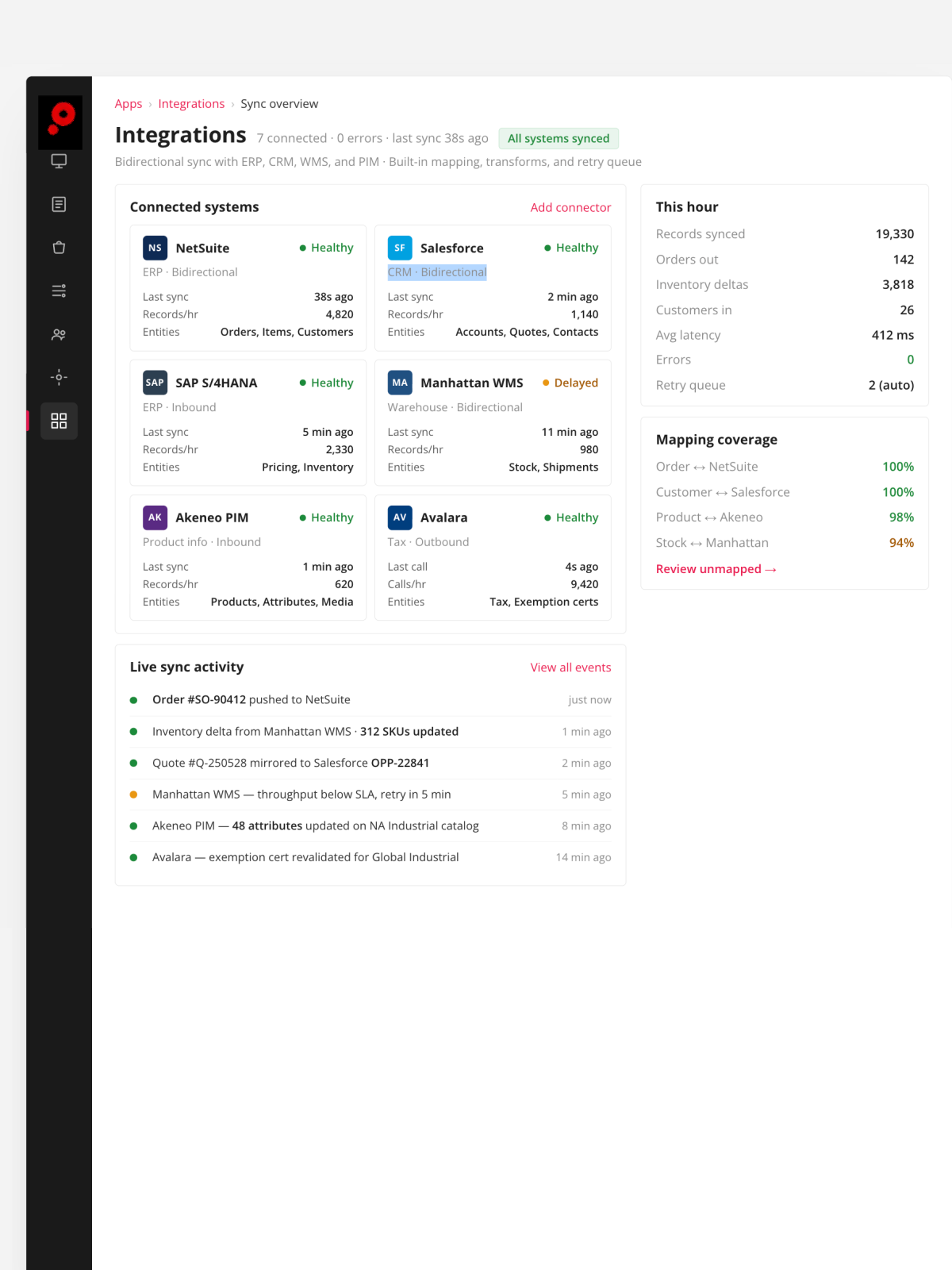
  • Existing systems plug in, they don't get rebuilt. We map your ERP, CRM, payment processor, and identity provider and connect to them.
  • Marketing publishes without dev tickets. One reason consolidations stall is that marketing goes back to the old tools. Core dna's is build so they don't.
  • The same team stays past launch. No reseller handoff. No agency dependency for ongoing changes.
Explore Core Commerce
Core dna AI CONNECT

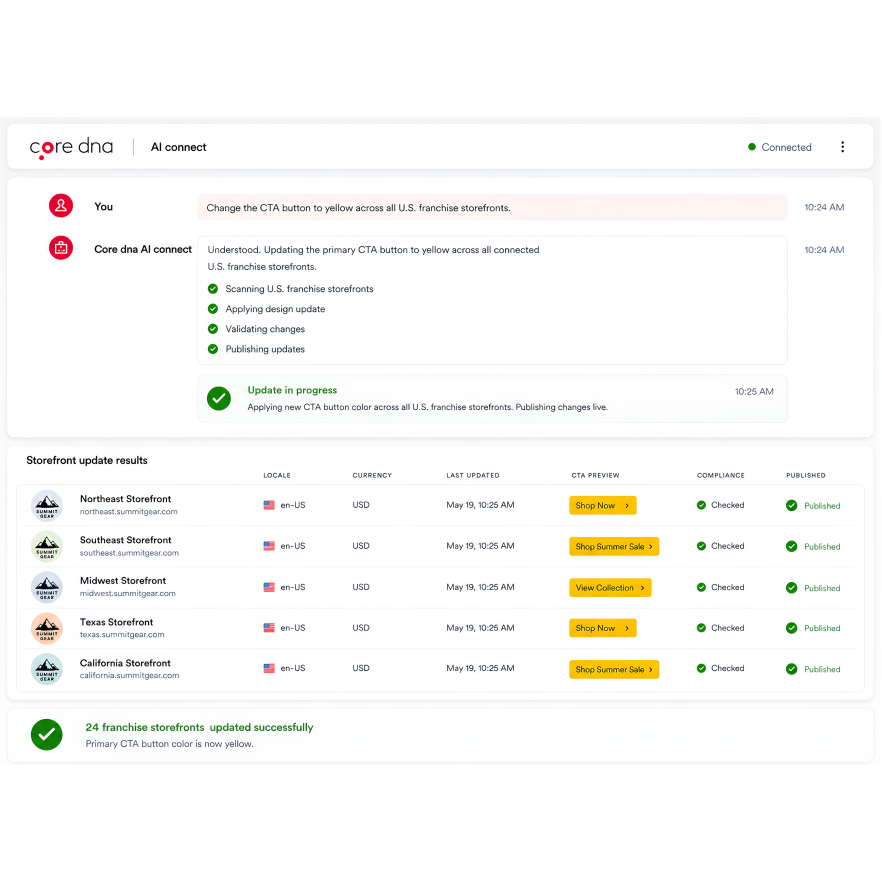
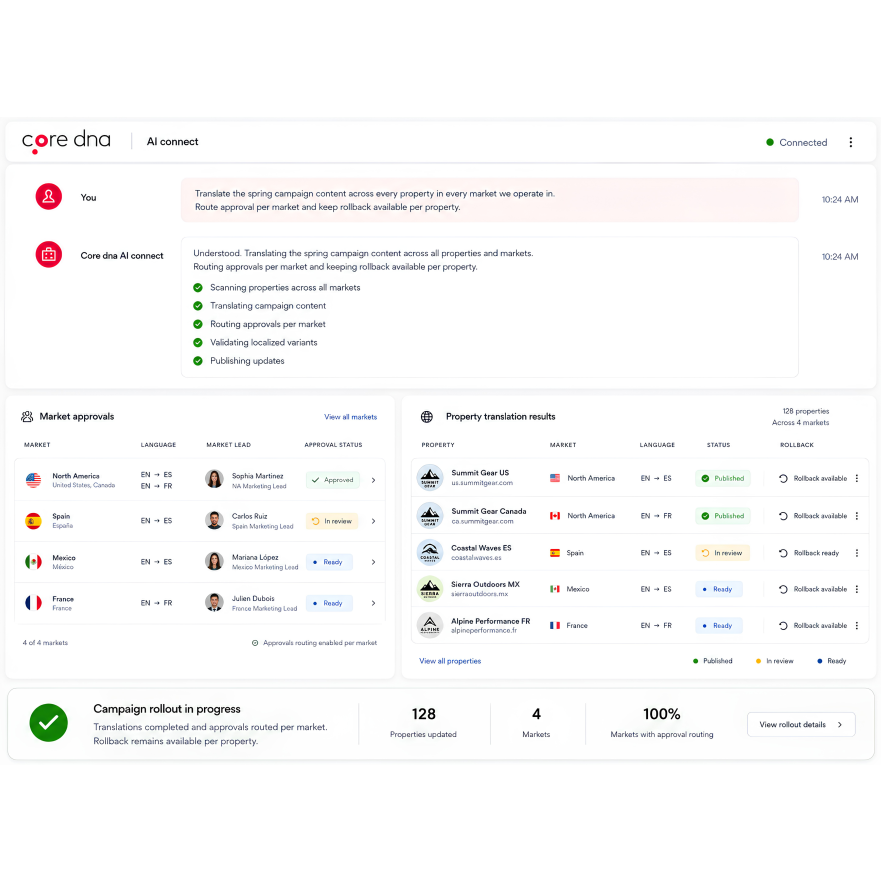
One prompt across every property

Connect Core dna to Claude or any MCP-compatible AI assistant and start managing your entire portfolio from a prompt. Behind the scenes, a live MCP server exposes 80+ agentic tools and 400+ API, so whatever you can do in the platform, your AI can do too.

Cross-portfolio campaigns from one prompt
Translation and localisation at scale
Policy and regulation updates per region
Bulk redirects, sitemap updates, tariff price changes
THE GUARDRAILS

Agentic operations on Core dna run inside a guardrail frame, not without one.

Open and test environments by default. Decide which environments the MCP layer can touch. Production access is granted explicitly, per operator, per environment.

Your governance rules apply. The agent does not bypass governance; it operates inside it. Each property's approval rules apply to changes that touch that property. The agent waits on approval before shipping.

Per property, per operator, per diff. Every change is logged per property with the prompt, the operator, and the diff. The audit log is queryable and exportable for compliance reviews.

Independent of the rest of the portfolio. A bad change on one property rolls back independently. The rest of the portfolio stays as shipped. Rollback fires from the audit log without re-running the prompt.

What to Look for in a B2B Commerce Platform

WHAT REPLATFORMING LOOKS LIKE TODAY If you replatformed two years ago, the problem moved. It did not go away.
MORE VENDORS, NOT FEWER
You replatformed onto a composable stack and ended up running more vendors, not fewer. The move was supposed to break a monolith apart. Two years in, you run a headless CMS, a commerce engine, a search vendor, a DAM, a CDP, an iPaaS, and three integration projects to keep them speaking to each other. The integration surface is larger than the monolith ever was.
STACK COSTS MORE THAN MONOLITH
Add up the subscriptions: CMS, commerce, search, DAM, iPaaS, observability, CDP. Add the licence cost of the agency that built the integrations. Add the contractor renewal because nobody on the team knows the middleware. The buyer who left a legacy DXP for cost reasons now pays more than they did, and the team is smaller.
REPLATFORMING ONE PROPERTY AT A TIME
Your team is replatforming one property at a time, forever. You operate franchises, brands, regions, stores, member portals, or locations. Every new property is its own replatforming project. The pilot took 9 months. The second property took 6. The portfolio has 30 properties left. Marketing waits.
THE TEAM IS THE INTEGRATION TEAM
Your CTO maintains an iPaaS layer that costs a five-figure annual licence and breaks every legacy DXP upgrade. The eCommerce manager reconciles three analytics dashboards in Excel on Monday morning. The Head of Digital owns the relationship with seven vendors and gets paged when any of them has an incident. The team stopped being the digital team and became the integration team.

Built to absorb the stack you're leaving

The reason most portfolio replatformings stall past Property 3 is that the new platform absorbs less of the old stack than scoped. The six capabilities below decide whether you actually retire vendors, or whether Core dna becomes a seventh one in the stack you already have.

Plug into the stack you already run.

Certified integrations across payments, fulfillment, marketing, and analytics, with a marketplace that ships weekly.

140+
Certified integrations
30+
Solution partners
99.9+%
API uptime
< 90d
Avg. time-to-launch
Commerce 38 apps
Stripe Adyen Klarna PayPal Affirm Avalara +32
Fulfillment 24 apps
ShipStation Easypost Shippo Flexport +20
Marketing 46 apps
Klaviyo Braze Segment Iterable Mailchimp +41
Analytics 32 apps
Snowflake BigQuery Redshift Amplitude +28

Six-phase delivery timeline

WEEK 1
Discovery & direct access

We map your current state. Define the configured application end to end. Capture every workflow and integration before configuration begins. Most timeline overruns trace back to skipping or rushing this phase.

WEEK 2 - 5
Architecture & brand configuration

We configure the platform, multi-site, forms, catalog, workflows and wire in your existing systems. 

WEEK 6-7
Location migration & content setup

Existing content migrated and mapped. SEO redirects, URL structures, and local content preserved. Each location's team onboarded.

WEEK 8 -10
Go live, and we stay involved

Once live, you get a dedicated managed services team. one accountable owner, weekly status, change-request discipline.

VS THE ALTERNATIVES

Why multi-property operators outgrow their first stack.

Capability
Composable stack
Headless CMS + commerce + search + iPaaS + DAM
Monolithic legacy
Sitecore, Adobe, Salesforce Commerce Cloud, SAP Commerce
Core dna configured platform
One platform, every property, configured
Time to first property live
How fast the first property is shipping
6-12 months
Integration work is the binding constraint, not platform configuration.
9-18 months
Vendor SI engagement scales with platform complexity.
12-18 weeks
Remaining portfolio rolls out in waves across 4-9 months.
Cost shape
How spending grows with the portfolio
Linear
Each vendor multiplies subscription and integration cost. Middleware adds a recurring five- or six-figure annual line item on top of every vendor in the stack.
Large capex
Large upfront licence plus implementation 3-5x licence. Ongoing maintenance team required.
Shared platform
Single platform subscription, plus configuration project, plus managed services. Properties unlimited at every tier.
Who owns the integration surface
Where the integration debt sits over time
You do
Across every vendor pair. Vendor-pair integrations drift. Ownership becomes fuzzy.
Your SI
Until they rotate off the account.
The platform
Integrations are configured in admin, not custom-coded between vendors.
Adding a property
What it takes to bring on the next property
New project
New integration project. Multiply by the vendor count.
Engineering project
On the existing instance.
Configuration
Configure a property in admin. No new project.
Where it breaks
The failure mode you're walking into
Vendor drift
Vendor-pair integrations drift. Ownership becomes fuzzy. Upgrades cascade.
Upgrade compound
Upgrade windows compound. Custom logic erodes. Team rotates.
Capability compounds
Configuration accumulates as platform capability instead of as maintenance debt.

Time to first property live
How fast the first property is shipping
Composable stack6-12 months
Integration work is the binding constraint, not platform configuration.
Monolithic legacy9-18 months
Vendor SI engagement scales with platform complexity.
Core dna configured platform12-18 weeks
Remaining portfolio rolls out in waves across 4-9 months.
Cost shape
How spending grows with the portfolio
Composable stackLinear
Each vendor multiplies subscription and integration cost. Middleware adds a recurring five- or six-figure annual line item on top of every vendor in the stack.
Monolithic legacyLarge capex
Large upfront licence plus implementation 3-5x licence. Ongoing maintenance team required.
Core dna configured platformShared platform
Single platform subscription, plus configuration project, plus managed services. Properties unlimited at every tier.
Who owns the integration surface
Where the integration debt sits over time
Composable stackYou do
Across every vendor pair. Vendor-pair integrations drift. Ownership becomes fuzzy.
Monolithic legacyYour SI
Until they rotate off the account.
Core dna configured platformThe platform
Integrations are configured in admin, not custom-coded between vendors.
Adding a property
What it takes to bring on the next property
Composable stackNew project
New integration project. Multiply by the vendor count.
Monolithic legacyEngineering project
On the existing instance.
Core dna configured platformConfiguration
Configure a property in admin. No new project.
Where it breaks
The failure mode you're walking into
Composable stackVendor drift
Vendor-pair integrations drift. Ownership becomes fuzzy. Upgrades cascade.
Monolithic legacyUpgrade compound
Upgrade windows compound. Custom logic erodes. Team rotates.
Core dna configured platformCapability compounds
Configuration accumulates as platform capability instead of as maintenance debt.
QUESTIONS, ANSWERED

Replatforming questions, answered.

Pilot live in 12 to 18 weeks. Rest of the portfolio over 4 to 9 months.

SEO preservation is part of Phase 1. Redirect matrix built and verified before any property goes live.

Property by property, with the old stack in parallel during cutover. Less than 2 hours of downtime per property is the target.

Yes. Your content, catalog, customer records, orders, and configuration export in standard formats at any time.

The work now is consolidation: replacing the middleware and the integration tax that compounded after the last move.

TCO typically improves as you remove vendors from the stack. How much depends on your portfolio. We work through the math with you.

Core dna is managed infrastructure. We handle hosting, security, performance, upgrades, and ongoing managed services.

One platform with content, commerce, and orchestration on the same data model, configured per property. The agentic layer is native, not bolted on.

We scope tightly in discovery, ship an MVP first, and roll the rest of the portfolio out in waves. Reference customers confirm directly.

GET STARTED

See it configured for your stack.

Book a 30-minute call. We will walk you through how we would configure Core dna for your portfolio: which vendors we replace, which integrations we reuse, what the pilot property looks like, and how the rest of the portfolio rolls out across the next 4 to 9 months.