01
Health and wellness
Dental groups, fitness networks, allied health
Corporate launches a campaign once, locations inherit brand and offer. Local managers update hours, pricing, and staff bios.

For organizations with 30 to 500 service locations under one brand. CMS, commerce, scheduling, member portals, and the workflows between them. Configured to how you operate, not locked into how a SaaS thinks you should.
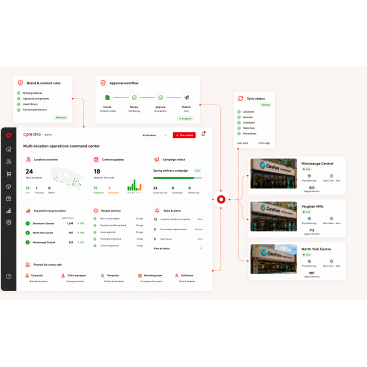
30 to 500 locations under one brand. One platform behind every one of them.
We needed to stop depending on developers every time marketing wanted to update a page or launch a campaign. Core dna gave us one platform our team actually owns - across every property, every location, every service category.
One structure. Local logic where it matters.
One platform behind every site, location, campaign, language. Each property inherits brand and shared components, with local override on the fields you decide.
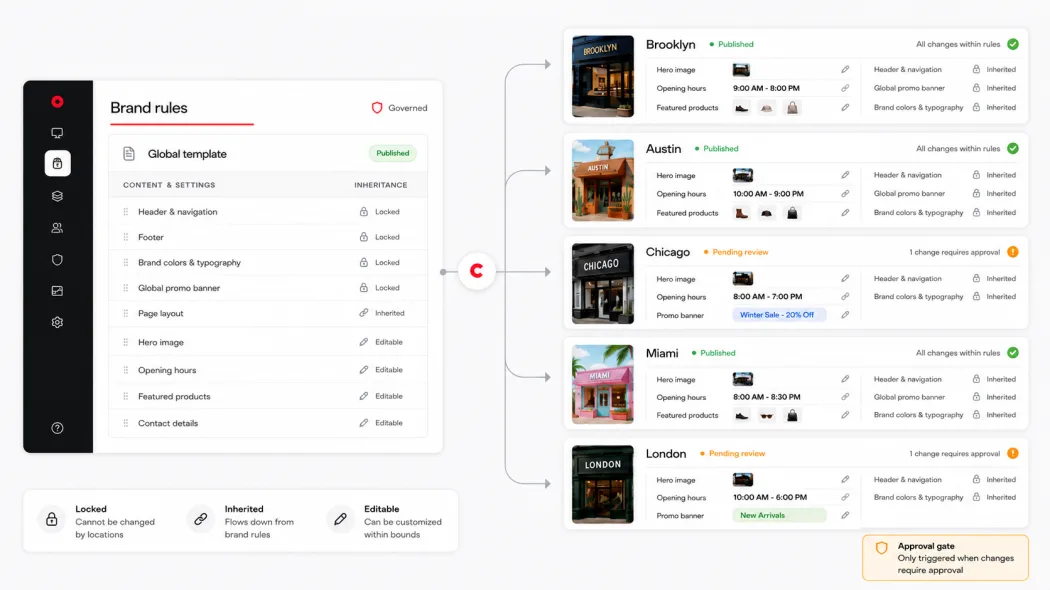
Corporate publishes once. Local managers customise inside guardrails you set. Approval gates and rollback are built in. A brand update reaches every location at the same time.
Scheduled imports, third-party API sync, conditional approvals, notifications. Configured without custom middleware.
Launch in any language. Regional data residency. Headless APIs available when you need them.
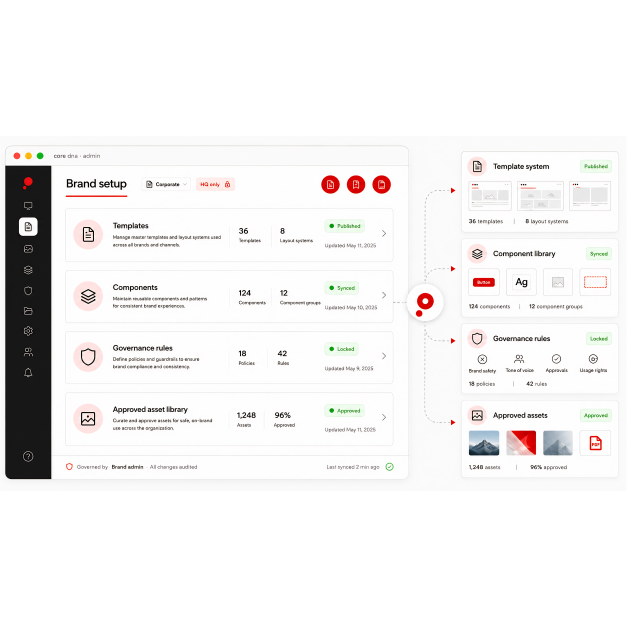
Create structured local pages without turning every market into a cloned template. Configure content around services, teams, service areas, opening hours, local offers, FAQs, reviews, and market-specific details.
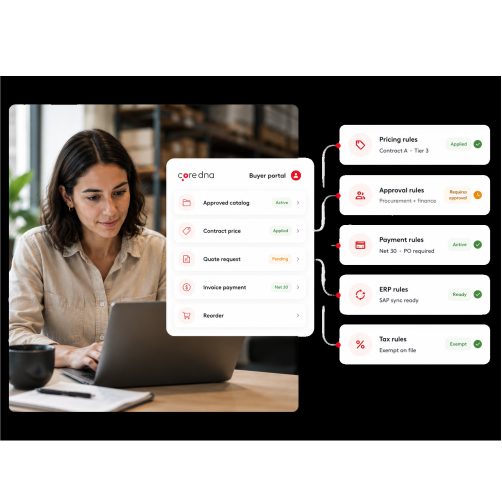
Core dna is built for brands that need to manage scale, multiple locations, multiple regions, local variations, without rebuilding for every new region, locking marketers out of changes, or adding three more vendors to your stack.
Multi-site architecture
One platform for every location, campaign, and regional site. Each property inherits brand, with local override on the fields you decide.
Brand governance
Lock what should never drift. Let local teams change what should be local. Corporate updates reach every location at the same time.
Approval workflows
Route content changes to marketing, operations, legal, or regional managers before they go live. Rollback is built in.
Portals
Give customers, members, employees, or location managers the right experience from one platform. No separate portal tool needed.
Integrations
Connect scheduling, CRM, payments, marketing automation, analytics, identity, and ERP via direct integrations or the Hooks engine.
Multilingual sites
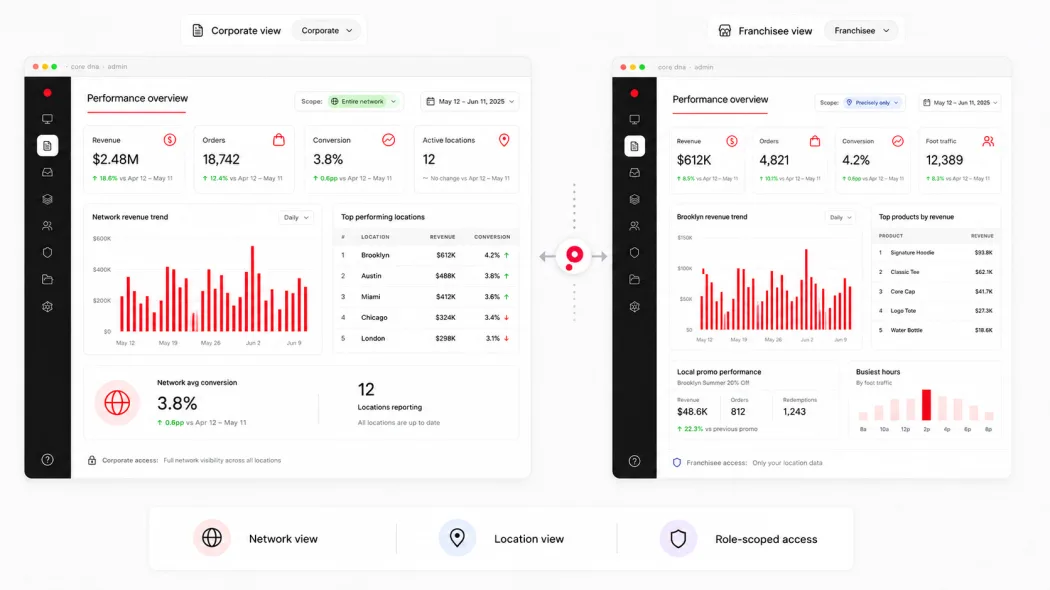
Localize in the languages you serve. Regional data residency included. Corporate sees the full network. Locations see their own store.
Head office sets the structure. Local teams work inside it. Templates, permissions, approved assets, workflows, and publishing rules keep the brand consistent.
Built for location operators. Configured for your shape.
Multi-site architecture, master and local content, workflows, forms, scheduling and integrations are the same across every service shape. What changes is how they are configured for the way your specific network operates.
Corporate launches a campaign once, locations inherit brand and offer. Local managers update hours, pricing, and staff bios.
Multi-language regional sites, branch microsites, activity finder, donor pages, member portal - all configured on one platform.
Location-level scheduling, service availability, central campaign rollout, and local pricing - without stitching five systems together.
Program pages, registration flows, parent and student portals, location-level schedules, and approval workflows from one system.
Corporate sees the network. Regional managers see their markets. Local teams see their location. Support teams see the customer requests and workflows assigned to them. Same platform. Different views.
We map your current state. Define the configured application end to end. Capture every workflow and integration before configuration begins. Most timeline overruns trace back to skipping or rushing this phase.
We configure the platform, multi-site, forms, catalog, workflows and wire in your existing systems.
Existing content migrated and mapped. SEO redirects, URL structures, and local content preserved. Each location's team onboarded.
Once live, you get a dedicated managed services team. one accountable owner, weekly status, change-request discipline.
Multi-location service businesses rarely fail because one tool is missing. They struggle when websites, local pages, booking flows, approvals, reporting, permissions, and integrations all grow in different directions. Core dna gives service networks one managed platform to configure, govern, and scale the operating model behind every location.
| Dimension | Stitched SaaS stack Fast to start harder to govern many tools · many contracts | Custom build Flexible engineering-heavy bespoke · dev dependent | Core dna Configured platform CMS + workflows + orchestration one platform · managed service |
|---|---|---|---|
Time to first location live How quickly the first usable location experience launches | Fast initially Quick to assemble for one or two locations, but the setup gets brittle as more tools and teams are added. | 9 to 18 months Longer delivery cycle because the platform, permissions, workflows, integrations, and interfaces need to be built. | ✓ 12 to 20 weeks Core workflows, templates, roles, and location rules are configured inside the platform instead of built from scratch. |
Cost shape How cost grows as the network expands | Compounding subscriptions Many small SaaS fees can look manageable early, but integration, reporting, support, and admin overhead grow over time. | Large capex High upfront development cost, followed by ongoing engineering, hosting, QA, security, and change-request costs. | ✓ Platform subscription One platform subscription, a configuration project, and managed services keep the commercial model clearer. |
Who maintains it The team responsible after launch | Your team Internal teams have to manage vendor updates, broken connections, access rules, reporting gaps, and workflow drift. | Your team + dev partner The business owns the roadmap, backlog, infrastructure decisions, testing, and technical debt with outside help. | ✓ Shared ownership Core dna manages the infrastructure and platform layer. Your team manages content, location data, and workflows. |
Changing a workflow How service processes evolve | New tool or workaround Changes often mean adding another plugin, forcing a workaround, or accepting that one system cannot match the process. | Developer ticket Even small operational changes can become backlog items that need requirements, development, testing, and deployment. | ✓ Configure in admin Rules, approvals, content flows, permissions, and location-level logic can be configured without rebuilding the system. |
Local customization How locations adapt without breaking the brand | Inconsistent Local teams may use different tools, pages, forms, campaigns, or assets, making brand control harder. | Possible but custom The rules can be designed, but every approval path, override, and permission model has to be specified and built. | ✓ Customize within bounds Corporate sets templates, components, approved assets, and governance rules. Locations customize inside those guardrails. |
Role-scoped access What corporate, regional, and local teams can see and change | Tool by tool Permissions have to be managed separately across CMS, forms, analytics, booking, CRM, and campaign tools. | Built into the spec Access models are flexible but need careful technical design, especially when regional and local teams overlap. | ✓ Role-scoped Corporate sees the network. Regional managers see their territory. Locations see their own content, tasks, and data. |
Network reporting Visibility across locations, campaigns, and operations | Fragmented Performance data sits across multiple systems, making rollups, comparisons, and location-level accountability harder. | Custom dashboards Reporting can be built, but it depends on clean data architecture, integrations, and ongoing maintenance. | ✓ Same dashboard, different views Network, regional, and location reporting can run from the same platform with role-specific visibility. |
Where it breaks The failure point as complexity increases | Integrations decay Each tool evolves independently. Connections break, data drifts, and teams create manual processes to close the gaps. | Maintenance debt The original build becomes harder to change as new locations, services, roles, and integrations are added. | ✓ Capability accumulates Configuration becomes reusable platform capability across locations instead of isolated custom work. |
| Best choice when | You are still small You need to get a few locations online quickly and can tolerate manual work between systems. | You need full ownership You have the budget, team, and long-term engineering appetite to own a bespoke platform. | Scale You need every location to move faster without losing governance, brand control, or operational visibility. |
See it configured for your network.
Book a 30-minute call. We will walk you through how Core dna would be configured for your specific operational shape, industry, and existing stack.